




How to Reconnect With Your Spouse Sexually: 10 Ways

Reviewed By
Kaye Smith, Ph.D. in General Psychology
 Review Board Member
|
By
Ph.D. in General Psychology
Review Board Member
Kaye Smith is a behavioral health coach, clinician, writer, and educator with over 20 years of experience in psychotherapy, coaching, teaching, and writing. She holds a Ph.D.... Read More
Jennifer Schulz

, LCSW
, LCSW
Dr. Jenni Schulz is a licensed social worker with a master's degree in social work from The Ohio State University, and she earned her Doctorate of Philosophy in Psychology... Read more
Learn about Our Editorial Process
14.8k Reads
Updated: 23 Sep, 2026

Heal & Grow Daily for a Happier Relationship
Subscribe FREETable of Contents
View more
Key Takeaways
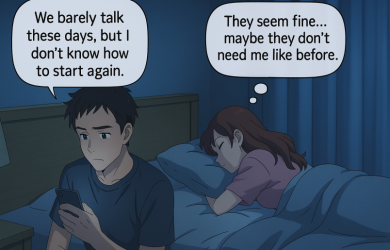
Somewhere between work stress, kids, and the sheer routine of daily life, the sexual spark between you and your spouse can quietly fade. It rarely happens overnight.
One year you’re close, and a few years later, you’re wondering when you last felt truly desired by each other. If that sounds familiar, you’re not alone, and it doesn’t mean your marriage is in trouble.
Many long-term couples go through stretches where sex takes a back seat to everything else. Learning how to reconnect with your spouse sexually often starts with small, low-pressure steps rather than a single big conversation. Here’s where to begin.
RELATED READING : The Role of Sex in Relationships
Is it really possible to reconnect with your spouse sexually?
People may think that a relationship is doomed when partners lose their strong sexual connection, but it is possible to improve intimacy and get your sex life back. It is relatively common for couples to go through periods of a lower sex drive or lack of sexual connection.

Join millions building healthier, happier relationships.
 Subscribe
It may be due to issues like conflict, illness, or stress, which can be temporary. Or, problems with sex can arise when people in a long-term relationship become so comfortable that they stop putting in the effort or feel that sex just isn’t as important anymore.
In this case, how to reconnect with your spouse sexually? Fortunately, if couples acknowledge the issue and are willing to work through it together, rekindling sex in marriage is achievable.
RELATED READING : How to Connect Emotionally During Intimacy: 15 Tips
What Happens If You And Your Partner Aren’t Sexually Compatible?
Sexual compatibility tends to strengthen a relationship, and communication is a big part of why.
In a study of 133 heterosexual couples, Mark and Jozkowski found that couples who were more relationally satisfied also communicated more openly about sex and other topics, and that this communication was linked to higher sexual satisfaction.
What this means is that people who are compatible will likely have a strong sexual connection. That being said, it is still possible to improve intimacy, even if sexual compatibility isn’t high.
Sexual incompatibility occurs when one partner wants sex more often than the other, or one partner is turned on by things the other doesn’t find appealing, and vice versa. While two people may have some sexual incompatibilities, you can often find common ground.
A research paper published in Sexologies states that differences in sexual needs do not always mean incompatibility. Working through those differences with openness and mutual growth can strengthen intimacy and keep passion alive.
In addition, if you love your partner, there are ways to restore sexuality in marriage, even if you have incompatibilities. You may have to compromise, adhering to your partner’s preferences at times while they adhere to yours at others. That give-and-take is part of building intimacy back into a marriage.
RELATED READING : How to Satisfy Your Partner: 10 Tips
Common Barriers to Sexual Connection vs. Ways to Address Them
Most couples run into the same handful of obstacles when sex starts to fade. Seeing them laid out side by side, along with a realistic way to respond to each one, can make the path back to intimacy feel far less overwhelming.
| Barrier | What can help |
|---|---|
| Chronic stress or exhaustion | Schedule short, low-pressure windows for closeness instead of waiting for energy to appear |
| Feeling emotionally distant | Rebuild friendship first through daily conversation and shared time |
| Mismatched sex drives | Compromise on frequency and explore what feels good to both partners |
| Body image or confidence struggles | Reconnect with your body through movement, rest, and self-care |
| Unresolved conflict | Address the underlying issue directly instead of avoiding it |
| Falling into a routine or boredom | Try something new together, from date nights to new activities in the bedroom |
10 ways to sexually reconnect with your partner
Beyond compromise, there are some strategies you can try for connecting sexually with a partner when the two of you are missing that passion and chemistry you once had.
According to Kaye Smith, Ph.D. in General Psychology, ” Couples often wait until bedtime to try to reconnect sexually. But sexual connection can begin hours earlier with a lingering kiss, a playful text, or a touch that says, ‘I’m still attracted to you.”
If you’re looking for things to do with your spouse to reconnect, consider the following tips for a better sexual life.
1. Start cuddling
Sometimes we put pressure on ourselves to go from a lack of intimacy straight back to a completely satisfying sexual connection. This can actually create anxiety and lead us to avoid sex and emotions altogether.
If you have been struggling with a lack of sexual connection, you can ease some of the anxiety surrounding sex by spending time cuddling. This physical closeness can pave the way for becoming more sexual with your spouse.
- Try: Being intentional about setting aside 10 minutes a day to cuddle before bed and watch a show together every evening.
2. Connect with your own body physically
When work and daily demands take over, it’s easy to lose touch with your own body. By spending our hours in the office working, we may miss out on opportunities for physical exercise or time spent in nature.
A recent study in Sexual Medicine Reviews found that women who exercise regularly are more satisfied with their sex lives. A bout of exercise can increase sexual arousal by activating the nervous and hormonal systems.
- Try: Taking time to get exercise, go outdoors, or stimulate the body physically through a warm bath can help us to reconnect physically with ourselves and increase our desire for sex.
RELATED READING : 5 Ways to build passion in a relationship
3. Have a conversation
Another method of bringing intimacy back into a marriage is to talk with your partner about the problem. If you are looking to improve intimacy, the chances are that sex has been problematic for quite some time.
Be careful not to blame your partner, as this will likely lead to defensiveness, which certainly does not improve intimacy in relationships.
- Try: Have an honest discussion with your spouse about what has led to this. Maybe one or both of you is stressed, or perhaps there is an ongoing conflict that has dampened your sex drive.
4. Kiss each other
It may sound simple, but taking the time to enjoy kissing your partner is a sure way to improve intimacy in relationships.
Maybe you aren’t in the mood for sex every night, or perhaps there is something preventing you from going all the way, but that doesn’t have to stop you from connecting with each other.
Intimacy is about more than just sex, but if you start with kissing, you may find that it leads to sex.
- Try: Spend a few minutes kissing without rushing toward sex. Let it stay soft, playful, and pressure-free so both of you can enjoy the closeness naturally.
RELATED READING : What Is the Importance of Kissing in Relationships? 11 Reasons
5. Take turns spoiling each other
Taking turns spoiling each other is another way to reconnect with your spouse sexually. This can be especially helpful if you have had problems with a lack of compatibility between the two of you.
- Try: For an hour, you may ask your partner to do exactly what you want, whether it is giving you a back massage, extended affectionate kissing, or engaging in intimate activities your partner enjoys.
6. Establish a friendship
If you want to reconnect with your spouse in the bedroom, it is important to have a close friendship with each other.
Kaye Smith highlights, “Before you try to reignite the sexual spark, try reigniting the friendship. Laugh together, talk about things that have nothing to do with responsibilities, and remember why you actually like this person.”
Truly get to know each other and develop a deep connection. This is critical because sex and emotions go hand-in-hand.
- Try: Make time for deep conversation, and be a friend to your partner. Discuss hopes, dreams, and fears together, and remain understanding and nonjudgmental.
RELATED READING : The Role of Friendship in Marriage
7. Be intentional with touch
Among the things to do with your spouse to reconnect sexually is to set a goal to touch each other more throughout the day.
This can include a hug, a quick kiss on the cheek, a pat on the back, or a squeeze of the hand. Engaging in physical touch throughout the day can also put you in the mood for sex.
- Try: Start with small, pressure-free touches, like holding hands while watching TV, giving a 10-second hug, or kissing goodbye in the morning.
8. Try new things
Your partner’s sexual needs and interests, as well as your own, may change over time. Instead of always doing the same thing when it comes to sex, try something new.
If you always have gentle sex, explore new things together sexually. Sometimes, a couple’s sex life comes to a halt because of boredom or because one partner wants to try new things but is afraid to ask.
- Try: Sitting down to talk about your fantasies or to create a list of things you’d like to try together is a great way to reconnect with your spouse sexually.
Watch this TED Talk by Mike Anderson, a communication researcher, who shares how honest conversations about sexual desires and fantasies can build trust, intimacy, and stronger relationships.
9. Prioritize sex
Unfortunately, couples may make a habit of avoiding sex. Over time, after a period of no sex, it is normal for sexual desire to fade.
This can lead couples to become caught in a cycle of low sexual desire, making it even more difficult to get back into the routine of having sex regularly.
To overcome distance in a relationship, you may have to prioritize sex for a while. Even if you aren’t in the mood, make a habit of just doing it. It may feel forced in the beginning, but if you stay committed to having sex regularly, it will feel more natural again with time.
- Try: Spend quiet, uninterrupted time together in bed and allow closeness to develop naturally.
RELATED READING : 10 Habits of Couples Having Great Sex
10. Consider therapy
Are you still wondering how to reconnect with your spouse sexually?
If other methods of restoring sexuality in marriage are not effective, it may be time to see a relationship therapist who can offer a neutral perspective and help you and your spouse to communicate better and learn new ways to meet each other’s emotional and physical needs.
In a controlled study of 49 couples in which the woman experienced low sexual desire, MacPhee, Johnson, and Van der Veer found that couples who received Emotionally Focused Therapy showed significant gains in sexual desire compared with a wait-list control group.
- Try: Book one therapy session together and treat it as a safe space, not a last resort. Go in with one shared goal, like rebuilding closeness or improving communication.
Mistakes to Avoid When Rebuilding Sexual Connection
Reconnecting sexually is easier when you can spot the patterns that quietly work against it.
- Waiting for desire to return on its own, instead of creating small opportunities for closeness.
- Turning every conversation about sex into a conversation about what’s wrong with the relationship.
- Comparing your current sex life to how things felt early on, or to other couples.
- Assuming one partner is solely responsible for the disconnect.
- Skipping physical affection just because it isn’t leading to sex.
- Avoiding professional support out of embarrassment or pride.
FAQs
Still have questions about how to reconnect with your spouse sexually ? Here are answers to the ones couples ask most often when they’re trying to reconnect.
Why did my sex drive disappear in my marriage?
A drop in sex drive within marriage is usually linked to stress, fatigue, unresolved conflict, hormonal changes, or simply falling into a routine that leaves little room for intimacy. It is rarely a sign that you no longer love your partner.
Understanding the root cause matters because the fix looks different depending on whether the issue is physical, emotional, or situational. Talking openly with your spouse, and with a doctor if you suspect a physical cause, is often the first step toward feeling desire again.
Can a marriage survive without sex?
Yes, many marriages remain strong and fulfilling without frequent sex, especially when both partners are content with the arrangement and stay emotionally connected. Problems tend to arise when one partner wants more physical intimacy than the other and the mismatch goes unaddressed.
What matters most is that both people feel heard about their needs, whatever those needs are. Some couples redefine intimacy to include more non-sexual touch and closeness, while others work through the mismatch together. If the gap is causing resentment or distance, a couples therapist can help you find an approach that works for both of you.
How do you talk to your spouse about a lack of intimacy?
Bring up the topic calmly and privately, using "I" statements rather than blame, such as saying you miss feeling close rather than accusing your spouse of pulling away. Choose a relaxed moment outside the bedroom, not right after a rejected advance.
Framing the conversation around connection, rather than performance, makes it easier for both people to stay open instead of defensive. You might ask what's been getting in the way for them, too, since the disconnect is rarely one-sided.
If the conversation keeps stalling or turning into an argument, a therapist can help both of you communicate without it escalating.
What percentage of couples experience mismatched sex drives?
Desire discrepancy is one of the most common intimacy challenges couples report. A mismatch in desire doesn't mean something is wrong with either partner; it often reflects normal differences in libido, stress levels, or life stage.
What helps most is treating it as a shared puzzle to solve rather than a personal rejection, and finding a middle ground both partners feel good about. If the gap feels unbridgeable on your own, a sex therapist or couples counselor can offer strategies tailored to your situation.
When should you see a therapist for sexual problems in marriage?
Consider seeing a therapist if you've tried talking openly and making small changes for a few months without improvement, or if the lack of intimacy is creating resentment, avoidance, or ongoing conflict.
Therapy is also worth exploring if either partner suspects a physical or medical cause. A licensed marriage or sex therapist can help you and your spouse understand what's driving the disconnect and give you tools to rebuild intimacy in marriage at a pace that feels safe for both of you. Reaching out for support isn't a sign of failure. Many couples work with a therapist at some point, and doing so early often makes the process shorter and less painful.
Rebuilding Together
A fading sex life doesn’t mean your marriage is broken, it just means something needs attention. Most couples go through stretches like this, and most find their way back with patience and small, consistent effort.
Start with something low-pressure: more cuddling, an honest conversation, a bit more touch throughout the day. Learning how to reconnect with your spouse sexually rarely happens through one big gesture; it happens through showing up for each other again and again.
If you’ve tried on your own and still feel stuck, a therapist can offer guidance without judgment. Give it time, stay patient with each other, and keep choosing to try.
Helpful?
Continue exploring this topic

Marriage.com AI: Your Relationship Guide
Talk through what's on your mind.
Automated
YOU COULD START WITH
Share this article on
Jennifer Schulz
LCSW

Marriage.com Community
Real people. Real relationships. No judgment.
My partner says they’re still attracted to me, but we barely have sex anymore. Is this just what long-term relationships turn into?
Have you navigated this in your own relationship?
Your perspective could help thousands of couples.
See what people are saying
Your perspective could help thousands of couples.
Related Articles


Recent Articles


Related Quizzes








 We'd love your feedback!
 Thanks for your feedback!