




17 Signs of a Condescending Person in Relationships & How to Deal

Reviewed By
Silvana Mici, Coach
 Review Board Member
|
By
Coach
Review Board MemberWith a rich background in Counseling Psychology and Pedagogy, I am a licensed psychologist and certified coach dedicated to empowering individuals on their journey to a fulfilling... Read More
Sylvia Smith, Author

Sylvia Smith shares insights on love revitalization and conscious living. She believes purposeful actions can transform relationships into happier, healthier ones.
Learn about Our Editorial Process
9.1k Reads
Updated: 6 Jan, 2026
Heal & Grow Daily for a Happier Relationship
Subscribe FREETable of Contents
View more
Key Takeaways
Sometimes, you can sense something is off in the way someone talks to you… but it’s hard to put a finger on what exactly feels wrong. Maybe you’ve wondered why their words sting, even when they say it’s just a joke or “For your own good.”
It can leave you feeling small and unheard and questioning yourself, which can be draining over time. If someone, or your partner, always talks down to you, subtly or openly, it may be a sign that you’re dealing with a condescending person.
Whether it’s in small comments or constant corrections, a condescending person can make you feel less valued in the relationship. Identifying signs of a condescending person early can help you understand what’s happening and find ways to protect your sense of self.
What is condescending behavior in a relationship?
Condescending behavior is when someone talks or acts as if they are superior to others, subtly or overtly making you feel small or less important.
It can be frustrating and confusing because, on the surface, the person might seem like they’re trying to help or offer advice, but underneath, there’s a sense of disrespect.
So, what does condescending mean?
It’s essentially a form of communication that implies someone believes they know better or are more capable than you.
This can manifest in different ways in relationships. It may lead you to ask, “What is a condescending person?”
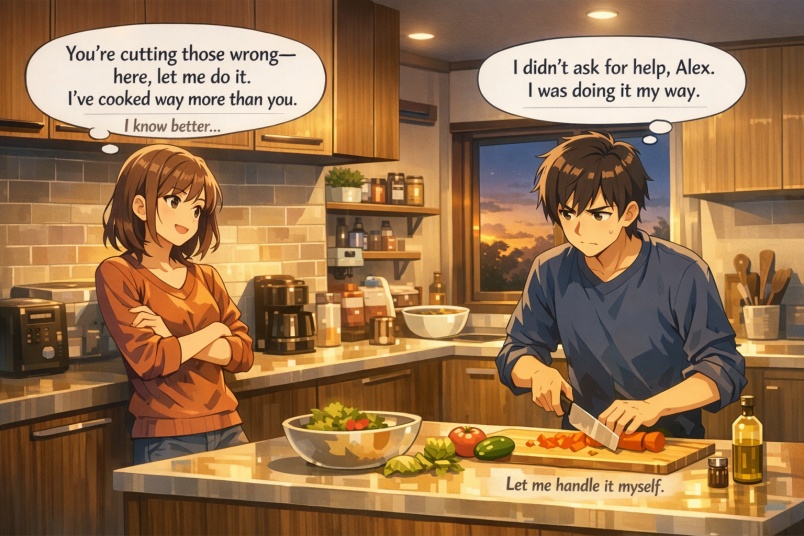
A condescending partner or person might dismiss your opinions, correct you constantly, or make remarks that seem helpful but are laced with criticism.
For instance, a condescending example might be your partner saying, “Well, it’s cute that you tried, but let me show you how it’s really done.”
While they may try to brush it off as a joke or constructive criticism, it can make you feel insignificant and unheard… and that’s not something anyone should have to endure in a relationship.
Research indicates that criticism in romantic relationships can be harmful and helpful, depending on delivery. Hostile criticism tends to reduce relationship satisfaction, whereas non-hostile criticism may actually improve it. Criticism can hurt self-esteem and even cause neurological damage when excessive, while its source also influences its impact.
5 possible reasons people are condescending in relationships
Sometimes, people behave condescendingly without fully realizing the impact of their words or actions. This can result from a variety of personal feelings or learned behaviors that cause them to speak down to others.
So, why are people condescending?
If you’re dealing with a condescending partner, understanding the reasons behind their actions might help you address the issue with more empathy and patience.
1. Insecurity or low self-esteem
A condescending person may put others down because they feel inadequate or insecure about themselves. By making someone else feel smaller, they temporarily boost their own self-worth.
Research indicates that grandiose and vulnerable narcissism contribute to fear of missing out (FoMO), while mature defenses and mental inhibition do not. Immature-depressive defenses are linked to heightened FoMO, suggesting these defenses worsen anxiety about exclusion. Targeting narcissism and immature defenses may help emerging adults with FoMO.
It can be a defense mechanism rooted in their fear of not being good enough. In a relationship, this can surface when they feel threatened by their partner’s abilities or successes, even if it’s not intentional.
RELATED READING : 10 Ways On How Low Self-Esteem Affects a Relationship
2. Control or dominance issues
Some people use condescension as a way to assert control or dominance in a relationship. They feel they are keeping the upper hand by constantly correcting or belittling their partner.
This often stems from a need to feel in charge or superior, making it difficult for them to recognize the harm caused by this behavior. Over time, this can create a toxic dynamic in the relationship.
RELATED READING : 5 Signs You are a Dominant Partner in a Controlling Relationship
3. Learned behavior from past relationships
A condescending partner may have developed this behavior from their upbringing or previous relationships.
They may unconsciously repeat these patterns if they grew up around family members who spoke down to others or were in relationships where they were constantly belittled.
It can become a habit they’re unaware of, impacting how they communicate with their partner.
RELATED READING : 13 Signs Your Past Relationship Is Affecting Present Relationship
4. A need to feel knowledgeable or superior
Some people take pride in being seen as the “expert” in all situations, and this can lead to condescending behavior. They may dismiss their partner’s opinions or ideas, believing their own knowledge or experience is always superior.
While they might see it as offering guidance, it often comes across as patronizing, leaving their partner feeling belittled and unappreciated.
5. Stress or frustration
Stress can bring out the worst in a person, and sometimes, it manifests as condescension. A person under pressure may become short-tempered and resort to belittling those around them.
This can happen in moments when they feel overwhelmed or frustrated with other aspects of their life, leading them to unintentionally take it out on their partner by talking down to them.
RELATED READING : How to Cope With Frustration in Relationships?
What are common examples of condescending behaviors?
Condescending behavior can be subtle, but over time, it wears you down. It is not just about the words—it is the tone, the dismissiveness, the way someone makes you feel less capable or valued.
Here are some examples of condescending behavior in a relationship:
- Correcting you constantly – “Actually, that is not how it works…” even when it is not necessary.
- Mocking your opinions – A smirk, an eye roll, or a sarcastic “Oh, sure, you would think that.”
- Making ‘jokes’ at your expense – Laughing it off with, “Relax, I am just teasing!”
- Acting superior – Explaining things as if you could never understand them.
No one deserves to feel belittled—your voice matters!
17 signs of a condescending person in a relationship

It’s not always easy to spot condescending behavior right away, especially in close relationships where emotions can cloud your judgment. However, over time, subtle patterns might start to emerge, leaving you feeling belittled, unheard, or unappreciated.
If you’re unsure whether you’re dealing with a condescending person, recognizing certain signs can be helpful in understanding what’s really happening in your relationship.
1. They interrupt you in conversations
One of the top signs of a condescending person in a relationship is interrupting conversations. They believe their input is the only logical opinion. Their partner’s perspective may be irrelevant to them, even if it is reasonable and backed by facts.
Interrupting a conversation is often seen as a sign of disrespect in relationships. It may indicate that your spouse is trying to control you when it becomes a frequent occurrence. Also, it means your partner belittles you. A relationship can only work out if your partner respects you.
- How it impacts your relationship: Constant interruptions make you feel ignored and insignificant. Over time, it may discourage you from expressing your thoughts, leading to resentment and emotional distance between you and your partner.
RELATED READING : 15 Subtle Signs of Deflection in a Relationship & How to Deal
2. They think they are smarter than you
One of the top signs of condescending people is the belief that they are smarter than their partner. You can easily spot this attitude when they show that they know everything and give no room for you to talk.
Also, they make no effort to hide this superior behavior, even among strangers or others.
- How it impacts your relationship: Feeling intellectually inferior can lower your confidence and create an imbalance where your thoughts and opinions seem to hold no value, making open communication difficult.
RELATED READING : 15 Signs You’re Intellectually Compatible With Your Partner
3. They lack empathy
A condescending person cannot empathize with their partner. They don’t understand their partner’s feelings and thoughts. Sometimes, you may feel emotionally down and need someone to lean on.
Sadly, if you date a condescending person, they tell you to get brave and calm down because it’s not a big deal. They may even tell you you are a weakling for being emotional about an issue.
- How it impacts your relationship: A lack of empathy can make you feel emotionally neglected, leading to feelings of loneliness and dissatisfaction, which can erode your emotional bond over time.
RELATED READING : 11 Useful Ways to Deal With Lack of Empathy in Relationships
4. They lack emotional intelligence
A condescending person often struggles to understand their own feelings or those of others. They are sometimes unaware of why they act the way they do or how others perceive their behavior.
They can’t read the room because they are preoccupied with their thoughts. In most cases, they justify their offending others with illogical reasons.
- How it impacts your relationship: Without emotional intelligence, misunderstandings become frequent, and conflicts remain unresolved, causing emotional exhaustion and frustration.
RELATED READING : Emotionally Intelligent Husbands Are Key to a Happy Marriage
5. They say you aren’t enough
Another condescending attitude you may have noticed in your partner is that they always say you aren’t perfect. Indeed, no one is perfect, but our imperfections are what make us human.
If your spouse is condescending, they will remind you how important it is to act in a certain way.
For example, condescending behavior may include telling you to dress, eat, speak, or walk in a particular manner. Nothing you do is acceptable, and you may lose yourself in trying to please them.
- How it impacts your relationship: Constant criticism can lower your self-esteem and make you feel unworthy, creating an unhealthy dynamic where you constantly feel the need to prove yourself.
6. They believe they are perfect
One common problem with condescending people is that they think they are perfect and hold everyone to this benchmark. They often have a list of rules and regulations they believe people should follow.
Even state or general laws that don’t align with theirs are considered non-standard.
To them, there is no room for mistakes. Mistakes make you weak. They opine that everyone should be intelligent, perfect, and smart. Anything less is inferior.
- How it impacts your relationship: This unrealistic expectation can make you feel pressured and anxious, causing you to fear mistakes instead of feeling secure and supported in your relationship.
RELATED READING : 13 Dangers of Perfectionism in Relationships & How to Overcome
7. They treat domestic workers with disrespect
As the partner of a condescending person, you may think you are going through a lot. However, a condescending person also treats their staff and domestic workers in an unpleasant manner. They may feel these people are certainly below them and deserve no recognition or honor.
They may overwork their partner and inconvenience them, using the excuse that they are being paid. Additionally, a condescending person may call their workers at odd hours, expecting undivided attention.
- How it impacts your relationship: Witnessing this behavior can make you uneasy about their values, and over time, you may fear being treated with the same level of disregard.
RELATED READING : 7 Ways to Handle a Partner Who Is Disrespecting Boundaries
8. They judge their partner and others
Another common sign of a condescending person is that they are judgmental. They only need to hear a version of a story or one side before they conclude.
In some situations, they blame their partner for issues over which they have no control. If your partner feels superior to you, they will paint scenarios of how they would have handled the situation better than you.
- How it impacts your relationship: Being constantly judged creates emotional insecurity, making it difficult to feel comfortable being yourself.
9. They belittle your achievement
Great achievements are meant to be celebrated with your loved ones. However, you should think twice if you believe your partner is condescending to you. They may be envious of you or threatened by your achievement.
Regardless, they will disregard your achievement or belittle it. For example, if you win the “Employee of the Month” at work, your partner may say it’s not a big deal.
- How it impacts your relationship: Instead of feeling supported, you may start doubting your success or seeking validation elsewhere, creating emotional distance.
RELATED READING : 24 Disrespectful Wife Signs (And What to Do Next)
10. They are arrogant
One of the main signs of a condescending person is arrogance. They think they are superior and better than everyone.
It’s always about them over others; they don’t care. Additionally, they often perceive themselves as being alone and disregard others’ feelings. Notably, they can’t please others to their detriment.
- How it impacts your relationship: Arrogance can make you feel unimportant and unheard, leaving little room for emotional intimacy or mutual respect.
RELATED QUIZ : Am I Arrogant or Confident in Relationships Quiz?
11. They show off
Another sign a condescending person can’t seem to hide is bragging. If someone feels superior, they won’t hesitate to flaunt their achievements, often in a way that feels boastful rather than celebratory.
This action helps them maintain the high standards they’ve set for others, subtly reminding you of their supposed superiority.
Not only do they highlight their successes, but they also describe in detail how much they struggled or sacrificed to reach their goals. This exaggerated storytelling magnifies their accomplishments, reinforcing their belief that they are better than others.
- How it impacts your relationship: Constant bragging can create a competitive atmosphere instead of a supportive one, making you feel undervalued or unappreciated.
12. They make decisions without you
A condescending person already views you as insignificant, so it’s no surprise that they would make important decisions without consulting you.
Whether it’s choosing a new apartment or planning a vacation, they act as though your opinion doesn’t matter.
To them, your input is either irrelevant or illogical, so why bother asking?
When confronted, they might justify their actions by claiming that you have nothing valuable to contribute, further diminishing your role in the relationship.
Over time, this can leave you feeling sidelined and powerless in decisions that affect both of you.
- How it impacts your relationship: This can make you feel powerless and excluded, undermining trust and equality in your relationship.
13. They give unsolicited advice
Sometimes, all you really need is someone to listen, but a condescending person will rarely offer that. Instead, they’ll force their advice upon you, assuming you can’t possibly make the right choices on your own.
Even when you haven’t asked for guidance, they swoop in with their “solutions,” which often come across as condescending and dismissive of your ability to think for yourself.
This behavior shows their belief that they know better than you, and they may even become offended if you choose not to follow their advice.
- How it impacts your relationship: Receiving constant, unwanted advice can make you feel like your thoughts are not valued, leading to frustration and a sense of distance.
RELATED READING : 17 Signs of a Critical Spouse (And How to Cope)
14. They have opinions on every matter
One of the more exhausting traits of a condescending person is their belief that they know something about everything. Whether the topic is complex or simple, they’re always ready to offer their opinion, even when it’s clear they lack real expertise.
This isn’t about sharing knowledge; it’s about appearing superior and knowledgeable at all times. They aim to impress others by acting like an authority on every subject, but the reality is that much of their information is surface-level at best.
Their desire to stand out often overshadows the actual value of what they’re saying.
- How it impacts your relationship: Their need to assert knowledge can overshadow your opinions, making you feel insignificant in conversations.
15. They put you down
Living with a condescending person often means dealing with constant disapproval and disrespect. Instead of offering support or encouragement, they find subtle (or not-so-subtle) ways to put you down.
They know how much their approval means to you, but they withhold it intentionally to keep you feeling small. Whether through sarcastic comments or dismissive gestures, they make sure you know they disapprove of your choices, ideas, or actions.
Over time, this kind of behavior can erode your self-esteem, making it more difficult to assert yourself or feel confident in your abilities.
- How it impacts your relationship: This constant negativity erodes your confidence, making it harder for you to trust your instincts and your self-worth.
RELATED READING : Why My Husband Puts Me Down: 15 Coping Strategies
16. They constantly interrupt you
A condescending person often interrupts during conversations, as they believe their thoughts are more important than those of others.
Whether you’re sharing your opinion or simply talking about your day, they jump in before you’re finished, cutting you off. This behavior reflects their lack of respect for your ideas and an underlying belief that their voice carries more weight.
Over time, these constant interruptions can make you feel unheard and unimportant in the relationship.
- How it impacts your relationship: Repeated interruptions make you feel unheard and unimportant, reducing emotional connection.
RELATED READING : 11 Psychological Effects of Being Yelled at in a Relationship
17. They use patronizing language
Another sign of a condescending person is their use of patronizing or infantilizing language. They might speak to you as if you’re a child, using terms like “sweetie” or “honey” in a way that feels belittling.
Their tone might also be overly simplified, as if you’re incapable of understanding something complex. While the words themselves may seem harmless, the way they are used conveys a sense of superiority, leaving you feeling diminished.
- How it impacts your relationship: This can feel demeaning, making you feel small or incapable, damaging trust and respect in your relationship.
7 ways to deal with condescending people in a relationship
Dealing with a condescending partner can be incredibly frustrating and emotionally draining. Whether the behavior is subtle or noticeable, it’s important to protect your self-worth and find ways to handle these moments with care.
Learning how to deal with condescending people takes patience and self-awareness, but it’s possible to address the issue while maintaining your dignity.
1. Stay calm and composed
When faced with condescension, it’s easy to feel upset or defensive, but staying calm is key. A measured response shows that you’re in control and won’t be easily rattled by their behavior.
By keeping your composure, you prevent the situation from escalating, and it becomes harder for them to justify their actions. Remaining calm also gives you a clearer mindset to respond effectively.
2. Set boundaries firmly
It’s important to establish clear boundaries when dealing with a condescending person. Let them know what behaviors you won’t tolerate, and stand firm in your decision.
Boundaries create a sense of respect and help prevent further emotional harm. Be specific about the hurtful behaviors, and calmly explain that their actions need to change for the relationship to be healthy.
RELATED READING : 26 Examples of Healthy Boundaries in a Relationship
3. Address the behavior directly
Knowing how to confront someone who is condescending involves being straightforward without being aggressive. Point out their condescending remarks when they happen and explain how they make you feel.
Keep the conversation focused on their behavior rather than their character. By addressing the issue directly, you make it clear that their actions have consequences and that you’re willing to discuss a solution.
4. Use “I” statements
When confronting condescending behavior, using “I” statements can reduce defensiveness and help them better understand your perspective.
For example, say, “I feel disrespected when you speak to me that way” rather than “You’re always talking down to me.”
This approach allows you to express your feelings without sounding accusatory, which can open the door to a more productive conversation.
5. Don’t engage in arguments
A condescending person might try to provoke you into an argument, but it’s important not to fall into that trap. Engaging in a heated exchange only validates their belief that they hold power over you.
Instead, stay calm and avoid reacting emotionally. Walk away if necessary, letting them know that you’ll return to the conversation when both of you can discuss it more calmly.
Watch this TEDx Talk where Roderick Jeter talks about how to stop arguing with your partner in just minutes:

6. Focus on your self-worth
Dealing with a condescending partner can take a toll on your self-esteem, so it’s essential to remind yourself of your own worth. Surround yourself with supportive friends and family who uplift you, and engage in activities that boost your confidence.
The stronger your sense of self-worth, the less their condescending remarks will impact your emotional well-being.
RELATED READING : What Is Self-Worth in a Relationship? 10 Ways to Improve It
7. Consider professional help
If condescending behavior becomes a recurring issue and affects your mental health, consider seeking help from a counselor or therapist. Couples therapy can also be beneficial if both partners are willing to work on the relationship.
Licensed psychologist and certified coach Silvana Mici says:
A condescending person exhibits an attitude of superiority, belittling others through patronizing behavior or tone. Dealing with condescension involves setting clear boundaries, expressing your feelings assertively, and maintaining self-confidence.
Therapists advise that one of the most influential ways to improve may be to establish open communication about the impact of their behavior, and encouraging mutual respect can contribute to healthier interactions with condescending individuals.
A professional can offer guidance on how to deal with a condescending person in a way that promotes healthier communication and mutual respect.
In a nutshell
Dealing with and figuring out the signs of a condescending person in a relationship can be challenging, but it’s essential to remember that you have the power to protect yourself. Whether the behavior is subtle or constant, finding ways to address it calmly and directly can make a big difference.
Set boundaries, speak up when necessary, and don’t hesitate to seek help if things don’t improve. Relationships should feel supportive, not belittling.
Though change may take time, focusing on your self-worth and approaching the situation with patience will help. After all, everyone deserves to feel respected, heard, and valued in their relationship—especially you!
Helpful?
Continue exploring this topic

Marriage.com AI: Your Relationship Guide
Talk through what's on your mind.
Automated
YOU COULD START WITH
Share this article on
Sylvia Smith
Author
Sylvia Smith loves to share insights on how couples can revitalize their love lives in and out of the bedroom. As a writer at Marriage.com, she is a big believer in living consciously and encourages couples to adopt this principle... Read more in their lives too. Sylvia believes that every couple can transform their relationship into a happier, healthier one by taking purposeful and wholehearted action. Read less

Marriage.com Community
Real people. Real relationships. No judgment.
How do couples survive big life stress without turning on each other?
Have you navigated this in your own relationship?
Your perspective could help thousands of couples.
See what people are saying
Your perspective could help thousands of couples.


Recent Articles


Related Quizzes







 We'd love your feedback!
 Thanks for your feedback!