




11 Reasons for Feeling Trapped in a Relationship & Ways to Deal

Reviewed By
Jennifer Schulz, LCSW
 Review Board Member
|
By
LCSW
Review Board MemberDr. Jenni Schulz is a licensed social worker with a master's degree in social work from The Ohio State University, and she earned her Doctorate of Philosophy in Psychology... Read More
Rachael Pace, Author

Rachael Pace inspires with motivational articles on loving partnerships. She encourages making room for love and facing challenges together.
Learn about Our Editorial Process
25.4k Reads
Updated: 2 Feb, 2026
Heal & Grow Daily for a Happier Relationship
Subscribe FREETable of Contents
View more
Key Takeaways
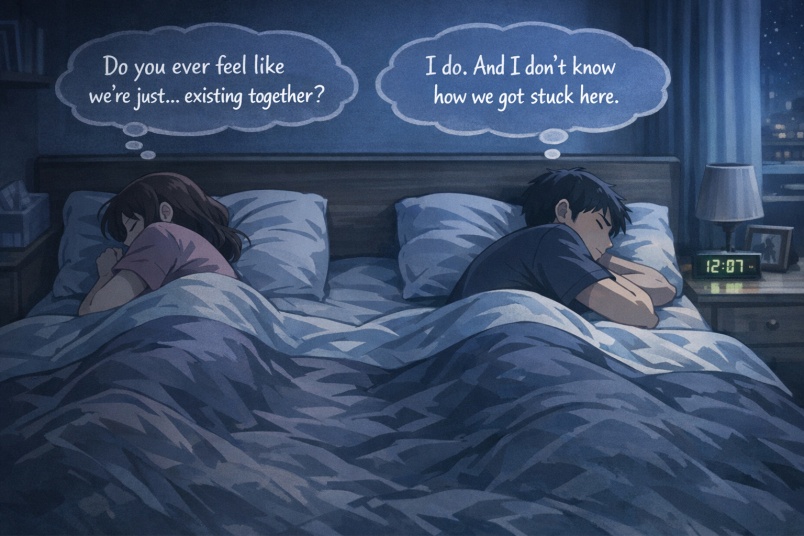
Sometimes it starts quietly… a heaviness in your chest, a sense of restlessness you cannot quite name. You care, you try, you show up, yet something feels off. Maybe you feel stuck between who you are and who you have become with them.
You ask yourself, “Why does love feel so tight lately?” or “When did comfort start feeling like confinement?”
Feeling trapped in a relationship does not always mean something is broken; it can mean something inside you is asking to be heard. Expectations pile up, routines blur, silence grows louder than words.
There can still be love, laughter, shared history… and confusion living right beside it. These feelings are tender, human, and more common than we admit. Sometimes clarity begins simply by noticing what feels heavy, and why.
What does it mean to feel trapped in a relationship?
Feeling trapped in a relationship means sensing that you’re stuck or emotionally confined, as if you don’t have the freedom to be yourself or make choices that are right for you.
It’s like being in a room with no exit – you might feel suffocated, unhappy, or unable to pursue your own dreams. This feeling can arise when there’s too much control, possessiveness, or a lack of understanding in the relationship.
A study found that higher relationship satisfaction is linked to fewer misunderstandings and more open communication. Romantic partners view misunderstandings as more serious than friends do. Participants also reported that misunderstandings occur more often through mediated communication than during face-to-face interactions.
For instance, imagine you love playing music, but your partner constantly belittles your passion, saying it’s a waste of time. They might also discourage you from spending time with friends who share your interests.
Over time, you’d feel trapped because you can’t be true to yourself or enjoy something that brings you joy. This can lead to frustration and sadness, making it important to communicate your feelings with your partner or seek support from friends and family to find a healthier balance.
RELATED READING : 15 Relationship Traps Everyone Needs to Avoid
11 reasons for feeling trapped in a relationship
Do you often wonder, “Why do I feel trapped in my relationship?”
If you are feeling trapped in a relationship, you must not keep your feelings under wraps. On the contrary, you need to confront the situation in order to find a plausible solution to your underlying problems.
The first step towards finding a way out of your situation is identifying the root cause. Here are 11 probable reasons you might feel trapped in a marriage or relationship.
1. You are not the same person anymore
At the outset of any relationship, numerous promises are made with the understanding that they will last “forever.” We expect our partner to be the same forever; we wish the spark to be alive forever, conveniently forgetting that change is inevitable.
As time progresses and you move up life’s ladder, not only your partner but you, too, are bound to change. And your perception of your relationship and life can change as well.
However, sometimes your partner may not be happy with the person you have become, or vice versa. If this is the case, you must try to talk to your partner politely about the changes that are bothering you and the way that they are making you feel.
Here’s what it looks like:
- You feel guilty for wanting different things than you did at the start of the relationship.
- Your partner says, “You’ve changed,” and it sounds more like a complaint than an observation.
- You hide parts of your growth to avoid arguments or disappointment.
RELATED READING : 15 Ways to Know When to Leave a Relationship for Good
2. You and your partner need space
Even in the closest of relationships, space is something that must never be compromised on.
Before you get into a relationship, it is advisable that you discuss this aspect with your partner. Personal space will help you and your partner relax in ways that suit you both within the defined limits of your relationship, of course.
Giving yourself and your partner some space doesn’t mean that you don’t love each other. This is just a simple yet effective way to let the two of you re-energize so you can bring the best of each other to the relationship.
If you are feeling trapped in a relationship, perhaps you aren’t getting enough of the space that you need.
You can have a small discussion with your partner over coffee or tea. Try to explain to them how you feel and what you want to do about it.
Here’s what it looks like:
- You feel restless or irritated when you have no time alone.
- Simple plans turn into negotiations because your partner expects constant togetherness.
- You miss doing things just for yourself, without explaining why.
RELATED READING : 15 Telltale Signs You Need Space in a Relationship
3. Your relationship has become monotonous

There’s a good chance the reason you are feeling trapped is the monotony in your relationship. When a couple gets married, several other things take over. There are career issues, family responsibilities, and several such commitments that take a toll on the relationship.
A longitudinal analysis found that identity diffusion in romantic relationships decreased from age 29 to 33, with many individuals shifting toward commitment. Commitment-making involved more positive, detailed views of relationships and more coherent, time-integrated identity narratives during young adulthood.
And gradually, the couples lose that feeling of excitement that they felt at the onset of their relationship. So, if you are feeling stuck in a marriage, it’s time for introspection. We need to remember that marriage is hard work, and it requires constant effort.
Feeling suffocated in marriage or being trapped in a relationship doesn’t imply that there has to be a major fault with you or your spouse. All you could be missing out on are simple pleasures in life.
Add some romance to your life with simple things like planning a date night, cooking a meal together, or taking an evening stroll hand in hand. Although cliché, these simple things can do wonders to make the two of you feel loved.
Here’s what it looks like:
- Days blur together, and conversations revolve only around chores or responsibilities.
- You stop looking forward to spending time together, even though nothing is “wrong.”
- Romance feels like a memory instead of something ongoing.
RELATED READING : When to Stop Trying in a Relationship: 10 Signs to Watch For
4. Absence of meaningful communication
Communication is the key to a happy relationship.
If you and your partner aren’t communicating in meaningful ways, there’s a great chance that you are feeling trapped in your relationship.
It is essential for partners to sit down and talk about their routines and troubles. Any healthy relationship requires this form of care.
It’s also important to understand that when communication is verbal, there are some non-verbal signs too.
Try asking yourself some relevant questions about your partner’s moods. Sometimes, you or your partner might simply not be in the mood to talk.
At such times, understand that you need to give them time alone. Then talk to them when they feel better.
Here’s what it looks like:
- Conversations stay surface-level, avoiding emotions or deeper topics.
- You feel unheard even when you are technically talking.
- Silence feels heavier than words, but breaking it feels exhausting.
RELATED READING : 10 Effective Communication Skills in Relationships
5. Lack of appreciation
If you feel trapped in a relationship, a major contributing factor could be a lack of appreciation. If you don’t feel valued or you feel that your partner conveniently takes you for granted, it is a clear sign that your relationship lacks mutual respect.
Of course, you do not expect your partner to sing your praises every day, but for a relationship to foster, respect and appreciation are imperative.
Here’s what it looks like:
- Your efforts go unnoticed unless something goes wrong.
- You feel invisible despite constantly showing up for the relationship.
- Gratitude feels one-sided, leaving you emotionally drained.
RELATED READING : 5 Ways Lack of Appreciation Can Ruin Your Marriage
6. Lack of communication
When you and your partner don’t talk openly and honestly, misunderstandings can arise. You might keep your feelings hidden, fearing their reaction, which can lead to frustration and distance.
Imagine feeling like you’re in a maze, unable to find the right path because there’s no clear direction. Over time, this can make you feel disconnected and trapped, as if your emotions are bottled up.
Here’s what it looks like:
- You rehearse conversations in your head but never say them out loud.
- Small misunderstandings snowball into bigger emotional distance.
- You feel safer staying quiet than being honest.
RELATED READING : 15 Signs of Feeling Suffocated in a Relationship & How to Break Free
7. Control and jealousy
Feeling like you’re being monitored or that your partner is excessively possessive can create a stifling atmosphere. It’s akin to having someone constantly peering over your shoulder, making you anxious about your actions.
It can lead to a sense of confinement as if you’re not trusted enough to make your own choices or interact with others without their approval.
Here’s what it looks like:
- You think twice before texting friends or making plans.
- Your partner questions your intentions, tone, or choices frequently.
- You feel anxious explaining harmless actions.
8. Different goals
When your dreams and aspirations don’t align with your partner’s, it’s like walking on separate paths that never converge. You might want to explore new horizons, but your partner’s goals might hold you back.
This can leave you feeling torn between your own ambitions and your relationship, as if you’re standing at a crossroads with no clear way forward.
Here’s what it looks like:
- You delay personal dreams to “keep the peace.”
- Conversations about the future feel tense or avoided altogether.
- You feel pulled between loyalty to your partner and loyalty to yourself.
RELATED READING : 10 Smart Goals Examples to Improve Your Relationship
9. Isolation
Being cut off from friends and family can lead to loneliness. It’s as if you’re on an island with no means of reaching the mainland. Losing connections outside the relationship can make you dependent on your partner for emotional support, making it hard to see beyond the relationship’s confines.
Here’s what it looks like:
- You slowly lose touch with people who once supported you.
- Your social world shrinks without you fully noticing.
- You rely almost entirely on your partner for emotional connection.
10. No personal space
Losing time for your hobbies and personal interests is like losing pieces of yourself. It’s as if you’re in a room that’s getting smaller and smaller, leaving you with little room to breathe or pursue what makes you happy. This can lead to feeling suffocated and to losing your individuality.
Dr. Jenni Jacobsen, PhD, and mental health clinician, explains:
When you’re in a long-term relationship, it’s still important to maintain your own hobbies and interests. If you’re feeling suffocated, take some time to pursue your own interests.
Here’s what it looks like:
- You no longer recognize your own routines or interests.
- Time alone feels like a luxury instead of a need.
- You feel overwhelmed but can’t explain why.
RELATED READING : 25+ Warning Signs He Doesn’t Love You Anymore
11. Constant conflict
Frequent arguments without resolution create a tense environment. It’s like being caught in a storm that never clears, making it hard to find a sense of calm or stability. Over time, this ongoing conflict can leave you feeling trapped in a cycle of negativity and uncertainty.
Here’s what it looks like:
- Arguments repeat without resolution, only resentment.
- You feel emotionally tired before discussions even begin.
- Peace feels temporary, like it could break at any moment.
Watch this TED Talk featuring Katie Hood, former CEO of the One Love Foundation, to identify if you are experiencing healthy or unhealthy love:

9 things to do when feeling trapped in your relationship
Wondering what to do if you feel trapped in a relationship? Keep reading this section.
Perhaps you are really irked with your partner and the status of your relationship. But you should not give up or fret over the unpleasant situation right away.
When you’re feeling trapped in a relationship or seeking ways to stop feeling trapped in a relationship, here are 9 steps you can consider taking:
- Self-reflection: Take time to understand your feelings. Reflect on what’s making you feel trapped and why. This self-awareness will help you communicate your concerns more effectively.
- Open communication: Talk to your partner honestly about your feelings. Share your thoughts and concerns, and listen to their perspective too. A genuine conversation can lead to understanding and potential solutions.
- Set boundaries: Establish healthy boundaries that allow both you and your partner to have personal space, pursue individual interests, and maintain connections with friends and family.
- Seek support: Reach out to friends, family members, or a therapist to discuss your situation. Their outside perspective and advice can provide clarity and guidance.
- Identify solutions: Work with your partner to find solutions to the issues that are making you feel trapped. Finding compromises and making changes can lead to a healthier dynamic.
- Focus on yourself: Rediscover your passions, hobbies, and interests that may have taken a backseat. Nurturing your own well-being can help you regain a sense of identity and independence.
- Consider professional help: If the situation doesn’t improve, consider couples therapy or counseling. A trained professional can facilitate productive discussions and provide tools to strengthen your relationship.
- Explore options: If efforts to improve the relationship aren’t successful and your feelings of being trapped persist, consider whether the relationship is truly healthy for you. Sometimes, it’s best to let go of the relationship for your own well-being.
- Prioritize your happiness: Your happiness matters. If the relationship is consistently causing you distress and doesn’t align with your long-term well-being, it might be time to make difficult decisions for your own sake.
RELATED READING : 15 Ways to Know When to Leave a Relationship for Good
FAQs
Feeling trapped in a relationship is common and can happen for various reasons. Here are answers to some common questions about this experience.
-
Is it normal to feel trapped in a relationship?
Yes, feeling trapped can be normal if there’s a lack of communication, control, or differing goals. It’s important to address these feelings to ensure your happiness.
-
What makes a woman feel trapped in a relationship?
A woman might feel trapped due to possessiveness, isolation, or conflicts in a relationship. Openly discussing concerns and seeking support can help navigate these feelings.
-
How can I communicate to my partner that I feel trapped without causing more problems?
Choose a calm moment to talk, use “I” statements to express your feelings, and listen to their perspective too. Frame it as a mutual effort to improve the relationship.
-
What if my partner is intentionally causing me to feel trapped?
Intentional manipulation or control isn’t healthy. Seek support from friends, family, or professionals to evaluate the relationship and decide what’s best for you.
-
Is it possible to work through feeling trapped and improve the relationship?
Yes, it’s possible. Open communication, understanding each other’s needs, setting boundaries, and seeking professional help can lead to positive changes and a healthier relationship.
Freedom to be your true self
Feeling trapped can be heavy, confusing, and quietly exhausting… and it does not mean you have failed at love. Sometimes it means something inside you needs care, space, or honesty.
Change does not always begin with big decisions; it often starts with small moments of clarity, gentle conversations, and permission to listen to yourself.
What feels tight today can soften with understanding, patience, and support. Whether the path leads to healing together or finding your own footing again, your feelings matter. You deserve a relationship that allows you to breathe, grow, and feel safe being exactly who you are.
Helpful?
Continue exploring this topic

Marriage.com AI: Your Relationship Guide
Talk through what's on your mind.
Automated
YOU COULD START WITH
Share this article on
Rachael Pace
Author
Rachael Pace is a noted relationship writer associated with Marriage.com. She provides inspiration, support, and empowerment in the form of motivational articles and essays. Rachael enjoys studying the evolution of loving partnerships... Read more and is passionate about writing on them. She believes that everyone should make room for love in their lives and encourages couples to work on overcoming their challenges together. Read less

Marriage.com Community
Real people. Real relationships. No judgment.
How do couples survive big life stress without turning on each other?
Have you navigated this in your own relationship?
Your perspective could help thousands of couples.
See what people are saying
Your perspective could help thousands of couples.



Recent Articles



Related Quizzes







 We'd love your feedback!
 Thanks for your feedback!