




Why Ghosters Come Back and How to Respond: 25 Ways

Reviewed By
Dionne Eleanor Reid, Coach
 Review Board Member
|
By
Coach
Review Board MemberDionne is an experienced transformational coach who has worked internationally for over 10 years. She fuses together science and ancient wellness techniques into her offerings.... Read More
Sylvia Smith, Author

Sylvia Smith shares insights on love revitalization and conscious living. She believes purposeful actions can transform relationships into happier, healthier ones.
Learn about Our Editorial Process
12.4k Reads
Updated: 18 May, 2026

Heal & Grow Daily for a Happier Relationship
Subscribe FREETable of Contents
View more
Key Takeaways
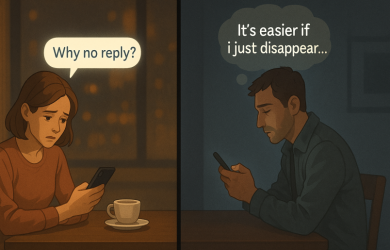
You finally moved on… or so you thought. Then, out of nowhere, that familiar name pops up in your notifications again. No explanation, no apology… just a casual “hey” as if nothing ever happened.
It stings, doesn’t it?
Ghosting already hurts, but the “comeback” can feel even more confusing. Understanding why ghosters come back isn’t always straightforward; their reasons can range from genuine regret to pure convenience. Some miss the connection, others just miss the attention.
Either way, you deserve to feel confident and at peace with however you choose to respond. Your feelings are completely valid, and so are your boundaries!
What Is Ghosting in a Relationship?
Ghosting is when someone you’re close to suddenly cuts off all communication… no calls, no texts, no explanation whatsoever. One day they’re present; the next, they’ve completely disappeared.
And the impact goes further than most people realize.
Langlais, Citrano, Renteria, Gica, and Ormsbee, publishing in Sexuality and Culture, studied both the psychological and physiological consequences of ghosting and found that those who were ghosted reported significantly higher anxiety and lower self-esteem, while also showing increased blood pressure and altered heart rate compared to a control group.
The body, it turns out, registers the experience of being ghosted as acutely as the mind does.
It happens in romantic relationships, friendships, and even situationships.
Sounds painful, right?
That’s because it is! Being ghosted leaves you with unanswered questions, self-doubt, and a strange kind of grief. It’s not just “being ignored”; it’s a silent rejection that can genuinely affect your emotional well-being.
-
Why do ghosters suddenly come back?
Ghosters come back for all sorts of reasons… and not all of them are good ones. Some feel genuine remorse; others simply miss the comfort you provided. Some are lonely, bored, or newly single.
Whatever their reason, one thing is certain: their return doesn’t automatically mean they’ve changed!
RELATED READING : What Is Ghosting: Signs, Examples & Ways to Cope
Why Understanding Their Return Matters for Emotional Well-Being
When a ghoster comes back, it’s easy to feel a rush of emotions… confusion, hope, maybe even anger. But understanding why their return matters can actually protect your peace and help you make clearer, healthier decisions moving forward.
-
It helps you recognize unhealthy dating behavior patterns
Knowing why ghosters come back gives you the ability to spot recurring cycles in your relationships. You stop reacting on impulse; instead, you respond with clarity. Recognizing these patterns early can save you a lot of emotional pain!
-
It validates your feelings and experiences
Understanding their return reminds you that your hurt was real and completely justified. You didn’t “overreact;” you responded to someone who chose silence over communication. That deserves acknowledgment, not dismissal.
RELATED READING : 10 Tips for Accepting Your Emotions in a Relationship
-
It protects you from making decisions based on false hope
Not every comeback means a new beginning… sometimes it’s just familiarity dressed up as second chances. Understanding their motives helps you separate genuine intention from convenience, so you don’t invest in something that was never truly there.
-
It gives you a deeper insight into ghosting psychology
Learning about why people ghost and return reveals a lot about avoidant behaviors and emotional immaturity. It’s not always about you; it’s often about their own unresolved fears. That knowledge can be surprisingly healing!
RELATED READING : How Ghosting Is Linked to Mental Health – 9 Ways
-
It empowers you to set firmer boundaries
When you understand why someone came back, you’re in a much better position to decide what you’ll accept. You can respond with confidence, not from a place of longing, but from a place of self-respect and self-worth.
Why Ghosters Come Back and How to Respond: 25 Ways
After being ghosted for a few days, the feeling is that you’ll never see the person again. As you deal with what you believe to be a breakup, facing questions like why people ghost you and wondering if there was something you might have done, suddenly the ghoster reappears.
Most partners are confused at the strange turn of events, wondering why the ghoster returned. It’s as illogical as their exit, especially considering the individual acts like things can start just where they left off, skipping a beat.
1. Regret has set in
Not all ghosters will feel a sense of regret. It is, in fact, rare, but it does happen with some partners. These people realize that they made a mistake by ghosting someone, hurting another person, and causing them to feel guilty.
They admit their selfishness and come with an apology. When trust is broken, as it was by being ghosted in the first place, it can be challenging to forgive and offer a second chance. Still, that is an option in this scenario.
You can also offer forgiveness, but choose to move on to a healthier relationship.
Here’s what you can actually do:
- Ask them specifically what they regret before responding.
- Wait a few days so you respond from clarity, not emotion.
- If you forgive, set clear communication expectations upfront.
2. They are jealous
If a boy or girl ghosted and came back, there is a chance she noticed you’d moved on to another relationship, or perhaps there were rumors of interest in another person.
With many ghosters, the ghosting intention is to leave the door open until they find something better. If you move on first, it can hurt them, mainly if there are still feelings there.
The individual doesn’t necessarily want you as a mate, but doesn’t want anyone else to have you. It’s wise for you to pursue your other interests.
Here’s what you can actually do:
- Don’t slow down your healing or new connections for them.
- Ask yourself honestly if their return feels genuine or just reactive.
- Keep pursuing what makes you happy, with or without them.
RELATED READING : What Is Really Behind Jealousy in a Relationship
3. They miss you

One of the suggestions as to why ghosters always come back is that the individual starts to miss their companion. Sometimes, the adage “you don’t know what you have until it’s gone” rings true for partners.
When the ghoster looks for something better, they realize the person they had was best suited for them. That conjures memories, causing them to react by reaching out to you.
The issue for you is whether this will be a permanent return or they’ll get cold feet again. Did they admit what they did and sincerely apologize? That will speak volumes.
Here’s what you can actually do:
- Look for a sincere apology, not just sweet words.
- Ask directly if they’ve addressed what made them leave.
- Observe their actions over time, not just their initial return.
4. There are presumptions and insecurities
In your confused state after being ghosted, you’re likely pondering, “Do ghosters ever come back?” This ghoster, on the other hand, has seemingly developed a lack of self-esteem and diminished confidence.
And that connection between self-esteem and relationship behavior runs deeper than most people stop to consider.
Erol and Orth, publishing in the European Psychologist, reviewed research on self-esteem and romantic relationship quality and found that high self-esteem is broadly beneficial in relationships, with its effects extending not just to the individual but to their partners happiness as well.
Critically, the mechanisms at work include perceived regard and secure attachment; when a person does not feel genuinely valued by their partner, their self-esteem and relationship behavior are both affected.
A ghoster operating from a place of low self-worth is, in many ways, acting on a story they have already written about how the relationship will end.
The individual believes you hold little regard for them and wouldn’t be bothered if they were to disappear. They perceived a lack of interest from you or felt rejected and found it necessary to move on by ghosting you.
As time passes, the ghoster senses you miss them and considers resuming the relationship. If you did reject them at one point, it’s better to let the partnership pass to avoid any future hurt.
If the ghoster has many unfortunate misperceptions about your mindset, it’s better to let go again, since the two of you are unlikely to ever be on the same page.
Here’s what you can actually do:
- Don’t feel responsible for managing their insecurities.
- Reflect honestly on whether the dynamic was ever balanced.
- If misperceptions were frequent before, consider that a red flag.
RELATED READING : How to Stop Being Insecure in a Relationship: 10 Ways
5. They don’t see what’s transpired as wrong
One of the ideas concerning why ghosters always come back is that people come from varied “settings,” if you will, or “environments.” Some people may be naive about the fact that ghosting is a hurtful behavior, done without the intention to cause pain.
They might believe that when they have a lot of things happening in their life, it’s quite normal to ignore texts and calls, regardless of the time of day.
They might believe that when they have a lot of things happening in their life, it’s quite normal to ignore texts and calls, regardless of the time of day.
Such a situation requires an open dialogue with a detailed explanation of how communication should work and why the behavior was inappropriate.
Here’s what you can actually do:
- Calmly explain how their silence affected you specifically.
- Gauge whether they’re receptive or dismissive of your feelings.
- Only move forward if they show a willingness to communicate better.
6. They know you will be readily available
Do ghosters come back? They often do if you have a reputation of being someone people can count on to be there when needed.
Perhaps the same ghoster has done this to you a couple of times because you’re so readily available, kind, and forgiving. It’s time to let this person know you’re moving on, or maybe doing some slight ghosting of your own might be somewhat apropos.
Here’s what you can actually do:
- Notice if this is a repeated pattern with the same person.
- Respond later than usual to signal your time is valuable.
- Be honest with them, and yourself, about what you’ll no longer accept.
RELATED READING : How to Stop Giving Too Much in a Relationship
7. They are bored
A sound reason why ghosters always come back is boredom. The sad fact is that the person most often walked away from your partnership because they felt stuck, but wouldn’t communicate that to you.
Needless to say, while away, it was decidedly more boring alone.
Unfortunately, a cycle can develop with this partner: they come to feed their ego and leave as they grow weary, as long as you allow it. Don’t allow it.
Here’s what you can actually do:
- Ask yourself if their energy feels consistent or just temporary.
- Refuse to be someone’s fallback option or boredom fix.
- Break the cycle by responding with firm, calm boundaries.
8. Rejection is a two-way street
It is sincerely possible the ghoster stepped away from you, leaving the relationship uncertain while testing the waters with another person of interest.
When the new partner rejected the ghoster, they decided to return to the partnership they had left open for just that reason. You’re safe and a companion until another person of interest comes along. It’s also better for you to reject this two-timer.
Here’s what you can actually do:
- Ask directly if they’ve been seeing someone else since they left.
- Trust your gut if their return feels like a consolation move.
- Know your worth and don’t settle for being someone’s backup plan.
RELATED READING : Why Rejection Hurts So Much & How to Deal It in the Right Way
9. They realize they want a commitment
When you finally achieve healing from what you consider a tough breakup, it can be destructive when the ghoster returns while trying to progress into a healthy pattern.
It’s more confusing when they want to explore a commitment and acknowledge the mistake of letting their emotions waver. Still, you must realize no one is perfect, especially regarding relationships.
Coach Dionne Eleanor points out,
Sometimes, ghosters are simply scared and take time away to reflect. They don’t see it as ghosting in this context; they see it as being sure of what they want before making their subsequent response.
When things get serious, people sometimes get scared and make the wrong moves. A second chance may be warranted when they recognize their mistakes, show genuine regret, and are ready to commit.
It would be essential to create some ground rules for the relationship and explore any fears together before actually committing, though.
Here’s what you can actually do:
- Ask what specifically has changed for them since they left.
- Set clear ground rules before agreeing to anything serious.
- Take it slow and let their consistency prove their intention.
RELATED READING : Significance of Commitment in Relationships
10. They are interested in a hookup
The ghoster makes no excuses or bears no apologies; instead, it is straightforward that they merely hope for a sexual encounter with someone familiar.
It would be a sort of friends-with-benefits arrangement, and see where it might go from there. Hopefully, you will indeed have an excellent negative response to this.
Here’s what you can actually do:
- Be honest with yourself about what you actually want.
- If a hookup isn’t what you’re after, say so clearly and directly.
- Don’t mistake physical familiarity for emotional readiness on their part.
RELATED QUIZ : Does He Like Me or Just Wants Sex Quiz
11. They are looking for a support system
A primary reason ghosters always come back is the support a loving relationship can provide. If the two of you had a perfect thing going, as is often the case when ghosting happens, you were likely a unique support system for your partner.
Once the ghoster stepped away from the partnership, the struggles they faced at the time still haunted them, but they had no one to turn to.
When they come back, the sole purpose is to have someone to talk to. You can offer to listen if you want to be kind, but let the person know you have moved on in every other sense.
Here’s what you can actually do:
- Be kind, but make clear where your emotional boundaries now sit.
- Don’t slip back into the caretaker role out of habit or guilt.
- Suggest they seek support from a therapist or trusted friend instead.
RELATED READING : 20 Practical Steps to Becoming a Supportive Partner
12. They have an urgent requirement
Anytime a favor needs to be taken care of, you would go. That would be whether the ghoster needed errands run, apartment-sitting, or help with chores.
The individual comes out of the blue, calling because they can’t find someone to attend an event they feel is essential, but they know they can count on you in a pinch.
Here’s what you can actually do:
- Pause before agreeing to any favor they reach out about.
- Ask yourself if this feels like a connection or convenience.
- It’s okay to say no; you don’t owe them your time or effort.
13. Happy couples surround them
Perhaps the ghoster has returned because they continue to remember all the two of you shared, along with examples of happy relationships around them. Maybe friends are getting engaged, couples are having babies, or family is asking about you.
That doesn’t mean they still have feelings for you or won’t do the same thing again; it’s just them reminiscing. Unless you see sincerity and genuine effort in moving forward, it’s better to stay in your healthy place.
Here’s what you can actually do:
- Look for consistent effort, not just sentimental nostalgia.
- Ask directly if they see a real future with you or just miss the idea.
- Stay grounded in your progress and don’t romanticize the past.
14. They need attention
Sometimes there are feelings of neglect, and a need for attention is part of why ghosters always come back. When standing on their own without a continuous stream of affection or attention, a ghoster longs for what they had in the partnership.
That doesn’t necessarily mean the person, but a relationship. It’s essential to make that distinction and be cautious.
Here’s what you can actually do:
- Notice if they’re engaging with you or just seeking validation.
- Don’t mistake their attention-seeking for genuine interest in you.
- Protect your energy by keeping early interactions light and non-committal.
RELATED READING : 10 Effects of Lack of Attention in Relationships & Remedies
15. Ghosting can mirror narcissistic behavior
A narcissist thrives on power. A ghoster who is narcissistic uses their power to put their mate in a position of inferiority.
When the individual attempts to return to the partnership, they show their superiority, implying that they can come and go at will. This sort of behavior can be toxic and should be avoided.
Here’s what you can actually do:
- Watch for patterns of control, manipulation, or entitlement in their return.
- Don’t engage if their comeback feels more like a power move than an apology.
- Consider speaking with a therapist if this dynamic feels familiar or hard to let go of.
RELATED READING : 10 Signs of a Narcissistic Collapse & Tips to Avoid the Trap
16. Curiosity is not the same as love
You shouldn’t confuse a ghoster’s curious nature with their desire to be in your life. The individual’s wonder about whether they can get back to you is not the same as the desire to do so. Nor is it acknowledging that what they did was hurtful and wrong.
For a second chance to be worth considering, there must be a sincere intention and commitment to building a future together. It’s essential to steer clear of further communication without sensing this genuine desire.
Here’s what you can actually do:
- Don’t mistake a casual “hey” for a serious attempt at reconciliation.
- Ask directly what they’re hoping for before investing any emotion.
- Require clear intention, not just curiosity, before reopening the door.
17. There’s an ex in the mix
The ghoster has had another relationship and breakup since they walked away from you. Now, the hope is that you can help make things better for them.
It would be a rebound situation because the ghoster was on the receiving end of the breakup this time. To this, you would, of course, say, “No.”
Here’s what you can actually do:
- Ask directly if they’ve recently come out of another relationship.
- Give it time before considering anything serious; rebound feelings fade fast.
- Don’t take on the emotional weight of someone else’s heartbreak.
18. They have matured
In some instances, ghosters always come back simply because people have an affinity for growing and changing over time.
With that period of growth comes maturity and an acknowledgment of fault for things many people wish they could take back and make amends for over the course of their lives.
And ghosters are no different. Does that mean they want to rekindle the relationship? Quite possibly. Or maybe not. But it’s worth a conversation.
Here’s what you can actually do:
- Look for genuine self-awareness, not just a polished apology.
- Have an honest conversation without committing to anything right away.
- Take your time deciding; growth on their end doesn’t obligate you to return.
RELATED READING : 27 Meaningful Signs of Emotional Maturity in Relationships
19. You might be missing them
In the same vein, as they miss you, a ghoster can conclude that you may come to a point where you miss them if enough time passes. For some ghosters, they wait a long time before they try to come back, so that might be the case.
In this way, there will be no need to discuss the ghosting “incident,” and things can just pick up where they left off. Of course, you won’t let the ghoster off that easily.
Communication is essential, with much discussion needed before any second chance can be considered. There needs to be a re-establishment of trust, which can’t be accomplished without acknowledging wrong.
Here’s what you can actually do:
- Don’t let mutual longing skip over the necessary conversations.
- Require a direct acknowledgment of what happened before moving forward.
- Rebuild trust slowly; it can’t be rushed just because feelings are still there.
20. They are lonely
When the ghoster walked away, it could have been a spur-of-the-moment decision that sort of caught them off guard as well. Sometimes, people get scared when things become a bit too real.
If the individual wasn’t looking for another relationship or pursuing someone of interest, they might be spending a lot of time alone and perhaps becoming lonely.
That causes the ghoster to reach back out to you. While you feel confused, your partner is too. Maybe the relationship was moving just a bit too fast. Perhaps if you slow things down, no one will get scared and feel the need to run away.
Here’s what you can actually do:
- Check if they’re reaching out for connection or just to fill a void.
- If you’re open to it, agree to slow things down and rebuild gradually.
- Make sure their return is about you specifically, not just loneliness in general.
RELATED READING : 17 Signs of Loneliness in a Relationship and How to Deal
21. Reflecting on life changes
Life’s unpredictable nature often brings about significant changes, such as a career shift, relocation, or personal loss, which can profoundly impact one’s perspective on past relationships. These pivotal moments serve as a mirror, reflecting on actions and decisions made hastily or without much thought.
For ghosters, such introspection might reveal a newfound appreciation for the stability and comfort they once had with you. The isolation or challenges faced during these times can intensify their regret over the ghosting, compelling them to seek a second chance.
Such outreach is not merely about finding familiar ground but a deeper acknowledgment of the value and significance you brought to their life, which they now seek to reclaim amidst the turbulence of their current circumstances.
Here’s what you can actually do:
- Ask what specifically changed in their life and how it shifted their perspective.
- Be empathetic, but don’t let their personal growth obligate your forgiveness.
- Evaluate if they’re seeking you out of genuine appreciation or just emotional need.
22. The influence of mutual friends
The social dynamics within mutual friend groups can significantly influence a ghoster’s behavior. Friends and acquaintances shared between the two of you can unknowingly act as mediators, sharing insights or expressing concerns that highlight the loss of the relationship.
These interactions can serve as a catalyst for the ghoster, prompting them to reassess their actions and the impact of their departure. Whether through a nostalgic recounting of shared memories or pointing out the noticeable absence felt within the group, these social cues can spark a desire for reconciliation.
The realization that their actions have affected not only the relationship but also the broader social fabric can motivate a ghoster to reach out, hoping to mend the rift and restore harmony.
Here’s what you can actually do:
- Don’t let mutual friends pressure you into a response you’re not ready for.
- Reach out directly, not through the friend group, if you want a real conversation.
- Make sure their return is personal and intentional, not socially motivated.
23. Discovering the value of what was lost
The allure of new experiences and relationships can lead individuals to make the hasty decision to ghost, driven by the belief that something better awaits.
However, the reality of new interactions seldom lives up to the idealized expectations set by novelty. This realization can dawn slowly as the ghoster manages new relationships, only to find that the depth, understanding, and connection they shared with you are rare.
The comfort of shared history, mutual understanding, and the effortless connection that characterized your relationship becomes increasingly appealing as they encounter the superficiality and transience of new connections.
Such a stark contrast can lead to a profound appreciation for the unique bond you shared, compelling them to seek a way back and hope to recapture the essence of what was lost in pursuit of the unknown.
Here’s what you can actually do:
- Don’t feel flattered just because their other options didn’t work out.
- Ask what they value about your connection specifically, not relationships in general.
- Make sure you’re a genuine first choice, not a carefully considered fallback.
Psychologist Jennice Vilhauer, Ph.D., discusses what to do when you’ve been ghosted in her insightful podcast:

24. Growth and the desire to make amends
Personal growth and the journey toward self-improvement often involve reflecting on past behaviors and acknowledging one’s faults and mistakes. For someone who has ghosted, this process of self-reflection can be a pivotal moment, leading to the realization of the hurt and confusion their actions have caused.
With maturity comes the understanding that communication and openness are fundamental to healthy relationships, and the act of ghosting contradicts these principles. A desire to make amends and demonstrate personal growth can motivate a ghoster to re-establish contact.
Such an approach is not about excusing past behavior but showing a genuine willingness to change and engage in more respectful and considerate interactions, laying the groundwork for a relationship built on mutual respect and understanding.
Here’s what you can actually do:
- Welcome the apology, but watch if their behavior actually reflects the change.
- Don’t rush reconciliation just because they’ve done some self-reflection.
- Give it time to see if their growth is lasting, not just a one-time conversation.
RELATED READING : Personal Growth in a Relationship: 11 Steps to Thrive Together
25. Realizing genuine connections are rare
So, why do guys ghost and come back?
Realizing that genuine, deep connections are a rarity can strike a poignant chord with a ghoster in a world inundated with fleeting interactions and superficial connections. The initial decision to ghost might have been influenced by the illusion of endless options and opportunities for connection.
However, as they manage through these transient interactions, the depth and authenticity of the connection shared with you become increasingly evident. This realization can ignite a deep sense of loss and a yearning to reconnect with something real and substantial.
The desire to return is not merely about revisiting the past but acknowledging the rarity and value of a genuine connection, prompting a willingness to invest the effort and vulnerability required to rebuild and nurture a truly meaningful relationship.
Here’s what you can actually do:
- Take their return seriously only if they’re willing to put in real effort.
- Have an honest conversation about what a rebuilt connection would actually look like.
- Trust the process slowly; rare connections are worth protecting, not rushing.
Should You Give a Ghoster a Second Chance?
Deciding whether to give a ghoster a second chance is never black-and-white…, and that’s okay. Understanding why ex returns after ghosting can help you see things more clearly.
Not every comeback deserves a closed door; some people genuinely grow, reflect, and return with better intentions. Here are a few signs they might actually mean it this time:
- They offer a sincere, specific apology without making excuses.
- They acknowledge how their actions hurt you.
- They’re consistent, patient, and don’t pressure you.
- Their words and actions actually match.
- They respect your boundaries without pushing back.
Knowing how to respond to ghosting starts with trusting yourself first! If something feels off, it probably is. But if you sense real effort and genuine remorse… it might just be worth that conversation. You deserve honesty, clarity, and someone who chooses you every time.
FAQs
Still have questions swirling in your head? You’re not alone! Here are some of the most common things people wonder about when a ghoster suddenly reappears.
How long does it usually take for a ghoster to return?
There's no set timeline, honestly. Some ghosters resurface within days; others take months or even years. It often depends on their personal circumstances, emotional readiness, or external triggers such as a breakup or a major life change. The timing alone rarely tells you much about their true intentions.
Should you reply to someone who ghosted you?
That's entirely your call! You're never obligated to respond. If you do, take your time and reply from a place of clarity, not impulse. A brief, composed response is always better than an emotional one. Whatever you decide, make sure it aligns with what's best for your peace of mind.
Can a relationship work after ghosting?
It can... but it takes real effort from both sides. Trust has to be rebuilt slowly and intentionally. Open, honest communication is non-negotiable; without it, the same patterns are likely to repeat. If both people are genuinely committed to doing the work, a healthier dynamic is absolutely possible.
Do ghosters regret ghosting people?
Some do, yes! Regret often shows up when the ghoster reflects on their behavior and realizes the hurt they caused. However, not all of them will admit it openly. Genuine regret usually comes with a sincere apology and a visible behavior change, not just a casual "hey" out of nowhere.
You Deserve Better, Always
Understanding why ghosters come back doesn’t mean you’re obligated to welcome them back with open arms. Every situation is different… and so is every person. Some returns are genuine; others are simply convenient. Whatever the case, your feelings, boundaries, and peace of mind always come first!
Take your time, trust your instincts, and don’t let anyone rush your healing. Whether you choose to give a second chance or walk away for good, just know that neither decision makes you bitter. It makes you someone who finally knows their worth!
Helpful?
Continue exploring this topic

Marriage.com AI: Your Relationship Guide
Talk through what's on your mind.
Automated
YOU COULD START WITH
Share this article on
Sylvia Smith
Author
Sylvia Smith loves to share insights on how couples can revitalize their love lives in and out of the bedroom. As a writer at Marriage.com, she is a big believer in living consciously and encourages couples to adopt this principle... Read more in their lives too. Sylvia believes that every couple can transform their relationship into a happier, healthier one by taking purposeful and wholehearted action. Read less

Marriage.com Community
Real people. Real relationships. No judgment.
How do I talk to my partner about something that bothers me without sounding like I’m attacking them? Every time I try, it blows up.
Have you navigated this in your own relationship?
Your perspective could help thousands of couples.
See what people are saying
Your perspective could help thousands of couples.


Recent Articles


Related Quizzes








 We'd love your feedback!
 Thanks for your feedback!