




How to Date a Widow: 11 Helpful Pieces of Advice

Reviewed By
Jennifer Schulz, LCSW
 Review Board Member
|
By
LCSW
Review Board MemberDr. Jenni Schulz is a licensed social worker with a master's degree in social work from The Ohio State University, and she earned her Doctorate of Philosophy in Psychology... Read More
Kaida Hollister, Author

Passionate relationship writer, Kaida Hollister, renowned for insightful and engaging writing on love, human connection, psychology, and personal growth.
Learn about Our Editorial Process
100 Reads
Updated: 27 Jan, 2026
Heal & Grow Daily for a Happier Relationship
Subscribe FREETable of Contents
View more
Key Takeaways
Dating a widow can feel tender in ways you didn’t expect. There may be warmth, openness, and depth… alongside quiet grief, memories that surface without warning, and love that never fully disappears.
You might wonder when to step closer, when to pause, or how to be present without feeling like you’re intruding on something sacred. It’s okay to feel unsure. Loving someone who has loved and lost deeply asks for patience, emotional steadiness, and a lot of listening.
Not every silence needs fixing; not every story needs comparison. When learning how to date a widow, compassion matters more than perfection, and consistency often speaks louder than words. Slow moments, honest curiosity, and gentle reassurance can build something real, meaningful, and steady… even when the past is still nearby.
What does it feel like to date a widow?
Dating a widow is different from dating anyone else. It involves understanding and respecting their past while building a future together. Widows often carry deep emotional scars and a heart that has experienced profound love and loss.
A longitudinal study finds that psychosocial adjustment after spousal loss is strongly gendered. Widowers show increasing depressive symptoms and declining social engagement for years after loss, while widows experience no significant changes, suggesting men face longer-term psychosocial vulnerability than women.
They might cherish memories of their deceased spouse, making their emotional landscape complex. Dating a widow may mean encountering days of grief, remembrance, and a sense of sharing the person with a memory.
Yet there are many reasons to date a widow, as it can be a profoundly enriching experience. Widows often have an immense capacity for love, empathy, and commitment.
RELATED READING : 5 Tips for Your First Relationship After Being Widowed
5 essential things about dating a person with a deceased spouse
Entering a relationship with someone who has lost a spouse presents unique challenges and considerations, often referred to as widower dating problems. It’s a delicate journey that requires sensitivity, understanding, and an open heart.
When dating a person who has been widowed, there are essential aspects to be mindful of that can significantly influence the dynamics of your relationship. Here are 5 crucial things to understand when embarking on this deeply personal and potentially rewarding path.
1. Grief is a long-term process
Grief does not follow a set timeline and can vary significantly in duration and intensity. It’s essential to recognize that your partner may experience waves of grief long after their spouse’s passing.
Dr. Jenni Schulz, PhD in Psychology, explains,
There is not one right way to grieve, so it’s important to be respectful of a widow’s grieving process.
These moments can be triggered by dates, places, or even small reminders. Patience and understanding during these times are key. Your support in allowing them to process their grief at their own pace will strengthen the bond you share.
RELATED READING : 10 Things That Need to Happen When Grieving a Relationship
2. Their love for their late spouse will always exist
It’s vital to acknowledge that your partner’s love for their late spouse will never entirely go away. This doesn’t mean they cannot deeply love someone else.
It’s not about replacing their late spouse but about opening their heart to new love. Understanding and accepting this can prevent feelings of jealousy or insecurity in your relationship.
Research indicates that perceived dependency and insecurity in romantic relationships can be reliably measured using validated self-report scales. Across five studies, these scales demonstrate strong reliability and validity, meaningful associations with relationship conditions, partner similarity, and key constructs including commitment, love, closeness, attachment, and dyadic discrepancies.
3. Communication is key

Open and honest communication is crucial in any relationship, but especially so when dating a widow or widower. Encourage discussions about their feelings, fears, and desires.
Such open dialogue will help you navigate the complexities of dating someone who has experienced such a significant loss, ensuring that both your needs are met.
RELATED READING : The Importance of Communication in Relationships
4. Special dates can be challenging
Birthdays, anniversaries, and holidays that were significant to your partner and their late spouse can be particularly difficult. These days might bring up intense emotions of sadness and longing.
Showing empathy and understanding during these times is essential. Offer your support and ask how they would like to remember and honor these dates.
5. Children may be involved
If the person you are dating has children from their previous marriage, understand that they are also grieving the loss of a parent. Building a relationship with them will require time, patience, and sensitivity.
It’s important to respect their feelings and the relationship they had with their deceased parent. Your role is not to replace the parent they lost but to be a supportive and loving presence in their lives.
RELATED READING : How to Date a Widower Successfully: 13 Essential Tips
How to date a widow: 11 helpful pieces of advice
Dating a widow can be deeply rewarding, though it comes with its own set of challenges. So, understanding the perspective of dating as a widower and how to date a widow is crucial if you’re serious about the relationship.
Here are 11 pieces of advice to help you manage this delicate relationship. However, remember each person and relationship is unique, and these guidelines offer a general framework for understanding and compassion.
1. Be patient
Patience is key when dating a widow. They may need extra time to process their feelings and open up emotionally. Understand that their journey of grief and healing is ongoing and complex. Your patience demonstrates your commitment and provides a safe space for your relationship to grow.
Here’s how you can approach it:
- Let emotional conversations unfold naturally; avoid pushing for clarity or closure.
- Show consistency through small actions, regular check-ins, and follow-through.
- Remind yourself that progress may come in waves, not straight lines.
RELATED READING : 15 Ways to Have More Patience in a Relationship
2. Be a good listener
Active listening is crucial. Allow your partner to share their feelings and memories when they feel the need. This not only helps them process their grief but also builds trust and intimacy in your relationship. Remember, sometimes they need someone to be there and listen, not necessarily to offer solutions.
Here’s how you can approach it:
- Listen without interrupting or redirecting the conversation toward yourself.
- Validate their feelings with phrases like “That makes sense” or “I hear you.”
- Ask thoughtful follow-up questions only when they seem open to sharing more.
3. Don’t rush the relationship
Avoid pushing the relationship to progress faster than your partner is comfortable with. Respect their pace and understand that moving forward in a new relationship doesn’t mean they’ve completed their grieving. It’s a gradual process of balancing the past with the present and future.
Here’s how you can approach it:
- Match their pace when it comes to milestones and commitments.
- Avoid comparisons to timelines from past relationships.
- Focus on emotional connection rather than defining the relationship too quickly.
RELATED READING : 10 Signs You’re Rushing Into Marriage and Reasons to Slow Down
4. Respect their past
Respect and acknowledge their past relationship without feeling threatened by it.
Dr. Jenni Schulz says,
Your partner’s love for their deceased spouse doesn’t mean they don’t care for you; it simply means their former spouse was once a big part of who they are, and it’s normal for them to remain emotionally connected.
Understand that their love for their deceased spouse is a part of who they are. Honoring this past relationship can actually enrich your current connection.
Here’s how you can approach it:
- Acknowledge their late spouse without competing with their memory.
- Allow space for photos, traditions, or stories without discomfort.
- Separate their past love from what they are building with you now.
5. Encourage them to share
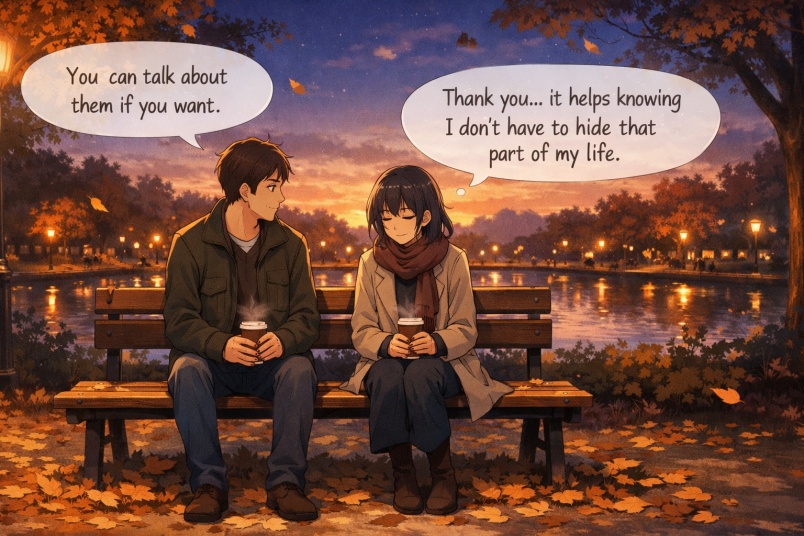
Invite your partner to share stories and memories of their late spouse. This not only shows that you’re comfortable with their past but also helps you understand them better. It’s an opportunity to see a fuller picture of the life they’ve lived and the experiences that have shaped them.
Here’s how you can approach it:
- Invite stories gently, without pressing for details.
- Respond with curiosity rather than insecurity.
- Thank them for trusting you with something personal.
RELATED READING : How to Share Your Feelings With Your Partner (Without Starting a Fight)
6. Be mindful of special dates
Be aware of significant dates, such as their late spouse’s birthday or wedding anniversary. These days can be challenging, and your support can mean a lot. Whether it’s offering a listening ear or giving them space, understanding their needs these days is essential.
Here’s how you can approach it:
- Ask in advance how they’d like to handle meaningful anniversaries.
- Offer options rather than assumptions, space, company, or distraction.
- Check in afterward, even if the day seemed to pass quietly.
7. Help create new memories
While it’s important to respect their past, it’s equally important to create new experiences and memories together. This helps in building a unique and separate foundation for your relationship that is forward-looking and hopeful.
Here’s how you can approach it:
- Suggest low-pressure experiences, such as short trips or shared hobbies.
- Celebrate “firsts” together without framing them as replacements.
- Let joy exist alongside grief without guilt.
8. Understand the role of family
Be mindful of the deceased spouse’s family. They, too, are grieving and might have strong emotions about their loved one’s partner moving on. Being sensitive and respectful toward these dynamics can prevent unnecessary complications.
Here’s how you can approach it:
- Stay respectful and neutral when discussing their late spouse’s family.
- Let your partner guide how involved you should be.
- Avoid forcing acceptance or timelines around family dynamics.
RELATED READING : The Importance Of Maintaining Healthy Family Relationships
9. Set realistic expectations
Understand that there may be ups and downs unique to dating a widow. Emotional setbacks don’t necessarily mean a lack of commitment or love on their part. Setting realistic expectations helps in handling these challenges more smoothly.
Here’s how you can approach it:
- Accept that emotional setbacks may happen unexpectedly.
- Don’t interpret distance as rejection without context.
- Communicate openly when you feel confused rather than withdrawing.
10. Seek support if needed
It’s okay to seek support for yourself. Dating a widow can be emotionally taxing, and at times, you might need guidance or a space to process your own feelings. Seeking support from friends, family, or a professional can be beneficial.
Here’s how you can approach it:
- Talk honestly with a trusted friend about your feelings.
- Consider counseling if emotions feel overwhelming or confusing.
- Give yourself permission to process your experience, too.
RELATED READING : Dating an Emotionally Unavailable Woman: Signs & How to Deal
Watch this video where Michelle Farris, a licensed psychotherapist, shares tips on how to be a supportive partner in a relationship:

11. Celebrate your relationship
Focus on the unique aspects of your relationship. Celebrate the love and connection you share. Every relationship has its own beauty and strengths, and it’s essential to recognize and cherish what makes yours unique.
Here’s how you can approach it:
- Acknowledge milestones that feel meaningful to both of you, big or small.
- Express appreciation regularly, in words, gestures, and shared moments.
- Build traditions that belong only to the two of you, reinforcing what makes your connection special.
FAQs
Handling the complexities of relationships involving widows or widowers often raises various questions. Below, we address some of the most frequently asked questions to provide clarity and insight.
-
Can a widower truly love again?
A widower can truly love again. While they may always hold a place in their heart for their late spouse, the human capacity for love is expansive.
Widowers can develop deep, meaningful connections with new partners. Love after loss requires understanding and patience, but it is entirely possible and can be wonderfully fulfilling.
-
How do you address a widowed woman?
When addressing a widowed woman, use the same respectful terms as you would with any other adult. Her marital status does not necessitate a special form of address.
If you know her preferred title (Ms., Mrs., or her first name), use that. It’s most important to respect her individual preferences and comfort.
-
What are the red flags when dating a widower?
Red flags when dating a widower include unresolved grief, constant comparisons to their late spouse, reluctance to introduce you to friends or family, and a lack of willingness to move forward in the relationship. These signs may indicate they are not yet ready for a new relationship.
-
Is it a sin to sleep with a widow?
The concept of sin varies significantly among different cultures and religions. In most secular and many religious contexts, sleeping with a widow is not considered a sin, provided it’s a consensual act between adults.
However, some religious beliefs may have specific guidelines about remarriage and relationships after a spouse’s death.
-
What is the average age of widowhood?
The average age of widowhood varies by country and gender. In the United States, the average age for a woman to become a widow is around 59 years old.
However, this age can vary significantly depending on factors such as health, socioeconomic status, and geographic location. Men typically become widowers at a slightly older age.
Final thoughts
Learning how to date a widow requires a blend of understanding, patience, and empathy. It’s a journey that can be as rewarding as it is challenging. Remember, every person’s experience with loss is unique, as is every relationship.
By being mindful of the past while nurturing a new love, a relationship with a widow can grow into a deeply fulfilling partnership.
Keep in mind that love, respect, and communication are the cornerstones of any successful relationship, and they hold especially true when dating someone who has experienced significant loss.
Helpful?
Continue exploring this topic

Marriage.com AI: Your Relationship Guide
Talk through what's on your mind.
Automated
YOU COULD START WITH
Share this article on
Kaida Hollister
Author
Kaida Hollister is a passionate relationship writer, renowned for her ability to shed light on the intricacies of love and human connection. With a deep understanding of psychology and personal growth, she has become known for her... Read more insightful and engaging writing on these subjects. When she’s not busy crafting thought-provoking articles, Kaida can often be found pursuing her love of dance. She is also an avid foodie and enjoys exploring new flavors and cuisines. With a curious and open-minded approach to life, Kaida is committed to helping readers deepen their understanding of themselves and their relationships. Read less

Marriage.com Community
Real people. Real relationships. No judgment.
How long do you give someone before deciding “this just isn’t working”?
Have you navigated this in your own relationship?
Your perspective could help thousands of couples.
See what people are saying
Your perspective could help thousands of couples.



Recent Articles


Related Quizzes





 We'd love your feedback!
 Thanks for your feedback!