




How to Deal With a Sexually Demanding Husband: 11 Tips

Reviewed By
Grady Shumway, LCSW
 Review Board Member
|
By
Licensed Clinical Social Worker
Review Board MemberGrady Shumway is a Licensed Clinical Social Worker in Utah. He earned his Master of Social Work Degree from Arizona State, along with his undergraduate degree from Utah State... Read More
Marriage.com Editorial Team

The Marriage.com Editorial Team is a group of experienced relationship writers, experts, and mental health professionals. We provide practical and research-backed advice on relationships. Our content is thoroughly reviewed by experts to ensure that we offer high-quality and reliable relationship advice.
Learn about Our Editorial Process
5k Reads
Updated: 15 Jun, 2026
Heal & Grow Daily for a Happier Relationship
Subscribe FREETable of Contents
View more
Key Takeaways
Learning how to deal with a sexually demanding husband can feel isolating, especially when you are not sure whether what you are experiencing is normal or how to even begin the conversation.
The truth is, mismatched desire is one of the most common tensions couples face, and it does not mean your relationship is broken. It means two people with different needs are trying to find each other.
This article walks you through why the gap exists, what it tends to feel like for both partners, and practical ways to work through it with honesty, care, and mutual respect.
Is It Normal for a Man to Want Sex Every Day?
Yes, it can be normal for a man to want sex every day. Libido varies widely from person to person, and factors like age, hormones, stress levels, emotional connection, and overall health all play a role.
This tracks with what researchers have found when studying desire directly.
Pamela and colleagues studied 676 men and women and found that men reported both stronger and more frequent sexual desire than women, a pattern that holds across multiple measures of drive and frequency.
For couples navigating different levels of desire, this research is a useful reminder that the gap is common, not a sign that something is wrong with either partner.
Please note:
Nothing about this makes you or your partner abnormal. With open conversations and mutual respect, couples can find a pace that feels comfortable and loving for both.
Why Do Men Want Sex So Often? 5 Common Reasons
Men’s desire for sex varies widely, shaped by hormones, emotional and physical health, lifestyle, and personal preferences. If you have been wondering why your husband’s drive is so high, these five factors help explain what is often going on beneath the surface.
1. Hormones
Testosterone, a hormone present in both men and women, plays a significant role in sexual desire. Men typically have higher levels of testosterone, which can influence their sex drive.
A research paper published in Frontiers in Public Health states that testosterone strongly influences male sexual desire, and higher levels can increase sexual thoughts, fantasies, and overall drive, explaining why some men may seek intimacy more frequently.
When testosterone levels are elevated, sexual thoughts and fantasies tend to become more frequent, which can partly explain why some husbands initiate more often than their partners expect.
2. Emotional and physical health
Men’s mental and physical health can also impact their sex drive. Stress, depression, anxiety, and other mental health conditions can reduce libido, while regular exercise, a healthy diet, and good sleep habits can enhance it.
Grady Shumway, LMHC, says understanding the link between health and libido can foster empathy and support in your relationship. Encourage open dialogue about mental and physical well-being to maintain a healthy, intimate connection.
If you think, “How to deal with a sexually demanding husband,” know that men’s physical health can also impact their sex drive, and underlying health conditions like high blood pressure, diabetes, and cardiovascular disease can affect sexual function.
RELATED READING : Managing the Emotional Health in a Relationship
3. Relationship satisfaction

Sexual desire does not exist in isolation from the relationship around it. When partners feel emotionally connected, loved, and respected, desire tends to rise naturally. When conflict or stress dominates, it often falls.
This two-way link means that investing in emotional closeness is one of the most direct ways to bring a couple’s intimacy needs into better alignment.
RELATED READING : 10 Characteristics of a Healthy Sexual Relationship
4. Personal preferences
Men’s sexual preferences can also impact their sex drive. Some men may enjoy sex more than others and may desire it more frequently.
Personal preferences such as the type of sexual activity, the frequency, and the intensity can vary, and it is important to communicate these preferences openly with one’s partner.
5. Culture and society
Men’s sex drive can also be influenced by cultural and societal factors. Messages from the media, peer pressure, and cultural norms can affect men’s attitudes towards sex and their desire for it. Men may also feel pressure to conform to traditional gender roles and expectations around sexual performance and frequency.
How to Deal With a Sexually Demanding Husband: 11 Practical Ways
Dealing with a sexually demanding husband can be a challenging situation for any woman. Here are ten ways to learn how to deal with a sexually demanding husband:
1. Communicate openly and honestly
If your husband wants sex every day, the first step in handling a sexually demanding husband is to have an open and honest conversation about how his demands make you feel and what you are comfortable with.
Grady Shumway adds that effective communication is key to any healthy relationship. By discussing your feelings openly and setting clear boundaries, you can work together to find a balance that honors both partners’ needs and fosters mutual respect.
It is essential to establish clear boundaries and have consistent communication about sex with them while maintaining respect for your partner’s desires. In learning how to deal with a sexually demanding husband, discuss ways to compromise and find a mutually satisfying solution that respects both your needs and desires.
- Quick tip: Start the conversation at a calm moment, not during or after conflict, to avoid defensiveness.
2. Prioritize self-care
It is crucial to prioritize self-care and take care of your mental and physical health. This may involve setting aside time for yourself to engage in activities that you enjoy, such as exercise, reading, or spending time with friends.
Taking care of yourself can help reduce stress and anxiety, which can impact your sexual desire and overall well-being.
- Quick tip: Schedule small daily rituals (like a 10-minute walk or quiet tea time) to refill your emotional energy.
RELATED READING : And Two Shall Become Two: Practicing Positive Self Care in Your Marriage
3. Seek professional help
If the gap in desire is causing real distress, working with a couples therapist or sex-positive counselor can give both partners a structured, neutral space to work through it.
A trained professional can help you navigate the complex emotions and issues that arise from a sexually demanding relationship and provide you with the right marriage advice and tools to understand why your husband wants sex every day
- Quick tip: Look for therapists who specialize in couples or sexual health for more tailored guidance.
4. Establish clear boundaries
Clear relationship boundaries in intimacy work best when they are specific and expressed calmly, not in the middle of a heated moment. For example, if you are not comfortable with a particular sexual act or frequency, make it clear to your husband and set limits. Consistently enforcing your boundaries can help establish trust and respect in your relationship.
- Quick tip: Use “I” statements, like “I feel overwhelmed when…”, to make boundary-setting easier and less confrontational.
RELATED READING : What Are “I” Statements in Relationships? Benefits & How to Use
5. Explore alternative forms of intimacy
If you are not comfortable with frequent sexual activity, exploring alternative forms of intimacy, such as cuddling, kissing, or holding hands, can help maintain emotional closeness and intimacy in your relationship.
Discuss with your partner ways to be intimate without engaging in sexual activity, and find other ways to show affection and care for each other.
- Quick tip: Create a list of non-sexual intimate activities you both enjoy to revisit anytime pressure builds.
6. Prioritize emotional intimacy
Emotional intimacy is essential in any healthy relationship. Prioritize spending quality time with your husband, engaging in activities that you both enjoy, and fostering an emotional connection.
Building emotional intimacy can help reduce the pressure to engage in sexual activity and increase satisfaction in your relationship.
- Quick tip: Set aside at least 15–20 minutes daily for distraction-free bonding or meaningful conversation.
RELATED READING : Emotional Intimacy vs Physical Intimacy: Why We Need Both
7. Take time to understand your husband’s needs
Understanding what is driving your husband’s desire can shift the conversation from frustration to curiosity, and that shift alone often changes the dynamic.
Take the time to understand your husband’s perspective and communicate your own needs and desires in a clear and respectful way.
- Quick tip: Ask gentle questions like, “What makes intimacy meaningful to you?” to understand the deeper reason behind his desire.
8. Use positive reinforcement
Positive reinforcement can help encourage desirable behavior in your husband. Praise and thank your husband when he respects your boundaries or shows sensitivity to your needs.
A research paper published in the Journal of Positive Psychology states that expressing gratitude strengthens relationships most when partners feel the gratitude is genuine and responsive, leading to greater closeness, satisfaction, and emotional connection.
Positive reinforcement can help build trust and respect in your relationship and foster a more supportive and caring dynamic.
- Quick tip: A simple “I appreciated that you checked in with me first” can strengthen trust instantly.
9. Practice mutual consent
Mutual consent is crucial in any sexual relationship. Mutual consent means both partners feel comfortable and safe, not just at the start of an intimate moment, but throughout. If you feel uncomfortable or overwhelmed, it is your right to say no.
Consistently practicing mutual consent can help establish trust and respect in your relationship and ensure that both partners’ needs and desires are being met.
- Quick tip: Create a shared phrase like “Let’s pause” to gently stop or slow things when needed.
Watch this TED Talk by Cheryl Bradshaw, relationship educator, who shares how consent involves ongoing communication, respect, and awareness not just a simple “yes” or “no.”

10. Seek support from friends and family
Talking to a trusted friend or family member can provide perspective and emotional relief when you are feeling stretched thin. It can also provide you with a safe space to vent your emotions and gain perspective on the situation.
However, it is important to be cautious about who you share information with and maintain appropriate boundaries to avoid any unintended negative consequences.
Thinking about how to deal with a sexually demanding husband? It can be a challenging situation, but it is essential to prioritize your well-being and establish healthy boundaries.
- Quick tip: Share only with someone trustworthy. Emotional maturity is more important than quantity in support.
11. Understand your own sexual needs and patterns
Sometimes, navigating a sexually demanding partner becomes easier when you have a clear understanding of your own sexual needs, triggers, energy levels, and boundaries. Reflecting on how stress, fatigue, hormones, emotional connection, or daily routines affect your desire can help you communicate more confidently and honestly.
When you recognize your own patterns, it becomes easier to express what feels good, what doesn’t, and what pace works best for you, creating a healthier dynamic for both partners.
- Quick tip: Try journaling your feelings and energy levels for a week to notice patterns in your comfort and desire.
5 Common Mistakes to Avoid When Navigating Mismatched Libido
Even with the best intentions, a few missteps can make a difficult dynamic harder. Here are the most common ones that can happen when handling a mismatched libido
- Avoiding the conversation altogether. Silence rarely resolves a desire gap — it tends to widen it. Even an awkward, imperfect conversation is more productive than months of unspoken tension.
- Framing it as your problem or his problem. A mismatch in libido is a couple’s challenge, not a character flaw in either partner. Language like “you always want sex” or “you never want me” tends to trigger defensiveness rather than understanding.
- Agreeing to intimacy when you are not willing. Saying yes when you mean no to keep the peace or avoid marital conflict in intimacy can build resentment over time and erode the mutual respect that healthy intimacy depends on.
- Assuming his desire is only physical. For many men, sexual connection is also how they experience emotional closeness. Recognizing this does not mean you are obligated to meet every request, but it can help you respond with more empathy.
- Waiting until the conflict peaks to address it. Boundary conversations land better when they happen during calm, connected moments, not after an argument or a rejected advance.
FAQs
When intimacy needs differ in a relationship, it’s natural to have questions about what’s normal, how to communicate, and how to find balance. These quick answers to why the husband wants sex every day offer support and clarity.
Is it unhealthy if my husband wants sex more often than I do?
No, a difference in sexual desire between partners is common and does not indicate a problem with either person. Libido is shaped by hormones, stress, sleep, emotional connection, age, and dozens of other factors that shift over time.
What matters most is not whether your drives match but whether you can talk about the gap with honesty and mutual respect.
Couples who address desire differences openly tend to find workable solutions; couples who avoid the topic tend to accumulate resentment. The conversation itself is usually the turning point.
What if talking about sex feels awkward or uncomfortable?
That discomfort is normal, and it does not mean the conversation cannot happen; it just means it may need some scaffolding. Start outside the bedroom, at a time when neither of you is tired or stressed.
Keep the first conversation short and low-stakes: you are not trying to solve everything at once, just opening a door. "I" statements help. "I have been thinking about how we talk about intimacy" is an easier opener than launching into specific concerns.
Over time, small conversations build the comfort that makes bigger ones possible. A few sessions with a couples therapist can also give you both a structured, safe space to practice.
Can a mismatched libido damage a marriage?
It can, but it does not have to. The mismatch itself is rarely what causes lasting damage — it is the way couples respond to it that matters.
When one partner feels constantly rejected, and the other feels constantly pressured, and neither feels heard, that cycle erodes trust and emotional closeness over time.
The good news is that couples who name the dynamic and work on it through communication, compromise, or professional support consistently report improvements in both intimacy and overall relationship satisfaction.
How do I set limits around sex without hurting my husband's feelings?
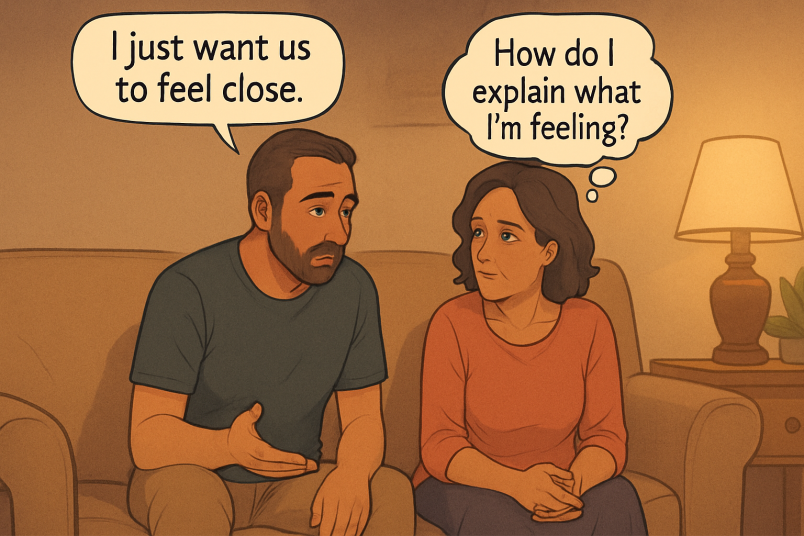
Framing matters enormously here. A boundary expressed as rejection ("I do not want to") lands differently than one expressed as redirection ("I am not up for sex tonight, but I would love to just be close").
Leading with what you can offer, physical closeness, emotional connection, and a specific alternative, helps your husband hear the limit without interpreting it as a withdrawal of love.
Being consistent also helps: when your husband knows where your limits are, he is less likely to experience each "no" as a new surprise. If he responds to limits with guilt, pressure, or withdrawal, that pattern is worth addressing directly or with a professional.
When does a high sex drive become a concern worth addressing?
A high drive is not inherently a problem, but it may be worth exploring if it feels compulsive to your husband, if it is causing distress for either of you, or if it is significantly affecting other areas of life.
Some men experience hypersexuality linked to anxiety, stress, or other underlying factors that respond well to therapy.
If your husband is open to it, a conversation with a sex-positive therapist or his doctor can help clarify whether what he is experiencing is within the range of typical variation or whether some support would be useful.
Framing this as care for him rather than criticism of his behavior tends to make the conversation easier to start.
A Shared Path
Knowing how to deal with a sexually demanding husband is less about having the perfect answer and more about building the kind of relationship where both partners feel safe enough to be honest.
Desire differences are common, and they rarely resolve on their own. What moves couples forward is a willingness to talk, to listen, and to find a rhythm that works for both people.
Small, consistent efforts open conversations, clear limits, and moments of non-sexual closeness tend to matter more than grand gestures. If the gap feels too wide to bridge alone, a couples therapist can help you find your way through it together.
Helpful?
Continue exploring this topic

Marriage.com AI: Your Relationship Guide
Talk through what's on your mind.
Automated
YOU COULD START WITH
Share this article on
Marriage.com Editorial Team
Relationship & Marriage Advice
The Marriage.com Editorial Team is a group of experienced relationship writers, experts, and mental health professionals. We provide practical and research-backed advice on relationships. Our content is thoroughly reviewed by experts... Read more to ensure that we offer high-quality and reliable relationship advice. Read less

Marriage.com Community
Real people. Real relationships. No judgment.
How do couples survive big life stress without turning on each other?
Have you navigated this in your own relationship?
Your perspective could help thousands of couples.
See what people are saying
Your perspective could help thousands of couples.



Recent Articles



Related Quizzes









 We'd love your feedback!
 Thanks for your feedback!
 Expert Q&A
Ask your question related to this topic & get the support you deserve from experts.