




7 Stages of Grief After a Breakup (& How to Move On)

Reviewed By
Grady Shumway, LCSW
 Review Board Member
|
By
LCSW
Review Board MemberGrady Shumway is a Licensed Clinical Social Worker in Utah. He earned his Master of Social Work Degree from Arizona State, along with his undergraduate degree from Utah State... Read More
Draven Porter, Author

Esteemed relationship writer Draven Porter explores human connection complexities. With a psychology background, his writing offers powerful insights and thoughtful analysis.
Learn about Our Editorial Process
100 Reads
Updated: 3 Jan, 2026
Heal & Grow Daily for a Happier Relationship
Subscribe FREETable of Contents
View more
Key Takeaways
Breakups can feel like a storm that leaves your heart scattered in a thousand little pieces. One moment you’re angry, the next you’re numb… and then suddenly, you’re missing everything you tried so hard to forget.
It’s confusing, exhausting, and so very human. These emotional waves aren’t random—they’re part of the stages of grief after a breakup; each one slowly guiding you toward healing, even when it doesn’t feel that way.
So, take a deep breath, give yourself some grace, and remember—grief doesn’t mean weakness; it means you cared, and you’re learning to let go.
What is grief after a breakup?
Grief after a breakup is the deep emotional pain and sense of loss that follows the end of a romantic relationship. It’s a natural reaction to losing someone who was once a major part of your life, filled with feelings like sadness, confusion, anger, and emptiness.
A research paper published in 2014 states that romantic rejection activates brain regions related to physical pain and craving, suggesting that grief breakup have both emotional and neurobiological components.
Just like mourning a loved one, your mind and heart go through stages of adjustment as you try to make sense of what happened and find balance again.
Example: Someone who used to talk to their partner every day suddenly faces silence. Even small routines—like morning texts or shared playlists—can trigger waves of grief because the emotional connection and daily comfort have been disrupted.
Please note:
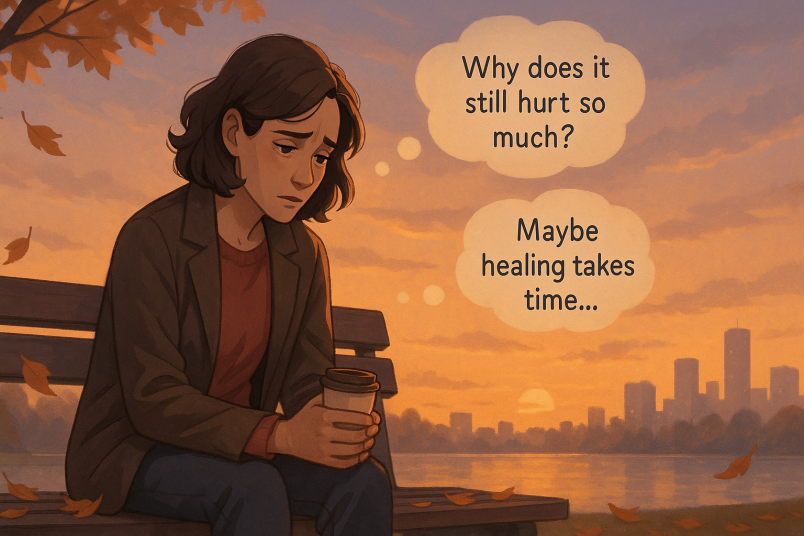
It’s okay if it still hurts; healing isn’t linear. Give yourself time, surround yourself with kindness, and remember—you will feel whole again. Every step, no matter how small, is part of moving through the stages of grief after a breakup.
7 stages of grief after a breakup
The end of a relationship can trigger a profound grieving process, akin to mourning a profound loss. This journey through the stages of grief after a breakup is both unique and universal, encompassing a wide range of emotions that facilitate healing and personal growth.
Understanding the stages of grief after a breakup is essential for anyone going through this challenging process.
1. Shock and denial
In the initial aftermath, shock and denial serve as a protective blanket, numbing the immediate pain of the breakup. This stage allows individuals to process the reality of their situation gradually, buffering the emotional impact.
- Chapter 1: When Emma’s relationship ended, she kept checking her phone, convinced he’d text any moment, saying it was all a mistake. This disbelief, a natural part of grief, gently shielded her from the full impact of loss.
2. Pain and guilt
As the shock wears off, it’s replaced by profound pain and, often, guilt. Questions of “what if” and “if only” may dominate, with individuals ruminating on what could have been done differently to prevent the breakup.
- Chapter 2: As reality sank in, Emma felt a deep ache in her heart, whispering, “What if I had tried harder?” Guilt and sadness intertwined, making her question every choice she had made.
3. Anger and bargaining
Anger can manifest towards oneself, the ex-partner, or the situation. Bargaining may also occur, with individuals making internal promises or appeals to a higher power in hopes of reversing the situation.
- Chapter 3: Anger rose like a wave—at him, at herself, at everything that went wrong. Then came bargaining, the silent hopes and late-night prayers wishing for one more chance to fix things.
According to Grady Shumway, LMHC:
These reactions are normal parts of the healing process, and acknowledging them without judgment can help ease their intensity. With time and support, people often move through these emotions toward greater clarity and acceptance.
4. Depression, reflection, loneliness

This stage marks a deeper level of processing, where the full extent of the loss is felt, often leading to periods of sadness, isolation, and introspection about the stages of relationship grief.
- Chapter 4: In the quiet of her room, loneliness wrapped around Emma like a heavy blanket. She replayed memories, reflected on her mistakes, and realized how deeply love and loss are intertwined in the different stages of grief after a breakup.
5. The upward turn
Gradually, the intensity of grief starts to lessen. Clarity begins to emerge, and the emotional turmoil subsides, making way for a more stable period of healing and reflection.
- Chapter 5: Slowly, light began to return. Emma noticed laughter coming more easily, mornings feeling less heavy. The fog of pain started to lift, revealing small moments of peace.
RELATED READING : How to Get Over a Breakup: 25 Ways to Move On
6. Reconstruction and working through
During this stage, individuals start to put the pieces of their life back together, actively working through the emotional and practical aspects of their lives without their partner.
- Chapter 6: Emma began rebuilding—taking long walks, writing, rediscovering who she was outside the relationship. Healing turned from survival to growth as she started shaping a new version of herself.
RELATED READING : How to Love Yourself After a Breakup? 10 Effective Ways
7. Acceptance and hope
The final stage is acceptance, where individuals come to terms with the reality of their situation. This stage is marked by a renewed sense of hope for the future, and the strength gained from having navigated the stages of grief after a breakup.
- Chapter 7: Finally, Emma found peace in her heart. She could think of him without pain, recognizing that endings are not failures but transitions. With quiet strength, she stepped forward—ready to love and live again through the final stage of the stages of grief after a breakup.
Please note:
If you see yourself in Emma’s journey, know that it’s okay to take your time. Healing doesn’t follow a schedule, and your emotions don’t make you weak—they make you human. You are healing, even when it doesn’t feel like it yet.
How long does grief last after a breakup?
The duration of grief after a breakup varies significantly among individuals, influenced by factors such as the relationship’s depth, the circumstances of the breakup, and personal coping mechanisms. Research suggests there’s no one-size-fits-all timeline for healing.
A study published in the Journal of Positive Psychology found that most people start to see emotional recovery approximately 11 weeks after a breakup.
The key is allowing oneself to grieve fully while seeking support and engaging in self-care practices.
7 mindful ways to overcome the stages of grief after a breakup
Overcoming these stages involves actively engaging in self-care, seeking support, and adopting coping strategies that facilitate emotional recovery. Here are seven ways to help you move through and ultimately overcome the stages of grief following a breakup.
1. Allow yourself to feel
Suppressing your emotions can delay the healing process. Allow yourself to feel the full range of emotions without judgment. Acknowledging your feelings is the first step towards processing them and moving forward.
How to start:
- Write in a journal daily, describing how you truly feel.
- Listen to music that mirrors your emotions to help release them.
- Practice mindful breathing when sadness or anger feels overwhelming.
Grady Shumway highlights that:
Giving yourself permission to feel creates space for genuine healing rather than avoidance. When emotions are acknowledged rather than pushed down, they tend to move through you more gently and with greater clarity.
2. Seek support
Lean on friends, family, or a support group who can offer empathy and understanding. Sharing your experiences and feelings with others can provide comfort, reduce feelings of isolation, and offer new perspectives on your situation.
How to start:
- Call or meet a close friend and talk honestly about how you’re coping.
- Join an online or local breakup support group.
- Share your thoughts with a family member who listens without judgment.
3. Practice self-care
Prioritize your well-being by engaging in activities that nurture your physical, emotional, and mental health. Whether it’s exercise, meditation, or pursuing hobbies, self-care is crucial for rebuilding your sense of self and enhancing your resilience.
How to start:
- Set a daily self-care ritual (e.g., morning walk, warm bath, journaling).
- Eat balanced meals and get enough sleep.
- Try a new hobby that brings you joy and relaxation.
4. Reflect and learn
Use this time for introspection to reflect on the relationship and your personal growth. Identifying lessons learned can provide closure and help you understand what you desire and need in future relationships.
How to start:
- Write down lessons you’ve learned about yourself and love.
- Identify patterns you don’t want to repeat in future relationships.
- Ask yourself what kind of partner and connection you truly need.
5. Set boundaries
If necessary, establish boundaries with your ex-partner, such as limiting contact or social media interaction, to protect your emotional well-being and facilitate the healing process.
How to start:
- Unfollow or mute your ex on social media if it triggers pain.
- Avoid unnecessary contact until you feel emotionally stable.
- Communicate boundaries kindly but firmly if interaction is unavoidable.
6. Reconnect with yourself
Rediscover who you are outside of the relationship by exploring new interests, reconnecting with old hobbies, or setting personal goals. This can be a powerful way to regain your sense of individuality and confidence.
How to start:
- Revisit old hobbies or activities you once loved.
- Set new personal or career goals for the next few months.
- Spend quiet time alone—read, walk, or meditate—to reconnect with your inner self.
Watch this TED Talk by Gary Lewandowski Jr., a psychology professor, who shares how break-ups can become opportunities for growth and self-rediscovery.

7. Consider professional help
If you find it challenging to move through the stages of grief, consider seeking help from a therapist or counselor. Professional support can provide strategies to cope with your emotions, work through unresolved issues, and start a new chapter in your life.
How to start:
- Research local therapists or online counseling platforms.
- Schedule a consultation to discuss your emotions and challenges.
- Practice the coping strategies your therapist suggests consistently.
FAQs
Handling the aftermath of a breakup brings forth a multitude of questions, reflecting the complex nature of love, loss, and healing. Understanding these dynamics can offer solace and clarity during a tumultuous time.
-
How do you know if you still love someone?
You know you still love someone if thoughts of them bring a profound emotional response, their happiness is still important to you, and you find yourself hoping for a reconnection despite the breakup. Lingering feelings often indicate unresolved love.
-
Can a heartbreak traumatize you?
Yes, a heartbreak can lead to emotional trauma, especially if the relationship was intense and the breakup was unexpected. The profound sense of loss and rejection can trigger symptoms similar to post-traumatic stress, affecting one’s emotional well-being and perception of future relationships.
-
What is the no-contact rule?
The no-contact rule is a self-imposed period of complete silence between you and your ex-partner, including no calls, texts, or social media interactions. This boundary is meant to help both parties emotionally detach, heal, and gain clarity on the relationship without interference.
Healing takes time
Heartbreak doesn’t disappear overnight—it softens, reshapes, and eventually transforms you. Each emotion, from pain to acceptance, serves a purpose in rebuilding your strength and self-awareness.
By embracing the journey through grief, seeking support, and showing compassion to yourself, you begin to rediscover hope and meaning. Remember, healing isn’t about forgetting the past; it’s about finding peace within it.
One day, you’ll look back and realize—you didn’t just survive the breakup, you grew from it, stronger and more open to love than before.
Helpful?
Continue exploring this topic

Marriage.com AI: Your Relationship Guide
Talk through what's on your mind.
Automated
YOU COULD START WITH
Share this article on
Draven Porter
Author
Draven Porter is an esteemed relationship writer who delves deep into the complexities of human connection. With a background in psychology, Draven’s writing is known for its powerful insights and thoughtful analysis. When not... Read more writing, Draven can be found exploring his passion for music and attending concerts. Draven’s unique perspective on relationships is rooted in his fascination with different cultures and he enjoys immersing himself in new experiences through travel and trying out exotic cuisines. Read less

Marriage.com Community
Real people. Real relationships. No judgment.
How do couples survive big life stress without turning on each other?
Have you navigated this in your own relationship?
Your perspective could help thousands of couples.
See what people are saying
Your perspective could help thousands of couples.



Recent Articles


Related Quizzes








 We'd love your feedback!
 Thanks for your feedback!