




Improving Communication With a Passive Aggressive Spouse

By
Dr. Marion Rollings
, Psychologist
, Psychologist
Dr. Marion Rollings is a licensed psychologist with offices in Hillsborough and Bound Brook, New Jersey. She works with multicultural couples and families using an integrative,... Read more
Learn about Our Editorial Process
6.1k Reads
Updated: 30 Sep, 2026

Heal & Grow Daily for a Happier Relationship
Subscribe FREETable of Contents
View more
Key Takeaways
Are you upset with me?”
“I’m fine.” (Cue the slammed cupboard.)
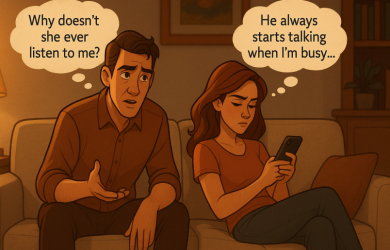
You can tell something’s wrong, but you’re told nothing is. Living with that gap can leave you second-guessing yourself and tiptoeing around your own home.
A passive-aggressive spouse expresses anger indirectly, through silence, sarcasm, “forgetting,” or backhanded comments, instead of saying what’s wrong. The most helpful response is usually calm and direct. Name what you notice, ask what’s underneath, and make it safe for them to say no.
Below, you’ll find what this behavior looks like, what to say in the moment, 8 common signs, and how to deal with a passive-aggressive spouse without turning every conversation into a fight.
What Does It Mean To Have A Passive-Aggressive Spouse?
It means your spouse often shows anger or resentment indirectly instead of saying it out loud. The frustration is real, but it comes out sideways.
- What it sounds like: “Fine.” “Whatever you want.” “I was only joking.”
- What it looks like: Silence, sighs, slammed doors, or tasks left undone.
- What’s usually underneath: Anger, hurt, or resentment that feels unsafe to say directly.
Passive-aggressive behavior in relationships is often a learned habit rather than a plan to hurt you. That doesn’t make it okay, but it can make it easier to address.
What To Say Instead Of Reacting To Passive-Aggressive Comments
Passive-aggressive communication can pull you into guessing games or sharp comebacks. A calm, direct reply usually keeps the door open. Here are some everyday examples:
Situation Reactive reply Calm, direct reply
They say "fine" and slam a cupboard Fine. Be that way. You seem upset. I'd like to hear about it whenever you're ready.
They've gone quiet since last night Great, the silent treatment again. Things have felt tense since last night. Can we talk about it later today?
They agreed to a plan, then didn't show up You never do what you say. I was counting on you tonight. If you didn't want to go, I'd rather you tell me.
A compliment comes with a dig Wow, thanks a lot. Thanks. The 'for once' part stung, though. What did you mean?
They joked about you in front of friends At least I'm not the one who... (Later, in private) "That story at dinner embarrassed me. I'd like us to keep things like that between us."
If your spouse brushes it off or says you’re too sensitive, you don’t have to argue the point. Say how it felt, and that you’d like to talk when they’re ready.
8 Signs Of A Passive-Aggressive Spouse (& How To Deal)
Everyone slips into indirect frustration now and then. What matters is a pattern. These signs of passive-aggressive behavior tend to show up together, and each one comes with a few ways to respond.
1. They say “fine” when it isn’t
You ask what’s wrong and hear “nothing” or “I’m fine,” but the cupboard doors say otherwise. The words and the mood don’t match. Denying the feeling keeps them from having to name it, and it leaves you guessing about what actually went wrong.
Nickola Overall and colleagues, publishing in the Journal of Personality and Social Psychology, studied 61 romantic couples trying to change something about each other. Direct requests felt less successful in the moment but were predicted to lead to more change over the next 12 months.
Positive but indirect approaches felt better at the time and didn’t predict later change.
How to deal with it
- Name what you notice without accusing, like mentioning that they seem upset.
- Give them room to answer later if they aren’t ready to talk now.
- Skip the guessing games, and don’t try to force a confession.
2. They give you the silent treatment

Instead of saying they’re angry, they go quiet for hours or days. They answer in single words, avoid eye contact, or leave the room when you come in. The silence sends a message, but it never says what the problem is or how to fix it.
Holding back is more common than many couples realize.
A 2026 Marriage.com survey of 2,399 US adults in committed relationships found that 70% avoid at least one major relationship conversation, most often citing fear of reactions (29.8%) or of harming the relationship (29.2%).
When speaking up feels risky, frustration can come out sideways instead.
How to deal with it
- Say once that you’ve noticed the silence and you’re ready to talk when they are.
- Resist following them from room to room to get an answer.
- Keep up everyday kindness, so the silence doesn’t turn into a standoff.
RELATED READING : Silent Treatment in a Relationship: Signs & How to Respond
3. They agree to things, then don’t follow through
They say yes to the plan, the chore, or the dinner with your friends, but it never quite happens. Agreeing avoids an argument in the moment. Not following through lets them say no without saying it, which leaves you feeling like you can’t count on them.
How to deal with it
- Ask whether they actually want to do it before you lock in the plan.
- Make it clear that an honest “no” is welcome.
- Agree on a specific time or detail, so there’s less room for vagueness.
RELATED READING : 12 Key Tips to Promote Open Communication in a Relationship
4. They “forget” or delay things that matter to you
The errand you asked about three times, the call they were going to make, the form that’s still unsigned. Everyone forgets sometimes. The difference is a pattern: the delays cluster around things that matter to you, often right after a disagreement.
How to deal with it
- Notice whether delays follow a conflict, and mention the timing gently.
- Talk about the pattern in a calm moment, not when something’s been missed.
- Decide together what happens when a task slips, like handing it back or doing it side by side.
5. Their compliments come with a sting
You hear praise with a twist: “Nice dinner, for once,” or “You look great, did you finally get some sleep?” These backhanded compliments let criticism slip in under something that sounds kind, so it’s hard to object without seeming touchy.
How to deal with it
- Thank them for the kind part, then calmly ask about the rest.
- Ask what they meant by the second half, in a curious rather than sharp tone.
- Later, when you’re both calm, tell them how those comments land for you.
6. They use sarcasm or “just kidding” to criticize
A pointed joke, followed by “relax, I’m kidding,” lets someone say something hurtful and then deny it. If you react, you’re told you can’t take a joke. Over time, it becomes hard to know which comments are playful and which are real complaints.
How to deal with it
- Say that the joke stung, even if it wasn’t meant to.
- Ask whether there’s a real complaint underneath that they’d like to talk about.
- Keep your own humor kind, so it doesn’t turn into a contest.
RELATED READING : 17 Signs of a Critical Spouse (And How to Cope)
7. They pull back affection when they’re upset
When something bothers them, the hugs, texts, and small check-ins stop. They may turn away in bed or go cool without saying why. Withdrawing affection can work as a quiet punishment, and it often leaves you trying to figure out what you did.
How to deal with it
- Mention the change in warmth without blaming, and ask if something’s on their mind.
- Keep offering your own affection, without chasing or pleading.
- Talk about what each of you needs when you’re upset, so pulling away isn’t the only signal.
8. They make digs about you in front of others
At a party or family dinner, they share a story that embarrasses you or joke about your habits. It’s framed as teasing, but it’s aimed. Criticism in public is hard to answer on the spot, which is part of what makes it sting.
How to deal with it
- Stay calm in the moment, and change the subject if you need to.
- Bring it up privately afterward, describing what was said and how it felt.
- Agree on a clear boundary that private complaints stay private.
Watch this TED Talk by Jay Johnson, a behavioral specialist, who shares practical ways to understand difficult people and handle challenging interactions effectively.

When Staying Calm And Direct Isn’t The Right Move
If you ever feel unsafe with your partner, help is available. You can reach the National Domestic Violence Hotline by calling 800.799.SAFE (7233), chatting with an advocate at thehotline.org, or texting START to 88788. If you’re in immediate danger, call 911.
The advice above assumes a passive-aggressive spouse who is avoiding conflict, not trying to control you. Sometimes indirect behavior is part of a bigger pattern.
It may be more serious when a passive-aggressive partner also:
- Cuts you off from friends or family.
- Sabotages your work, sleep, or plans on purpose.
- Controls or withholds money.
- Humiliates you regularly, in private or in public.
- Uses silence to punish you until you give in.
- Leaves you afraid of how they’ll react.
In that situation, calm, direct conversations alone may not be safe or enough.
If this sounds familiar, you might speak with a counselor on your own, or with an advocate:
- Your options. Some people choose to work on the relationship with professional support. Some choose to leave. Both are legitimate paths, and only you can weigh your own situation.
- Safety planning. An advocate can explain what safety planning generally involves, such as thinking ahead about who you’d contact and where you could go if you needed to.
FAQs
Still have questions about indirect anger in your marriage? Here are answers to some of the most common ones, from whether it counts as abuse to when outside support might help.
Often, yes, when they're willing. Saying feelings directly is a skill that can be learned, and it tends to come more easily when it feels safe to disagree. Change usually takes time, and a counselor can help. Notice whether you say "fine" when you're not, go quiet instead of explaining, or let tasks slide when you're annoyed. Try naming one small frustration directly this week and see how it feels. Not necessarily. Addressing every remark can feel like constant criticism. Focus on the patterns that affect you most, and raise them at calm moments. It may help if the same pattern keeps repeating, resentment is building on either side, or conversations keep ending in silence. A counselor can help you both find more direct ways to talk. Can a passive-aggressive spouse change?
How do I know if I'm the passive-aggressive one?
Should I call out every passive-aggressive comment?
When should we try couples counseling?
Saying It Directly
Living with a passive-aggressive spouse can feel like reading between the lines all day. You can’t control how your spouse expresses anger, but you can change how you respond. Name what you notice, ask what’s underneath, and make it safe to say no.
Pick one sign from this list to address calmly this week. If things don’t shift, or the behavior feels controlling, reaching out to a counselor is a strong next step.
Helpful?
Continue exploring this topic

Marriage.com AI: Your Relationship Guide
Talk through what's on your mind.
Automated
YOU COULD START WITH
Share this article on
Dr. Marion Rollings
Psychologist
 Reviewed by
Marriage.com Community
Real people. Real relationships. No judgment.
How do I talk to my partner about something that bothers me without sounding like I’m attacking them? Every time I try, it blows up.
Have you navigated this in your own relationship?
Your perspective could help thousands of couples.
See what people are saying
Your perspective could help thousands of couples.
Related Articles


Recent Articles



Related Quizzes







 We'd love your feedback!
 Thanks for your feedback!