




7 Examples of Exposure Hierarchy to Overcome Relationship Fears

By
Marriage.com Editorial Team
The Marriage.com Editorial Team is a group of experienced relationship writers, experts, and mental health professionals. We provide practical and research-backed advice on relationships. Our content is thoroughly reviewed by experts to ensure that we offer high-quality and reliable relationship advice.
Learn about Our Editorial Process
100 Reads
Updated: 10 Aug, 2026

Heal & Grow Daily for a Happier Relationship
Subscribe FREETable of Contents
View more
Key Takeaways
Ever notice how the fear of getting close to someone can sneak up on you, even when you want closeness more than anything?
Maybe it’s the thought of saying “I love you” first, or sharing something a little too personal, a little too soon. That tightness in your chest isn’t weakness; it’s just your nervous system trying to protect you. The good news is, fear doesn’t have to run the show forever.
With a few thoughtful, gradual steps, it’s possible to build real comfort where there used to be avoidance. That’s exactly what exposure hierarchy examples can offer: a gentle roadmap for facing what scares you, one small moment at a time.
Slowly, courage starts to feel less like a leap and more like… a series of small, doable steps.
What Is an Exposure Hierarchy?
An exposure hierarchy is basically a list of feared situations, ranked from “not too scary” to “okay, this one’s a lot.” It comes from exposure therapy, a cognitive behavioral approach where facing small fears first builds the confidence to handle bigger ones later.
In relationships, this might mean starting with something as small as sharing a preference out loud, then working up to deeper vulnerability over time.
And that gradual opening up, that willingness to be seen incrementally, turns out to be one of the most foundational things on which a relationship can be built.
Bakshi and Ansari, publishing in the Cyprus Turkish Journal of Psychiatry and Psychology, examined the role of vulnerability in romantic relationships and found that vulnerability functions as a key mechanism through which authentic connection, emotional intimacy, and genuine self-disclosure develop between partners, with greater openness linked to deeper and more fulfilling relational bonds.
The beauty of exposure hierarchy steps is that they’re personal; there’s no rush, no pressure to “just get over it.” Just steady, gentle progress, one level at a time.
7 Examples of Exposure Hierarchy to Overcome Relationship Fears
Fear doesn’t disappear overnight, but it can shrink, gradually, safely, one step at a time. That’s the whole idea behind exposure hierarchy examples: they turn a scary feeling into something manageable, something you can actually work through instead of avoiding.
Below are 7 real-life ways couples and individuals use this method to face relationship fears without feeling overwhelmed.
1. Fear of emotional vulnerability

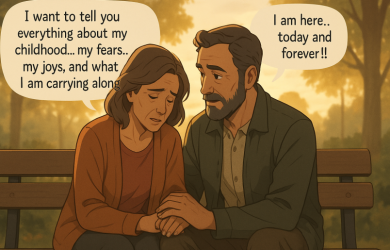
This one starts small, almost too small to feel like progress at first. Maybe it’s admitting you had a rough day, or sharing a small preference you’d normally keep to yourself.
Over time, the steps get bigger; you might open up about a childhood memory, or admit you’re scared of being hurt again. These fear hierarchy examples work because they don’t ask for everything at once.
Instead, they build trust slowly, layer by layer, until vulnerability starts to feel less like danger and more like connection.
Here’s how it works:
- Start by sharing one small, low-risk feeling each day, like naming a mood out loud
- Gradually work up to sharing a memory or fear you’ve never voiced before
- Notice how your partner responds, and let that safety guide your next step
RELATED READING : Why Vulnerability in Relationships Matters: 17 Benefits
2. Fear of conflict
Conflict feels risky, especially if arguments used to mean something bad growing up. So the first “rung” might just be disagreeing about dinner plans! From there, you move up, maybe expressing a small frustration, then eventually having a harder conversation about needs or boundaries.
This is often used in the exposure hierarchy for anxiety, since conflict avoidance and anxious tension go hand in hand. Slowly, disagreement starts to feel survivable… even productive.
Here’s how it works:
- Practice disagreeing on something minor, like which movie to watch
- Voice a small frustration before it builds into resentment
- Work toward a real conversation about needs, using “I feel” statements
3. Fear of rejection
Rejection fear can quietly shrink a person’s world; it stops them from asking, sharing, or reaching out at all. A gentle starting point might be asking a partner for a small favor, something low stakes, like picking a restaurant.
From there, the steps build toward bigger, more vulnerable requests, like asking for reassurance or expressing a need directly. These exposure hierarchy examples remind us that rejection, while uncomfortable, rarely feels as catastrophic as it does in our heads.
Here’s how it works:
- Ask for something small first, like help with a task or a restaurant pick
- Slowly increase the emotional stakes, like asking for quality time together
- Practice sitting with discomfort if the answer is “no,” without spiraling
RELATED READING : How to Overcome Fear of Rejection in Any Aspect of Life
4. Fear of physical intimacy
Physical closeness can feel loaded, especially after past hurt or trauma. So this hierarchy often begins with something simple, holding hands, or sitting close on the couch. Gradually, it moves toward hugging, longer touch, and eventually deeper physical intimacy, whenever both people feel ready.
Fear of intimacy is far more common than most people openly acknowledge, and understanding where it comes from is the first step toward moving through it.
Vangelisti and Beck, in a chapter published in Low-Cost Approaches to Promote Physical and Mental Health, explored the dual nature of intimacy as both deeply sought and deeply feared, noting that difficult childhood experiences and failed adult relationships often reinforce the belief that closeness is inevitably paired with pain or disappointment.
These exposure hierarchy examples pair well with an exposure therapy hierarchy examples framework, since pacing and consent matter just as much as progress. There’s no rush here; just steady, respectful steps forward.
Here’s how it works:
- Begin with low-pressure touch, like holding hands or sitting close
- Extend to longer hugs or cuddling, only when it feels comfortable
- Check in with each other often, keeping consent part of every step
5. Fear of commitment
Commitment fear often shows up as “what if this doesn’t work out?” looping quietly in the background. A gentle first step might be making short-term plans, like a weekend trip, instead of long-term promises. From there, the hierarchy might include meeting family or having a conversation about the future.
Learning how to create an exposure hierarchy for this fear usually starts with naming exactly what feels scary, whether it’s the loss of freedom or the fear of failure. Small commitments build confidence for bigger ones.
Here’s how it works:
- Make a short-term plan together, like a trip or shared event
- Introduce your partner to family or close friends when ready
- Have one honest conversation about long-term hopes, without pressure to decide everything
6. Fear of being seen
This fear often centers around body image, insecurity, or simply feeling “too much.” The earliest steps might involve being makeup-free around a partner, or wearing something that feels a little exposed, physically or emotionally.
A graded exposure hierarchy helps here because it never demands instant comfort; it allows confidence to build gradually, at whatever pace feels safe. Over time, being fully seen, flaws and all, starts to feel less terrifying and more freeing.
Here’s how it works:
- Try being makeup-free or dressed down around your partner for short periods
- Share an insecurity out loud instead of hiding it
- Let your partner respond with reassurance, and let that soften the fear over time
Watch this TED Talk in which personal branding strategist and founder of The Visibility Agency, Lauren C. Nelson, addresses something many talented people quietly struggle with, which is the fear of being seen:

7. Fear of losing independence
For some, closeness feels like losing themselves. So this hierarchy might start with small compromises, like adjusting weekend plans for a partner’s needs. Later steps could include shared finances, cohabitation talks, or blending long-term goals together.
These exposure hierarchy examples work well because they honor independence while still encouraging connection; nobody has to lose themselves to be close to someone else. It’s “us” without erasing “me.”
Here’s how it works:
- Practice small compromises, like adjusting plans to fit both schedules
- Discuss shared decisions, like finances or living arrangements, one topic at a time
- Keep space for individual hobbies and friendships, even as you grow closer
RELATED READING : How to Balance Dependence and Independence in a Relationship
How to Build Your Own Exposure Hierarchy
Building your own exposure hierarchy doesn’t require a therapist’s office or a fancy worksheet; it just takes a little honesty and a willingness to start small. First, get clear on the fear itself.
Is it rejection, closeness, conflict, something else entirely?
Naming it takes away some of its power right away. From there, list out situations that trigger that fear, ranking them from “mildly uncomfortable” to “makes my stomach drop.” This becomes your personal roadmap, one you can move through at your own pace.
Here’s a simple way to start:
- Write down 5 to 10 fear-related situations
- Rank them from least to most anxiety-inducing
- Pick one small step to try this week
- Track how you feel before and after each attempt
There’s no perfect timeline for this. Some steps might take days, others weeks. What matters most is that you’re moving, gently, toward something that once felt impossible.
FAQs
Still have questions about exposure hierarchies and how they work in relationships? Here are quick, honest answers to help clear things up.
There's no fixed timeline; it depends on the fear's intensity and how often you practice. Some people notice small shifts within weeks, while deeper fears may take months of steady, gentle exposure to feel truly manageable. Yes, you can start on your own by listing fears and ranking them by intensity. That said, working with a therapist can help, especially for deeper trauma or anxiety, since they can guide pacing and offer support along the way. Facing fears alone is often random and overwhelming. In contrast, an exposure hierarchy is structured and builds confidence gradually, step by step. This lowers the chance of feeling flooded, making the process feel safer and more sustainable. Yes, it can be really helpful. Anxious attachment often thrives on avoidance and reassurance-seeking, so gradual exposure to discomfort, like sitting with uncertainty, can build emotional security and reduce anxiety over time... one small step at a time. How long does exposure therapy take to work on relationship fears?
Can I build an exposure hierarchy without a therapist?
What's the difference between exposure hierarchy and just "facing fears" on your own?
Is the exposure hierarchy effective for anxious attachment?
Small Steps, Lasting Courage
Facing relationship fears doesn’t mean leaping into the deep end all at once; it means taking small, steady steps until courage starts to feel familiar. Whether it’s vulnerability, conflict, or the fear of being truly seen, progress rarely happens overnight, and that’s okay!
These exposure hierarchy examples show that growth can be gentle, intentional, and completely doable at your own pace.
So, what’s one small step you could take this week?
Maybe it’s a little honesty, a little closeness, or just showing up a bit more than before. Either way, you’re already moving forward.
Helpful?
Continue exploring this topic

Marriage.com AI: Your Relationship Guide
Talk through what's on your mind.
Automated
YOU COULD START WITH
Share this article on
Marriage.com Editorial Team
Relationship & Marriage Advice
The Marriage.com Editorial Team is a group of experienced relationship writers, experts, and mental health professionals. We provide practical and research-backed advice on relationships. Our content is thoroughly reviewed by experts... Read more to ensure that we offer high-quality and reliable relationship advice. Read less
 Reviewed by
Marriage.com Community
Real people. Real relationships. No judgment.
How do you know if therapy is actually helping or if you’re just talking in circles?
Have you navigated this in your own relationship?
Your perspective could help thousands of couples.
See what people are saying
Your perspective could help thousands of couples.







 We'd love your feedback!
 Thanks for your feedback!