




7 Possible Effects of Cognitive Dissonance in Relationships

Reviewed By
Dionne Eleanor Reid, Coach
 Review Board Member
|
By
Coach
Review Board MemberDionne is an experienced transformational coach who has worked internationally for over 10 years. She fuses together science and ancient wellness techniques into her offerings.... Read More
Dylan Banks, Author

Dylan Banks offers sharp insights on relationships, love, and human connection. A leading expert, he's passionate about helping others build meaningful connections.
Learn about Our Editorial Process
100 Reads
Updated: 21 Apr, 2026

Heal & Grow Daily for a Happier Relationship
Subscribe FREETable of Contents
View more
Key Takeaways
Cognitive dissonance shows up in relationships more often than we realize. It’s that quiet tug-of-war inside you when your feelings say one thing, your thoughts say another, and your actions… well, they try to keep the peace.
Sometimes it feels insignificant; other times, it leaves you wondering why something doesn’t quite feel right. When that inner tension lingers, it can slowly shape the way you connect, communicate, and cope. And the effects of cognitive dissonance can slip into everyday moments, creating confusion where you hoped for clarity.
With a little compassion for yourself and for each other, it becomes easier to notice what’s happening, pause, and gently explore what your heart has been trying to say all along.
What is cognitive dissonance in a relationship?
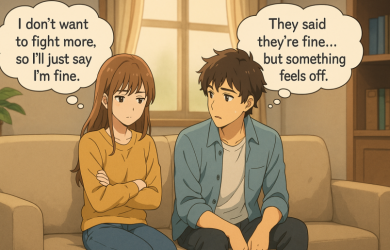
Cognitive dissonance in a relationship happens when your heart, mind, and actions don’t quite match up, leaving you with a quiet sense of tension you can’t always name. Maybe you care deeply for someone, but a part of you hesitates… or you stay committed even when something feels off.
A study examined how conflicting beliefs and behaviors create psychological tension in relationships and influence emotional well-being and decision-making. Using mixed methods, it found that cognitive dissonance has a weak effect on relationship stability, with other factors playing stronger roles. It highlights emotional regulation, self-awareness, and communication as key supports.
That inner conflict can feel confusing, exhausting, and strangely familiar all at once. It often shows up in the little moments where you’re torn between what you believe and what you’re trying to accept.
When this mismatch lingers, it gently nudges you to slow down, reflect, and understand what you truly need.
RELATED READING : 7 Signs of Cognitive Dissonance in Relationships & Ways to Deal
7 possible effects of cognitive dissonance in relationships
Cognitive dissonance can subtly influence how two people interact with each other, sometimes creating tension that is difficult to articulate or express. It often shows up in subtle moments, the ones where your feelings, beliefs, or actions don’t align.
Inner contradiction is a signal and opportunity for growth, not a flaw. Dionne Eleanor – Relationship & Empowerment Mentor
Although this is common, many people still wonder about it. “What are the effects of cognitive dissonance?” especially when it starts to influence everyday connections. It can feel confusing, heavy, or unexpectedly emotional… sometimes all at once.
1. Emotional confusion

Emotional confusion can arise when your thoughts, feelings, and actions no longer align with each other. You may care deeply for someone while also feeling unsure or unsettled, and that mismatch leaves you wondering what’s really going on.
This tension can linger quietly in the background, shaping how you respond and how safe you feel emotionally. It’s easy to slip into second-guessing yourself. Over time, this confusion becomes a gentle signal asking you to pause, reflect, and reconnect with what feels true for you.
Here’s a way to handle it effectively:
- Write down your conflicting feelings to understand where the tension is coming from.
- Pause before reacting so you’re not responding from a place of overwhelm.
- Share your confusion with your partner using simple, honest statements, such as “I’m still figuring out how I feel.”
RELATED READING : 9 Signs You’re Confused in a Relationship & Things to Do
2. Growing self-doubt
When your inner world feels conflicted, you may begin questioning your own judgment more than you’d like to admit. Simple decisions can feel heavier, and you might wonder why something so ordinary suddenly feels complicated. This self-doubt can gradually soften your confidence.
You may hold back opinions, hesitate to share your needs, or stay quiet even when something matters to you. Eventually, the uncertainty affects how secure you feel in the relationship, even if nothing obvious has changed.
Here’s a way to handle it effectively:
- Validate your own perspective before seeking reassurance from others.
- Practice expressing one small need each day to rebuild confidence.
- Notice places where you over-apologize and gently reduce them.
RELATED READING : 15 Ways to Cope With Self-Doubt in Relationships
3. Avoidance and withdrawal
Avoidance often becomes a quiet coping tool when the tension feels too overwhelming to face directly. You might pull back emotionally, keep conversations on the surface, or distract yourself with anything that feels easier than confronting discomfort.
This withdrawal isn’t about caring less; it’s about protecting yourself from the emotional strain that comes with it. But over time, the space between you and your partner can widen. And eventually, you may find yourself missing closeness while feeling unsure how to return to it.
Here’s a way to handle it effectively:
- Set a gentle 10-minute check-in time to talk about feelings without pressure.
- Approach one avoided topic slowly rather than trying to fix everything at once.
- Reconnect through shared activities that feel emotionally safe and secure.
RELATED READING : 7 Common Reasons for an Emotional Shutdown in a Relationship
4. Overexplaining or overcompensating
Sometimes, you may overexplain your thoughts or try extra hard to prove your commitment because you’re struggling to reconcile conflicting feelings within yourself. Overcompensation can manifest as doing more than you have the capacity for or trying to “fix” things that don’t actually need fixing.
It often stems from a desire for reassurance, whether for yourself or your partner. But this pattern becomes emotionally tiring. Eventually, you may realize that you’re acting out of fear rather than genuine connection, which can leave you feeling unseen and misunderstood.
Here’s a way to handle it effectively:
- Pause and ask yourself, “Am I doing this out of worry or genuine desire?”
- Set small boundaries around how much you give emotionally or physically.
- Let silence or simplicity stand without needing to explain every detail.
RELATED READING : 11 Dangerous Psychological Manipulation Tactics in Relationships
5. Increased conflict and defensiveness
The effects of cognitive dissonance can spill into everyday interactions, making even small disagreements feel unusually intense. When your internal world feels unsettled, you might react more quickly, take things more personally, or feel attacked when your partner simply expresses a concern.
Researchers examined how attachment styles relate to physiological arousal during and after couple conflict using skin conductance. Results showed attachment anxiety predicted stronger arousal, while avoidance did not. Findings highlight the value of considering attachment in clinical work and using biofeedback to support emotional regulation.
This defensiveness isn’t about anger; it’s a result of emotional overload. Over time, this pattern can create more conflict than either of you intends, leaving both partners confused about why simple conversations feel so heavy.
Here’s a way to handle it effectively:
- Take breaks during heated moments to reset your emotional state.
- Use softer phrases, such as “I hear you,” before responding.
- Focus on the specific issue rather than bringing in old frustrations.
RELATED READING : How to Stop Being Defensive in Relationships
6. Rationalizing unhealthy behavior
When you’re holding conflicting beliefs or feelings, it becomes surprisingly easy to justify actions—yours or your partner’s—that don’t truly align with your values. You might explain away hurtful comments, minimize unhealthy patterns, or tell yourself things are “not that bad.”
This happens because your mind is trying to protect you from emotional discomfort. But these justifications slowly erode self-trust and clarity. Eventually, you may notice the backfire effects of cognitive dissonance, where the very stories meant to protect you end up keeping you stuck.
Here’s a way to handle it effectively:
- Ask yourself whether the behavior aligns with how you want to feel, not just what you want to believe.
- Talk to a neutral person you trust for perspective.
- Track repeated patterns so you can clearly see what’s happening.
RELATED READING : Healthy vs Unhealthy Relationships: 13 Key Differentiators
7. Emotional burnout
Over time, the long-term effects of cognitive dissonance can accumulate, leaving you feeling emotionally drained. This burnout doesn’t arrive all at once; it builds quietly from prolonged internal conflict. You may feel tired, disconnected, or overwhelmed by even small relational moments.
Your enthusiasm fades, and numbness sometimes replaces the warmth you once felt. This exhaustion becomes a sign that your inner tension has been asking for attention far longer than you realized, gently urging you to reconnect with your emotional needs and limits.
When your behavior and beliefs clash, your nervous system keeps score. Dionne Eleanor – Relationship & Empowerment Mentor
Here’s a way to handle it effectively:
- Prioritize rest and slow, grounding routines that soothe your nervous system.
- Reduce emotional responsibilities that aren’t truly yours to carry.
- Rebuild your sense of self through hobbies, journaling, or personal support.
Watch this video in which Dr. Daniel J. Fox, a licensed psychologist and author, explains relationship burnout through emotional exhaustion, disconnection, and conflict, and offers simple, supportive ways couples can rebuild closeness through communication and shared effort:

Can cognitive dissonance end a relationship?
Cognitive dissonance can slowly shift the way two people connect, sometimes creating a tension that’s hard to put into words.
You may feel pulled in different directions—loving someone deeply while also sensing a quiet discomfort that keeps growing. And when that inner conflict lingers for too long, it can reshape your view of the relationship itself.
- You may start doubting your needs
- You may feel emotionally drained
- You may avoid meaningful conversations
- You may question the relationship’s direction
All of this can build up until you’re left wondering whether the relationship still feels like home. Cognitive dissonance doesn’t automatically end things, but if the mismatch between your beliefs, feelings, and experiences continues to widen, it can make staying feel heavier than leaving.
With honesty, compassion, and open conversations, many couples find clarity… and sometimes, a new way forward together.
Moving toward emotional clarity
Cognitive dissonance can quietly permeate a relationship, shaping how you think, feel, and behave with someone you care about. And when you finally notice its presence, it can be both unsettling and strangely comforting… because it means you’re paying attention to yourself again.
Suppressed discomfort eventually demands to be understood. Dionne Eleanor – Relationship & Empowerment Mentor
The effects of cognitive dissonance don’t have to define your connection; they can simply remind you that something inside needs gentler care. With openness, small conversations, and a little patience, you can find your way back to clarity—one honest moment at a time, one truth at a time.
Helpful?
Continue exploring this topic

Marriage.com AI: Your Relationship Guide
Talk through what's on your mind.
Automated
YOU COULD START WITH
Share this article on
Dylan Banks
Author
Dylan Banks is a prolific writer, known for his sharp and insightful commentary on relationships, love, and human connection. With his extensive experience and infectious passion for all things love-related, he has become a leading... Read more expert in the field of relationship advice. Dylan is a true romantic at heart, with a deep passion for helping others find love and build meaningful connections. When he’s not writing about love and relationships, Dylan can be found exploring the great outdoors or indulging in his other passion: music. As an accomplished musician and songwriter, he believes that music has the power to connect people in profound ways. Read less

Marriage.com Community
Real people. Real relationships. No judgment.
How do mental health struggles affect relationships without one partner becoming the “caretaker”?
Have you navigated this in your own relationship?
Your perspective could help thousands of couples.
See what people are saying
Your perspective could help thousands of couples.








 We'd love your feedback!
 Thanks for your feedback!