




7 Behavioral Therapy Techniques for Kids Every Parent Should Know

By
Marriage.com Editorial Team
The Marriage.com Editorial Team is a group of experienced relationship writers, experts, and mental health professionals. We provide practical and research-backed advice on relationships. Our content is thoroughly reviewed by experts to ensure that we offer high-quality and reliable relationship advice.
Learn about Our Editorial Process
100 Reads
Updated: 9 Aug, 2026
Heal & Grow Daily for a Happier Relationship
Subscribe FREETable of Contents
View more
Key Takeaways
Every parent has been there. One minute, things are calm, and the next, there’s a full-blown meltdown over something as small as the wrong colored cup.
It’s exhausting, isn’t it?
You try to stay patient, you try everything you can think of, and still, some days feel like you’re speaking a language your child just isn’t picking up on.
Here’s the good news: kids aren’t “acting out” for no reason; there’s almost always something underneath it, whether it’s frustration, big feelings, or just not knowing how to ask for what they need.
That’s where behavioral therapy techniques for kids come in. They’re not about control or punishment… they’re about understanding, patience, and small shifts that genuinely make daily life gentler for both of you.
What Is Behavioral Therapy for Kids?
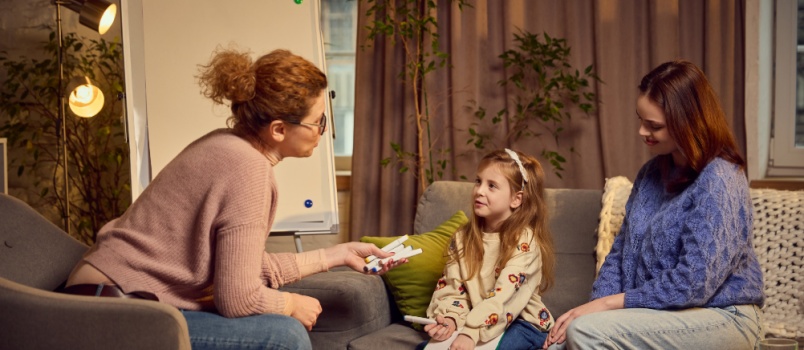
In simple terms, behavior therapy for children is an approach that focuses on encouraging positive actions while gently reducing the ones that don’t serve a child well. It’s less about “fixing” a kid and more about helping them understand cause and effect; when this happens, that follows.
CBT is one of the most widely used and evidence-backed approaches in this space, with a track record that stretches across settings, ages, and conditions.
Halder and Mahato, publishing in the Indian Journal of Psychological Medicine, noted that CBT has been found beneficial across generalized anxiety, stress, OCD, phobias, depression, and behavioral problems, and that research supports its fluid application across individual, couple, and family formats in diverse cultural and socioeconomic contexts.
Therapists often use it, but many of these same principles can be adapted at home, giving parents practical, everyday ways to guide behavior without constant power struggles.
RELATED READING : Strategic Family Therapy: Examples, Benefits & Techniques
7 Behavioral Therapy Techniques for Kids Every Parent Should Know
Parenting is full of little moments that test your patience, and that’s okay; it’s part of the deal! What matters more than getting it “right” every time is having a few reliable tools in your back pocket.
Some approaches use behavior modification for children rooted in real psychology, while others borrow gently from CBT techniques for kids to help little ones manage big emotions.
RELATED READING: 7 Parenting Behavioral Therapy Techniques That Work
Let’s walk through 7 behavioral therapy techniques for kids that genuinely make a difference at home.
1. Positive reinforcement

This one’s simple: catch your child doing something good, and celebrate it! Whether it’s a high-five, a sticker, or just saying “I’m so proud of you,” positive reinforcement for kids works because it makes good behavior feel rewarding, not just expected.
Over time, kids naturally repeat what earns them warmth and attention. It’s one of the most effective behavioral therapy techniques for kids, and honestly, one of the easiest to start using today.
Here’s how it works:
- Praise the specific action right away, like “You shared so nicely!” instead of a generic “good job”
- Use a mix of rewards; sometimes a hug, sometimes a small treat, sometimes just extra playtime together
- Keep it consistent, so your child learns which behaviors reliably earn a positive response
2. Time-out (or time-in)
Traditional time-outs give kids a moment to pause and cool down; time-ins, on the other hand, keep you nearby for comfort while they calm themselves. Both approaches teach coping skills for children, just in slightly different ways.
Which one works better often depends on your child’s temperament, so it’s worth trying both, and even switching between them as your child grows. The goal isn’t punishment; it’s giving little nervous systems space to reset, gently and without shame.
Here’s how it works:
- Set a clear, short time limit (roughly one minute per year of age works well)
- Choose a calm, quiet spot, not a scary or isolating one
- Stay nearby if you’re using time-in, offering quiet comfort without lecturing
RELATED READING : New to Parenting? We’ve Gathered 12 Useful Parenting Advice
3. Modeling behavior
Kids are always watching, even when you don’t realize it! Demonstrating patience, kindness, and calm problem-solving teaches far more than lectures ever could. This is one of the most foundational child behavior therapy techniques, since children naturally mimic what they see repeated at home.
And research on how interactions shape development makes a strong case for just how much the quality of those moments matters.
Hamre, Pianta, Downer, and colleagues, publishing in the Elementary School Journal, analyzed over 4,000 classrooms and found that teacher-student interactions organize into distinct emotional, organizational, and instructional domains, each independently contributing to student learning and development, with the emotional domain proving particularly foundational across age groups.
If you want your child to handle frustration well, showing them how you do it matters more than simply telling them to; actions really do speak louder here.
Here’s how it works:
- Narrate your own calm-down process out loud, like “I’m feeling frustrated, so I’m taking a deep breath”
- Apologize openly when you make a mistake, showing accountability in real time
- Practice the behavior you want to see, even in small, everyday moments
4. Token economy or reward charts
Reward charts turn good behavior into something visible and trackable, which kids genuinely enjoy. Earning tokens, stars, or points toward a small prize taps into therapy activities for kids that feel playful rather than like a chore.
It also gives children a sense of control; they can see their progress building day by day, which feels motivating all on its own. Just remember, consistency is what makes this system actually work.
Here’s how it works:
- Pick 2-3 specific behaviors to track, rather than overwhelming the chart with too many
- Let your child help choose the reward, so they feel invested in the process
- Update the chart daily, so progress stays visible and motivating
5. Natural and logical consequences
Sometimes, the best lesson comes from real-life outcomes rather than a punishment you hand out. If a toy gets thrown, it goes away for the rest of the day; simple, fair, and easy to understand.
These child behavior intervention strategies work because they connect actions to results in a way that feels logical to a child. It’s one of the more effective behavioral therapy techniques for kids, especially as children grow older and start reasoning things through.
Here’s how it works:
- Make sure the consequence directly relates to the behavior, not something unrelated
- Explain the connection calmly, like “Since you threw it, it needs a break”
- Follow through every time, even when it’s inconvenient in the moment
RELATED READING : 8 Reasons Why You Should Try Co-Parenting Therapy
6. Redirecting behavior
Instead of only saying “no,” redirecting offers kids something else to do instead. Handing over a toy, switching activities, or turning a moment into a quick game are all examples of play-based behavioral therapy in action.
This keeps things light while still guiding behavior in a better direction, without turning every moment into a battle. It’s especially useful for toddlers and young kids who respond well to distraction paired with warmth.
Here’s how it works:
- Offer an alternative activity before frustration turns into a full meltdown
- Turn the redirection into a quick game, like “Let’s see who can clean up fastest!”
- Stay upbeat and light, since tone matters just as much as the action itself
Watch this TED Talk in which psychodynamic psychotherapist and founder of Kate’s Garden, Kate Beckwith, makes a compelling case for revolutionizing how we approach mental health support for children by taking therapy outside the walls of a traditional therapy room and into nature:

7. Consistent routines and structure
Kids thrive on knowing what comes next, even if they’d never admit it! Predictable routines reduce anxiety and meltdowns because there’s less uncertainty to navigate each day.
Many behavior therapy exercises for children actually rely on structure alone to see real improvement, long before anything more formal is needed. Building consistency isn’t always easy, especially on busy days, but it’s one of the most powerful behavioral therapy techniques for kids you can offer.
Here’s how it works:
- Keep morning, meal, and bedtime routines as consistent as possible
- Use visual schedules or charts for younger kids who respond well to pictures
- Give a heads-up before transitions, like “Five more minutes, then it’s bath time”
FAQs
Parents often have a few lingering questions before trying these techniques at home, and that’s completely normal! Here are some quick, honest answers to help guide you along the way.
Yes, many of these techniques are commonly used for kids with ADHD or autism, often with slight adjustments. Structure, visual schedules, and consistent reinforcement tend to work especially well. That said, working alongside a therapist familiar with your child's specific needs can make the approach even more effective. This varies quite a bit depending on the child and the behavior being addressed. Some families notice small shifts within a couple of weeks, while others take a few months of steady, consistent practice. Patience really does matter here; progress is rarely instant, but it does add up. Not necessarily. These techniques work well for everyday behaviors, but they aren't a substitute for professional support when deeper emotional, developmental, or behavioral concerns are involved. If challenges persist or feel overwhelming, consulting a child psychologist or licensed therapist is always a good next step. Can these techniques work for ADHD or autism?
How long does it take to see results?
Do these techniques replace professional therapy?
Small Steps, Lasting Change
At the end of the day, no parent gets it right every single time, and that’s perfectly okay! What matters most is showing up, staying patient, and trying again tomorrow.
These behavioral therapy techniques for kids aren’t about perfection; they’re small, practical shifts that build trust, calm, and connection over time.
Some days will feel easier than others, and some techniques will click faster than others, too. Give yourself grace along the way… progress isn’t always a straight line, but consistency and love will carry you both through it, one small step at a time.
Helpful?
Continue exploring this topic

Marriage.com AI: Your Relationship Guide
Talk through what's on your mind.
Automated
YOU COULD START WITH
Share this article on
Marriage.com Editorial Team
Relationship & Marriage Advice
The Marriage.com Editorial Team is a group of experienced relationship writers, experts, and mental health professionals. We provide practical and research-backed advice on relationships. Our content is thoroughly reviewed by experts... Read more to ensure that we offer high-quality and reliable relationship advice. Read less
 Reviewed by
Marriage.com Community
Real people. Real relationships. No judgment.
How do you know if therapy is actually helping or if you’re just talking in circles?
Have you navigated this in your own relationship?
Your perspective could help thousands of couples.
See what people are saying
Your perspective could help thousands of couples.



Recent Articles


Related Quizzes








 We'd love your feedback!
 Thanks for your feedback!