




10 Best Online Premarital Preparation Courses to Take in 2026

By
Rachael Pace, Author
Rachael Pace inspires with motivational articles on loving partnerships. She encourages making room for love and facing challenges together.
Learn about Our Editorial Process
13.6k Reads
Updated: 20 Mar, 2026
Heal & Grow Daily for a Happier Relationship
Subscribe FREETable of Contents
View more
Key Takeaways
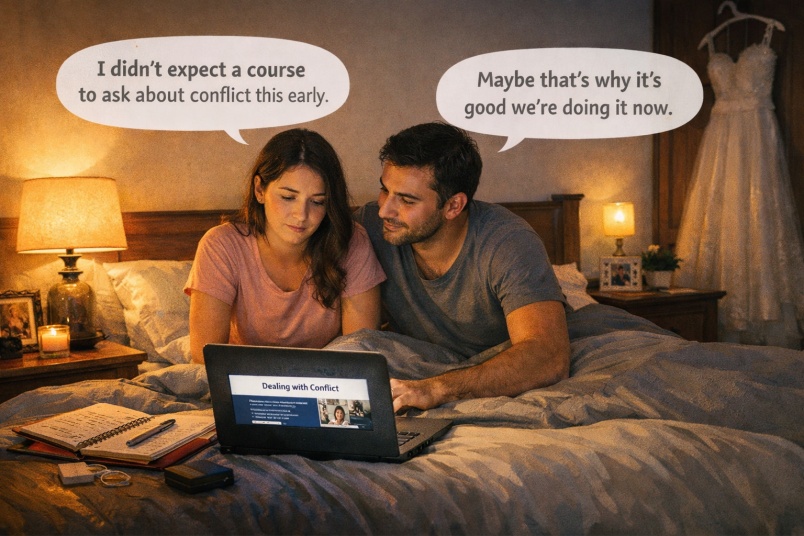
Getting married is exciting… and honestly, a little overwhelming too. I remember feeling that mix of joy and quiet uncertainty, especially late at night, when the wedding planning slowed down, and the real questions showed up:
Will we handle money the same way?
What happens when we really disagree?
Are we truly ready?
There was also a deeper worry I didn’t say out loud very often. The fear of loving someone deeply and still missing something important.
I kept coming back to a line I once read: “Love doesn’t fail because people stop caring; it fails because they stop talking.” That landed hard, because caring was never the problem… knowing how to talk through the hard things was.
At that point, I started looking for something that could genuinely help. Not advice meant for “broken” relationships, and not surface-level tips either. I wanted something practical, thoughtful, and private.
I tested 10 programs, spent over $600, and logged 40+ hours, so you don’t have to.
What I learned through these courses is that premarital preparation isn’t about fixing problems. It’s about making space for real conversations, the kind that help you understand each other more deeply, with clarity and care.
In 2026, online options make this process far more flexible and private. For me, it felt less like pressure… and more like learning how to listen better, support each other, and move forward with intention and confidence.
What is a pre-marriage course?
From my experience, a pre-marriage course is designed to help couples slow down and intentionally build a foundation before stepping into married life. Each course I took approached this a little differently, but the goal was the same: helping couples get aligned before the wedding day.
According to Maggie Martinez, a licensed clinical social worker:
This can be a great way to get to know each other and work toward a common goal.
I found that the best pre-marriage courses encouraged honest reflection, not just about the relationship itself, but about personal habits, communication patterns, and unspoken expectations.
The best ones didn’t feel like lectures. They felt like guided conversations that helped set healthier patterns before marriage even began.
RELATED READING : What Is a Premarital Preparation Course? Benefits, Cost & How It Works
Best online pre-marriage courses: A comparison table
After going through each of these premarital courses myself, one thing became very clear… there’s no such thing as a “perfect” program. What matters is finding the one that fits your relationship, your schedule, and the kind of support you’re actually looking for.
Some of these courses felt calm and reflective, others more structured or research-heavy. A few worked best with live guidance, while others were ideal for self-paced learning.
I’ve compared all 10 courses below by format, cost, and focus areas. Scan for your budget and learning style, then read the full review to confirm fit.
| Course Name | Mode | Cost | Focus areas | Ideal for |
|---|---|---|---|---|
| Marriage.com | Self-paced (online) | $49–$99 | Communication, expectations, goals, intimacy, emotional readiness, long-term unity | For busy, newly engaged or newly married couples who want a flexible, self-paced option with both core skills and additional resources |
| Happily Ever After | Self-paced (online) | $67 | Self-discovery, money, conflict repair, intimacy, family background | For couples wanting real conversations without heavy theory |
| The Marriage Course | Hybrid (online or in-person) | Varies by host | Communication, commitment, conflict, and understanding differences | For couples who like guided “date-night” style sessions |
| Holy Trinity Brompton | Hybrid (online / facilitated) | Varies | Communication, conflict, commitment, Christian foundations | For faith-based couples seeking a structured, discussion-focused experience |
| Udemy | Self-paced (online) | $6–$15 | Communication, conflict resolution, and Christian principles | For budget-conscious couples wanting a short introductory course |
| Avalon Relationship Experts Ltd | Self-paced (online / DVD / in-person) | $160+ per couple | Catholic marriage prep, communication, values, reflection | For catholic couples needing an official Pre-Cana-accepted course |
| Growing Self | Live + online | $195 per session / $295 course | Communication, values, finances, long-term planning | For couples wanting therapist-led counseling and personalized guidance |
| The Gottman Art & Science of Love – Online | Self-paced (online) | $169 | Research-based intimacy, conflict management, and trust | For couples who want science-backed relationship tools |
| Prepare to Last | Self-paced + community | $129 | Expectations, communication, conflict, finances, spiritual growth | For faith-based couples seeking mentorship beyond the wedding day |
| SYMBIS (Saving Your Marriage Before It Starts) | Assessment + guided sessions | $35–$75+ | Personality, communication, conflict, finances | For couples who want assessment-driven insight with a counselor or church |
So, how to use this table?
Quick picks:
• Best overall: Marriage.com (Platinum)
• Tightest budget: Udemy
• Catholic couples: Avalon
Match your priorities to the table, then explore the full review for details.
RELATED READING : What Is Offered in an Online Pre-marriage Course?
10 best online premarital preparation courses to take in 2026
Choosing the right support before marriage felt just as important to me as choosing the right date or venue. After going through these courses myself, I noticed how much they can vary in style, structure, and focus.
Some lean toward the practical, others toward reflection or research-driven approaches, but all aim to strengthen communication, trust, and understanding.
Below are the programs I personally explored and found most impactful, each offering different tools and perspectives to help couples find a marriage preparation course that genuinely fits their relationship and long-term goals.
1. Marriage.com’s Online Premarriage Course

Marriage.com’s Pre-Marriage Course is built as a structured, self-paced journey through the core conversations couples need before (and soon after) the wedding. It felt especially balanced for couples who want practical tools without a clinical or overly theoretical feel.
What stood out to me most was how clearly the course was structured. Each session guided us through essential topics without rushing or skipping over the emotional side of things. The core course focuses on:
- What makes a marriage healthy
- Managing expectations
- Setting shared goals
- Improving communication
- Moving from “me” to “we”
- Helpful relationship resources
Because the course is fully self-guided, we could move at our own pace, pause when conversations needed more time, and return to sections when something resonated. That flexibility made a big difference during a busy season of planning.
Rather than feeling like a test, the material encouraged honest reflection around readiness, communication patterns, and future expectations in a way that felt gentle but clear.
Learn More about this Premarriage Course >
2. Happily Ever After
Happily Ever After felt refreshingly practical from the start. When I went through this course, what stood out most was how conversational it felt. It wasn’t theory-heavy or overly clinical. Instead, it focused on helping couples talk honestly about real-life topics that often get avoided until after the wedding.
The course walks couples through six core areas:
- Self-discovery
- Money and financial conversations
- Conflict and repair
- Sex and intimacy
- Family backgrounds and influences
- Communication
I appreciated how grounded the lessons felt. The content encouraged reflection without judgment and made it easier to recognize patterns in how we communicate, especially around money and conflict. The bonus material on parenting, spirituality, and managing anxiety added depth, particularly for couples thinking beyond the early years of marriage.
-
How it works
The process starts with an online assessment, followed by short, engaging videos that are easy to absorb.
Each lesson includes downloadable worksheets and connecting questions, which help turn the content into actual conversations rather than passive watching. Everything is self-paced and accessible anytime, which makes it manageable even on busy days.
This course felt especially helpful for couples who want meaningful conversations without feeling overwhelmed by structure or expert jargon.
Price: $67, with full access to all videos, worksheets, and bonus materials.
3. The Marriage Course
The Marriage Course felt more like a guided experience than a typical online class. When I went through it, what stood out most was the intentional pace. Each session created space to slow down, talk privately, and really listen, without feeling rushed or distracted.
The course is hosted by a married couple, which gives it a warm, relatable feel. Across five sessions, the focus stays on communication, commitment, understanding differences, and navigating conflict in healthy ways.
I appreciated that the structure encouraged private discussion rather than group sharing, which made the conversations feel more honest and personal.
One thing I genuinely liked was the emphasis on treating each session like a purposeful date night. Using the journals to take notes and track progress helped keep the conversations focused, and it was surprisingly meaningful to look back on those reflections later.
Because it’s available both online and in person, this course works well for couples who want guidance but still value privacy and intentional time together.
Price: Varies by location and course administrator
4. Holy Trinity Brompton
The premarital preparation course from Holy Trinity Brompton felt very intentional and thoughtfully paced.
When I went through it, I noticed how much emphasis it placed on creating space for conversation rather than just consuming content. While the course is rooted in Christian principles, it never felt exclusionary or overly rigid.
Founded by Nicky and Sila Lee, this five-session program mirrors the in-person experience closely. Each session follows a watch-and-talk format.
We watched the filmed lesson together and then spent dedicated time talking privately, guided by the prompts in the journals. That structure made the conversations feel focused, but not forced.
Each session runs about 1 hour and 45 minutes, with nearly half the time reserved for discussion. I liked how the course encouraged a calm, relaxed atmosphere. It naturally turned each session into an intentional date night, especially helpful for couples who want guided conversations without outside pressure.
Price: Cost varies by provider; journals are typically purchased separately
5. Udemy
The Udemy premarital course felt like a lightweight, accessible starting point. When I went through it, I didn’t expect a deep, highly personalized experience, and that helped set the right expectations. It works best as an introduction rather than a full premarital journey.
Created by Cheryl Y. Howard, the course blends relationship psychology with Christian-based principles. I found the lessons clear and easy to follow, especially around communication habits, emotional regulation, and conflict resolution. The structure makes it easy to pause, revisit sections, or skip ahead depending on what feels most relevant.
With 5.5 hours of on-demand video and downloadable resources, it’s surprisingly comprehensive for the price. That said, it doesn’t offer the same depth or guided reflection as some of the more robust programs.
For couples on a tight budget or those just beginning premarital conversations, this course can be a helpful first step.
Price: Approximately $6–$7 (pricing varies with promotions)
6. Avalon Relationship Experts Ltd
Avalon felt very structured and reassuring, especially for couples planning a Catholic wedding. When I went through this course, what stood out most was how clearly it was designed to meet official Pre-Cana requirements while still encouraging meaningful, personal reflection.
The course is fully online and pre-recorded, which made it easy to complete at our own pace. There’s just over four hours of content, along with well-designed workbooks that guide discussion without feeling scripted.
I appreciated how the questions prompted honest conversations about values, expectations, and communication, all within a Catholic framework.
Knowing the course had been independently assessed by senior psychotherapists added to its credibility. It also helped that Avalon offers multiple formats, including an online course, an in-person option, and a DVD version, depending on what couples prefer.
This course felt best suited for Catholic couples who want something officially recognized, structured, and thoughtfully guided.
Price: Starts at $160+ per couple
7. Growing Self
Growing Self felt the most personalized out of all the options I explored. Rather than feeling like a course you simply move through, it felt more like a guided process. When I went through it, the emphasis on assessment and professional feedback stood out right away.
The experience begins with a comprehensive relationship assessment, which helps surface both strengths and potential pressure points.
From there, sessions are tailored with the help of an experienced premarital counselor, focusing on communication, shared values, finances, parenting expectations, and long-term planning. I appreciated how collaborative the process felt, less about instruction and more about working together as a team.
They also offer a live online option called Lifetime of Love, which combines expert-led coaching, video lessons, and guided workbooks. It’s more time-intensive and structured than self-paced courses, but that’s also where its strength lies.
This option felt best for couples who want therapist-led support and are ready to invest more deeply in personalized guidance.
Price: Typically $195 per 60-minute session (pricing may vary)
8. The Gottman Art & Science of Love – Online

The Gottman Art & Science of Love – Online felt deeply grounded in research from the very beginning. As I went through the course, it was clear that everything is built on decades of work by Dr. John Gottman and
Dr. Julie Gottman, not trends or assumptions. The focus stays firmly on strengthening friendship, intimacy, and learning how to handle conflict in healthier ways. I found this course especially helpful for understanding why certain patterns show up in relationships.
The online workshop, filmed from a live session, is broken into clear, manageable sections that couples can complete together at their own pace, which makes it easy to pause and reflect when conversations need more time.
What stood out to me most were the practical frameworks, including:
- Building friendship, respect, and emotional closeness
- Learning calm, productive ways to discuss conflict
- Identifying and working through ongoing conflict or gridlock
- Recognizing and responding to the Four Horsemen of relationship conflict
- Strengthening trust, commitment, and shared meaning
- Using tools like Love Maps, the Fondness and Admiration System, and the Emotional Bank Account
This course felt best suited for couples who appreciate structured, evidence-based guidance and want tools they can return to long after the wedding.
Price: $169 per couple (discounted from $199; pricing may change)
9. Preparetolast.com
Prepare to Last felt very relationship-focused rather than wedding-focused. When I went through this course, what stood out most was its emphasis on preparing couples for life after the ceremony, especially the first few years of marriage, when habits and patterns really begin to form.
Created by marriage mentors Jeff and Debby McElroy, this faith-based program places a strong focus on mindset and daily relational habits, not just information. The lessons encouraged intentional reflection around expectations, communication, and spiritual alignment, helping conversations feel more grounded and forward-looking.
I appreciated the mix of video content, interactive exercises, and access to a supportive couples community. That ongoing sense of mentorship made this feel less like a one-time course and more like continued encouragement.
Key areas the course covers include:
- Marriage expectations
- Communication
- Conflict resolution
- Personality differences
- Financial unity
- Spiritual growth
- Building healthy relational habits
This course felt best suited for couples who value faith-based guidance and want ongoing support beyond the engagement phase.
Price: $129 (includes access to course content, community, and mentors)
10. SYMBIS (Saving Your Marriage Before It Starts)
SYMBIS felt very insight-driven when I went through it. Rather than moving through lessons passively, the experience starts by helping couples understand themselves and each other more clearly. Created by psychologists Dr. Les and Dr. Leslie Parrott, the program uses research-backed assessments to highlight strengths, growth areas, and potential blind spots early on.
What I found especially helpful was how the assessment shaped the conversations that followed. Instead of guessing what to work on, the guided discussions and exercises focused on areas that actually mattered to us. Depending on how it’s used, SYMBIS can be completed independently or alongside a counselor or church facilitator.
The core topics include:
- Communication styles and expectations
- Conflict resolution and problem-solving
- Family background and personality differences
- Emotional intimacy and trust
- Financial attitudes and life goals
- Preparing for long-term commitment
While SYMBIS has faith-based roots, it didn’t feel limiting. The framework is flexible enough to work for couples from many backgrounds, especially those who appreciate structured insight and assessment-driven guidance.
Price: Starts at approximately $35–$75 for the assessment (additional facilitator fees may apply)
How I selected these courses
Choosing a premarital course is deeply personal, and after going through these programs myself, I wanted this list to reflect more than just popularity or branding. I reviewed each course using a consistent, experience-based framework focused on credibility, usability, and long-term value.
My selection criteria
Based on what actually made a difference for me, I prioritized courses that:
- Trusted relationship experts: Courses led by licensed therapists, certified counselors, or well-recognized relationship experts, whom I felt confident learning from.
- Research-backed frameworks: Programs built on evidence-based approaches like the Gottman Method, PREP, or similar research-driven models.
- Well-rounded topic coverage: Thorough attention to communication, conflict, finances, intimacy, and shared values, not just surface-level advice.
- Simple, accessible experience: A clear structure and pacing that felt supportive and easy to follow, without being overwhelming or rigid.
- Real couple feedback: Honest insights from couples who completed the course and shared meaningful, long-term outcomes.
- Strong value for cost: Courses that delivered practical takeaways and lasting value, not just content for the price.
Expert-guided rating rubric
To keep things consistent, I evaluated each course across five areas: content depth, quality of practical exercises, expert credibility, ease of use, and long-term applicability. This helped me focus on programs that felt useful beyond the engagement phase, not just helpful for the moment.
When should I take a pre-marriage course?
From my experience, the best time to take a pre-marriage course is before things feel rushed or heavy… when there’s still space to talk, reflect, and really hear each other. Starting earlier made the conversations feel curious instead of pressured, and much easier to navigate.
There isn’t one perfect moment, but there are clear signs it might be the right time.
It’s probably time to take a pre-marriage course if you’re thinking:
- “We’re engaged, but we haven’t really talked about the hard stuff yet.”
- “Wedding planning is stressing us out more than we expected.”
- “We agree on the big things, but we avoid certain conversations.”
- “Money, family, or expectations feel a little unclear.”
- “We’re good now, but we want tools for when things get harder.”
Even couples who feel solid can benefit. For me, the biggest value wasn’t fixing problems… it was learning how to face future challenges together, calmly and intentionally, before life gets busy.
RELATED READING : When Should I Take a Pre-marriage Course?
FAQs
Preparing for marriage naturally brings up thoughtful questions… and from my experience, that’s a really good sign.
As I worked through these premarital courses, these were the same questions that kept coming up for me, too. The answers below reflect what I learned along the way and what felt most realistic, helpful, and grounding.
Are online premarital courses as effective as in-person courses?
In my experience, yes, they can be. Online courses offered more flexibility and privacy, which actually helped conversations feel more honest. When the content is well-structured and led by qualified experts, the impact can feel just as meaningful as sitting in a room together.
How much do pre-marriage counseling courses cost?
Costs vary quite a bit. From what I saw, self-paced online courses usually fall between $20 and $150. Therapist-led or live counseling programs tend to cost more, often $150 to $300 or higher per session, depending on the level of personalization.
Is a premarital course the same as premarital counseling?
Not exactly. Premarital courses felt more educational and structured, focusing on skills and guided discussions. Premarital counseling went deeper and felt more personalized, especially when working through specific challenges. I found that some couples benefit from one, while others choose a mix of both.
Are free premarital courses worth it?
Free courses can be a helpful starting point, especially if the budget is tight. That said, I noticed they often lacked depth and personalized guidance. When possible, investing in a well-designed paid course usually offers more practical tools and longer-lasting value.
How long does a premarital course usually take?
Most of the online courses I tried ranged from two to six hours total. Some could be completed over a weekend, while others were designed to unfold over a few weeks, which gave more time to reflect, talk things through, and apply what we learned.
Summing up
Preparing for marriage isn’t about having all the answers; it’s about asking the right questions together. After testing all these programs, Marriage.com’s Pre-Marriage Course offered the best balance of depth, flexibility, and value.
Ready to start? Most couples begin here because it’s self-paced, comprehensive, and costs less than two therapy sessions.
Start your preparation with Marriage.com →
Strong marriages aren’t built overnight… they’re built with intention, patience, and care.
Helpful?
Continue exploring this topic

Marriage.com AI: Your Relationship Guide
Talk through what's on your mind.
Automated
YOU COULD START WITH
Share this article on
Rachael Pace
Author
Rachael Pace is a noted relationship writer associated with Marriage.com. She provides inspiration, support, and empowerment in the form of motivational articles and essays. Rachael enjoys studying the evolution of loving partnerships... Read more and is passionate about writing on them. She believes that everyone should make room for love in their lives and encourages couples to work on overcoming their challenges together. Read less
 Reviewed by
Marriage.com Community
Real people. Real relationships. No judgment.
What do you wish you had talked about before getting married but didn’t think to?
Have you navigated this in your own relationship?
Your perspective could help thousands of couples.
See what people are saying
Your perspective could help thousands of couples.



Recent Articles


Related Quizzes




 We'd love your feedback!
 Thanks for your feedback!