




7 Behavioral Therapy Techniques for Anxiety Attacks

By
Marriage.com Editorial Team
The Marriage.com Editorial Team is a group of experienced relationship writers, experts, and mental health professionals. We provide practical and research-backed advice on relationships. Our content is thoroughly reviewed by experts to ensure that we offer high-quality and reliable relationship advice.
Learn about Our Editorial Process
100 Reads
Updated: 1 Oct, 2026
Heal & Grow Daily for a Happier Relationship
Subscribe FREETable of Contents
View more
Key Takeaways
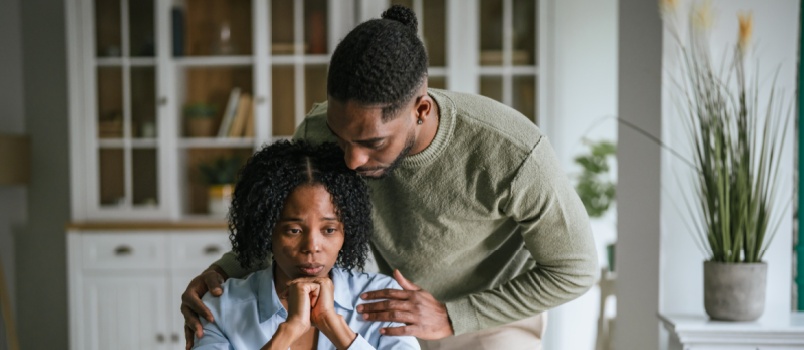
“You are safe… I am right here with you,” one partner says softly, reaching for a hand that is trembling. Even with love and reassurance, an anxiety attack can make the world feel frightening and out of control.
It can leave both partners feeling helpless, confused, and unsure of what to do next. The good news is that these moments do not have to define your relationship.
With time, support, and the right behavioral therapy techniques for anxiety attacks, it is possible to calm your mind, regain confidence, and feel more in control of everyday situations.
What Is An Anxiety Attack, And Why Does It Happen?
An anxiety attack is a period of intense worry or fear that builds in response to stress, uncertainty, or overwhelming emotions. It can cause symptoms such as a racing heart, rapid breathing, dizziness, muscle tension, restlessness, or difficulty concentrating.
Although anxiety attacks can feel frightening, they are the body’s response to perceived stress rather than actual danger. Behavioral therapy techniques for anxiety attacks can help people understand these reactions and learn healthier ways to manage them.
Research supports the effectiveness of behavioral therapy for anxiety.
A meta-analysis published in Clinical Psychology Review found that cognitive behavioral therapy significantly reduces anxiety symptoms across a wide range of anxiety disorders by helping people change unhelpful thought patterns and behaviors.
Example: Sarah begins feeling overwhelmed before attending a family gathering with her partner. Her chest tightens, her thoughts race, and she wants to leave immediately.
Instead of assuming something terrible will happen, she practices slow breathing and grounding techniques, allowing the anxiety to settle enough for her to stay and enjoy the evening.
Please note:
If anxiety attacks have become part of your life, remember that you are not weak, and you are certainly not alone. Many people learn to manage anxiety successfully with the right support, practical coping skills, and professional guidance.
RELATED READING: Behavioral Therapy for Anxiety, Depression & Stress
7 Behavioral Therapy Techniques for Anxiety Attacks
Small, consistent steps can make a meaningful difference in helping you feel calmer and more confident over time.
1. Deep breathing exercises
One of the most effective forms of behavioral therapy for panic attacks is learning to slow your breathing. Anxiety often causes rapid, shallow breaths that increase physical symptoms.
In a controlled laboratory study of 27 adults, Luo and colleagues found that slow breathing significantly reduced anxiety, emotional arousal, and heart rate compared with fast breathing, suggesting it can help regulate the stress response during uncertain situations.
Controlled breathing helps calm the nervous system and signals to your body that you are safe.
- Try this: Inhale for four seconds, hold for four seconds, exhale for four seconds, and repeat until your breathing feels steadier.
2. Challenge anxious thoughts
Many CBT techniques for anxiety attacks teach you to identify fearful thoughts, question whether they are accurate, and replace them with more balanced ones. Over time, this reduces the power anxiety has over your reactions.
- Try this: Write down one anxious thought and list evidence both for and against it before drawing a conclusion.
3. Keep an anxiety journal

Writing down what happened before, during, and after an anxiety attack can help you recognize patterns that might otherwise go unnoticed.
Over time, these behavioral therapy techniques for anxiety attacks can help you to identify common triggers, physical sensations, and thought patterns, making it easier to prepare for and manage future anxiety attacks with greater confidence.
- Try this: After an anxiety attack, note the situation, your thoughts, physical symptoms, and what helped you feel calmer. Review your notes weekly to spot recurring patterns.
4. Face fears gradually
Avoiding situations that trigger anxiety can make fear stronger over time.
A guide published by the American Psychological Association (APA) explains that exposure therapy helps people gradually face trauma-related memories and situations in a safe, controlled way, reducing fear.
Exposure therapy for panic attacks helps people slowly face those situations in small, manageable steps until they become less frightening.
- Try this: Create a fear ladder with your therapist, beginning with the least challenging situation before progressing further.
5. Stay connected to the present
During overwhelming moments, grounding techniques for anxiety attacks help shift your attention away from racing thoughts and back to your surroundings. This is one of the behavioral therapy techniques for anxiety attacks that can reduce emotional intensity and help you feel more in control.
- Try this: Use the 5-4-3-2-1 method by identifying things you can see, touch, hear, smell, and taste.
6. Change everyday habits
Healthy behavioral strategies for panic disorder focus on reducing avoidance while encouraging routines that improve resilience. Small daily actions, such as regular exercise, good sleep, and meaningful activities, can lower overall anxiety levels.
- Try this: Schedule one enjoyable or meaningful activity each day, even if it feels small.
Watch this TED Talk by Olivia Remes, a mental health researcher, who shares practical, research-backed ways to cope with anxiety by changing habits and thought patterns.

7. Relax your body
Anxiety often causes muscles to tighten without you realizing it. Practicing relaxation techniques for panic attacks, such as progressive muscle relaxation, helps release physical tension and creates a greater sense of calm.
- Try this: Slowly tense and relax each muscle group from your feet to your shoulders while breathing deeply.
RELATED READING: Relaxation Techniques for Anxiety
What You Should Say Vs What You Should Not
The words you choose during an anxiety attack can either comfort or overwhelm someone. Along with breathing techniques for panic attacks and other panic attack coping techniques, calm and supportive communication helps the person feel understood rather than judged or pressured.
Situation What you should say What you should not say
Reassure them I am here with you. You are safe. Calm down. You are overreacting.
Acknowledge their feelings I know this feels scary right now. There is nothing to be afraid of.
Offer support How can I help you right now? Just deal with it yourself.
Encourage without pressure Take your time. There is no rush. Hurry up and snap out of it.
After the attack You handled a really difficult moment. This was not a big deal.
RELATED READING : 8 Tips on How to Help Your Partner With Anxiety
When Should You Seek Professional Help For Anxiety Attacks?
Occasional anxiety attacks can happen during periods of intense stress, but frequent or severe attacks should not be ignored.
If anxiety is affecting your daily life, relationships, work, or overall well-being, reaching out to a mental health professional can help you understand what is happening and learn effective ways to manage it.
You should consider seeking professional help if:
- Your anxiety attacks are becoming more frequent. If they happen regularly or seem to occur without a clear trigger, a therapist can help identify underlying patterns and develop a treatment plan.
- You start avoiding everyday situations. Skipping work, social events, travel, or other normal activities because you fear having another anxiety attack is a sign that anxiety may be limiting your life.
- The symptoms feel overwhelming or frightening. If you often worry that you are having a heart attack, losing control, or something terrible is about to happen, it is important to get a proper evaluation and support.
- Self-help strategies are not providing enough relief. If breathing exercises, grounding techniques, lifestyle changes, or other coping methods are not improving your symptoms, professional guidance may be beneficial.
- Anxiety is affecting your relationships or responsibilities. When anxiety makes it difficult to connect with loved ones, perform at work or school, or enjoy daily life, therapy can help you regain confidence and stability.
Remember, seeking help is not a sign of weakness. Anxiety attacks are treatable, and many people experience significant improvement with evidence-based therapies, supportive care, and, when appropriate, medication recommended by a qualified healthcare professional.
Moving Forward
Anxiety attacks can feel frightening, but they do not have to define your life. With patience, consistent practice, and the right support, it is possible to feel more confident and in control again.
The behavioral therapy techniques for anxiety attacks discussed above can help you respond to fear in healthier ways and gradually reduce its impact. Remember, progress often happens one small step at a time, and every step you take toward understanding and managing your anxiety is a meaningful one
Helpful?
Continue exploring this topic

Marriage.com AI: Your Relationship Guide
Talk through what's on your mind.
Automated
YOU COULD START WITH
Share this article on
Marriage.com Editorial Team
Relationship & Marriage Advice
The Marriage.com Editorial Team is a group of experienced relationship writers, experts, and mental health professionals. We provide practical and research-backed advice on relationships. Our content is thoroughly reviewed by experts... Read more to ensure that we offer high-quality and reliable relationship advice. Read less
 Reviewed by
Marriage.com Community
Real people. Real relationships. No judgment.
How do you know if therapy is actually helping or if you’re just talking in circles?
Have you navigated this in your own relationship?
Your perspective could help thousands of couples.
See what people are saying
Your perspective could help thousands of couples.





 We'd love your feedback!
 Thanks for your feedback!