




How to Heal From Heartbreak When It Hurts so Much

By
Owen Kessler, Author
Talented writer Owen simplifies complex topics, focusing on psychology and personal growth. He enjoys camping in scenic mountains, traveling, and embracing diverse cultures.
Learn about Our Editorial Process
100 Reads
Updated: 22 May, 2026

Heal & Grow Daily for a Happier Relationship
Subscribe FREETable of Contents
View more
Key Takeaways
You already know heartbreak hurts. What you might not know is exactly why it cuts so deep, and what that depth is actually telling you.
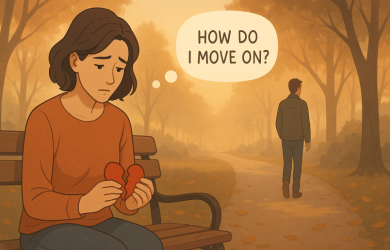
Most people who go through a painful breakup spend weeks, sometimes months, asking the same question: Why can’t I just move on? They feel embarrassed by how heavy it all is. They shrink their own pain with phrases like, “It was only a few months,” or “We weren’t even official.” They try to stay busy, scroll through their phones at midnight, throw themselves into work, and wonder why the weight in their chest refuses to lift.
Here at Marriage.com, we have had countless conversations with people trying to make sense of heartbreak. And the pattern is almost always the same. Most people do not realize that what they are really going through is grief. Not just sadness about a person, but genuine, layered grief for the future they thought was theirs.
This article is based on Marriage.com’s video on how to heal from heartbreak, which walks through five honest, practical truths about what heartbreak really is and what it takes to begin healing. By the time you finish reading, our hope is that you will feel a little less alone in yours, and a little more ready to move forward.
Heartbreak is really grief for the future you lost

Join millions building healthier, happier relationships.
 Subscribe
The first and most important truth about how to heal from heartbreak is also the most overlooked one: what you are grieving is not just a person. It is the version of tomorrow that felt completely real.
Think about it. When a relationship ends, you are not only losing someone you loved. You are losing the life you had mentally built alongside them. The holidays you pictured. The person you imagined calling when something good happened. The quiet Tuesday mornings that somehow meant everything. That whole picture collapses at once, and no one prepares you for that part.
This is why heartbreak can feel so disproportionately heavy, even to the person going through it. You are not being dramatic. You are grieving something real: three things, specifically.
The person. The actual human being you cared for and shared your life with.
The pattern. The daily rhythms and rituals your life was organized around. Their name in your notifications. Their habits woven into yours.
The picture. The future you had already started living in your imagination.
When all three collapse at once, of course it is a lot. Recognizing this is not about making excuses for your pain. It is about finally understanding what you are actually dealing with, which is the first step toward healing from the emotional pain of a breakup in a real and lasting way.
A simple tool: name what you are feeling
If you have been asking yourself, “Why am I still this upset?”, try this one practice. Instead of arguing with the feeling or trying to reason your way out of it, name it. Say it out loud if you need to. I am grieving the future I thought we had. I am grieving the pattern of my days. I am grieving the version of myself I was in that relationship.
That simple act of naming is you meeting your grief at the door instead of pretending nobody is knocking. It sounds small, but it changes something.
Unprocessed grief does not disappear, it just goes underground
Here is the second truth, and it is one that explains a lot of confusing behavior in the weeks and months after a loss: grief that you do not face does not go away. It just shape-shifts.
You might recognize some of these signs in yourself. Snapping at a friend over something minor. Pulling back the moment someone new tries to get close to you. Throwing yourself into work until you are so exhausted there is no room left to feel anything. Staying up late scrolling, just so you do not have to sit in the quiet.
This is what unprocessed heartbreak looks like. And the reason we avoid the grief in the first place makes complete sense. Sitting with that kind of pain feels unbearable. So we keep moving. We distract ourselves, we stay busy, we convince ourselves we are fine. But while we are doing all of that, the grief is quietly shaping the way we love, the way we trust, and the way we show up in every relationship that follows.
There is a powerful lesson here from an unexpected source: salmon. Every year, salmon make an extraordinary journey upstream. They fight against rapids, waterfalls, and predators to reach their spawning grounds. They could simply let the current carry them. It would be so much easier in the moment. But if they did, they would never arrive. They would never grow. They would never complete the journey.
Healing from heartbreak is exactly like that. Everything in you wants to drift with the current, to avoid the hard parts. And for a while, that feels like it is working. But avoidance keeps you stuck in ways you will not always immediately see. The only way through is to swim upstream, to face the waves of emotion, to feel the things you would rather not feel. It is harder at first. But it is also the only thing that carries you forward.
If you are noticing these hidden patterns showing up in your relationships, understanding the stages of a breakup can help you see exactly where you are and what comes next.
Anger is grief in disguise, and it deserves a closer look
This third truth is one of the most important for anyone trying to figure out how to heal from heartbreak: anger is almost always the first emotion that arrives after a loss. And it makes complete sense why.
Anger feels strong. Anger feels like action. When you are furious at the person who ghosted you, at the betrayal you never saw coming, at the years you feel you wasted, that anger gives you something to hold onto. It is easier to carry than the sadness underneath it. So it becomes a kind of armor.
But here is what is really happening. When you are burning with anger at being ghosted, what is sitting underneath is the grief of feeling disposable. When betrayal keeps you boiling, the real wound is the loss of trust, and the loss of the future you thought was safe. The anger is real, but it is also protecting you from something even more vulnerable that has been waiting to be seen.
This does not mean anger is wrong. It means it is worth asking a different question. Instead of “Why am I so angry?”, try: What is this anger guarding?
That question will not make the sadness disappear. But it will do something more important. It will reveal the part of you that has been quietly waiting to be cared for. And that is where real healing begins.
If you find that anger and resentment have been showing up persistently in your life and relationships, Marriage.com has a free guide on letting go of anger and resentment in relationships with simple, real steps you can try to stop anger from running the show.
How you treat yourself during heartbreak matters more than you think
The fourth truth is one that too many people discover only after they have already done themselves unnecessary damage: how you treat yourself in the middle of a heartbreak is central to how well, and how quickly, you heal.
A lot of people going through heartbreak end up turning on themselves. They replay every mistake, every fight, every red flag they think they missed. They pile on blame as if hurting was not already enough. They spiral into the question of what they should have done differently, and they stay there. And the danger, if that pattern goes unchecked, is that heartbreak does not just take the relationship. It chips away at your sense of self.
So what does showing up for yourself actually look like when you are in the middle of it? Here are four things that genuinely help.
Set boundaries with your own thoughts. When you catch yourself spiraling into self-blame or endlessly rehashing old arguments, pause and say out loud: “I do not need to go down that road right now.” You would not let a toxic ex move back into your home. Do not let destructive thoughts keep living rent-free in your mind.
Create small rituals that steady you. A morning walk. A notebook where you write one thing you are proud of each day. Making your bed first thing in the morning as a small act of reminding yourself: I can still bring order into my world. These rituals do not fix everything, but they create structure when everything else feels formless.
Practice talking to yourself kindly, out loud. This may sound strange, but the voice most of us use with ourselves is often the harshest one we know. Try replacing it with the voice you would use with a close friend who was hurting. That shift alone is more powerful than it sounds.
Lean on the people who can hold space for you. Not the ones who rush you to feel better, but the ones who can sit with you in the messy middle without needing you to perform recovery. Learning how to let go of someone you love is never something you have to do in complete isolation.
Healing is not meant to be a solo sport. Reaching out for support, whether that is a trusted friend, a therapist, or a community of people who understand, is not weakness. It is one of the most intelligent things you can do for yourself right now.
Facing the storm is what sets you free
The fifth and final truth ties everything together, and it is this: heartbreak is a storm. Storms are not meant to be avoided. They are meant to be faced.
Every truth in this video builds toward the same destination. When you stop comparing your pain to someone else’s timeline. When you stop running from the grief and finally turn toward it. When you look beneath the anger to find what it is protecting. When you choose to treat yourself with the same care you would offer someone you love. When you do all of that, you discover something unexpected.
Heartbreak does not have to define you. It can transform you.
The people who come out of deep heartbreak stronger, clearer, and more capable of genuine connection are not the ones who moved on the fastest. They are the ones who were willing to feel it fully, to face it honestly, and to show up for themselves throughout the process.
That is what how to heal from heartbreak really means. It is not a shortcut. It is a direction.
Common questions about how to heal from heartbreak
What does it mean to grieve the "person, pattern, and picture"?
When a relationship ends, you are actually grieving three separate things at once: the person you loved, the daily routines and patterns your life was built around, and the future you had already imagined with them. Understanding this helps explain why heartbreak can feel so heavy even when a relationship was relatively short or complicated. The size of the grief is not determined by the length of the relationship. It is determined by how much of your vision of the future was wrapped up in it.
How do I know if I am using anger to avoid my grief?
A useful signal is whether your anger feels more like energy than like sadness. If you find yourself replaying arguments, holding onto resentment, or feeling a hot, restless irritation rather than sadness, it is worth asking: what is this anger protecting? Often the answer is a deeper, more vulnerable grief that feels harder to sit with. That does not mean the anger is wrong. It means it is pointing toward something that needs to be gently acknowledged.
Is it normal to feel like I cannot move on even after a lot of time has passed?
Yes, and it is usually a sign that the grief has not been fully processed rather than a sign that something is permanently wrong with you. Staying busy, numbing out, or jumping quickly into the next relationship can all delay genuine healing without eliminating the pain. If you find yourself stuck after a significant amount of time, speaking with a therapist can help you identify what part of the grief is still waiting to be faced.
Final thoughts
Heartbreak is one of the most disorienting experiences a person can go through, because it is not just about what you lost. It is about the future you thought was already yours. That grief is real, it is layered, and it deserves to be taken seriously.
The five truths in this video offer something more honest than the usual advice to “just move on.” They offer a direction: name the grief, stop running from it, look beneath the anger, treat yourself with compassion, and face the storm rather than waiting for it to pass on its own. That is how to heal from heartbreak in a way that actually lasts.
You do not have to be further along than you are. You do not have to have it figured out. You just have to be willing to start.
Watch the full Marriage.com video on how to heal from heartbreak for the complete breakdown, and let it be the first step forward. When you are ready, share your experience in the comments below. Which was the hardest to grieve: the person, the pattern, or the picture? Your answer might be exactly what someone else needs to read today.
Helpful?
Continue exploring this topic

Marriage.com AI: Your Relationship Guide
Talk through what's on your mind.
Automated
YOU COULD START WITH
Share this article on
Owen Kessler
Author
Owen Kessler is a talented writer with a knack for making complex topics easy to understand. He has a particular interest in psychology and personal growth, and his writing is known for its insightful commentary on these subjects.... Read more When he’s not writing, Owen enjoys spending time camping in the beautiful mountains and forests that surround his home. He also loves to travel and has a deep appreciation for the diversity of cultures he encounters on his journeys. Read less
 Reviewed by
Marriage.com Community
Real people. Real relationships. No judgment.
How do you work on self-love while in a relationship without becoming distant or self-absorbed?
Have you navigated this in your own relationship?
Your perspective could help thousands of couples.
See what people are saying
Your perspective could help thousands of couples.


Recent Articles



Related Quizzes








 We'd love your feedback!
 Thanks for your feedback!