




Healthy vs. Unhealthy Parent-Child Attachment: 7 Differences

By
Marriage.com Editorial Team
The Marriage.com Editorial Team is a group of experienced relationship writers, experts, and mental health professionals. We provide practical and research-backed advice on relationships. Our content is thoroughly reviewed by experts to ensure that we offer high-quality and reliable relationship advice.
Learn about Our Editorial Process
100 Reads
Updated: 27 Nov

Heal & Grow Daily for a Happier Relationship
Subscribe FREEAsk AI Coach
Questions about this article? Get a private answer in seconds.
In this Article
View more
Key Takeaways
Parent-child attachment is the emotional bond that teaches a child whether the world is safe and whether the people who love them will show up.
Healthy vs. unhealthy parent-child attachment comes down to how reliably that comfort arrives, and how much room a child has to grow.
No parent gets it right every time, and they don’t need to. Below you’ll find what secure and insecure attachment look like, seven differences between healthy and unhealthy bonds, and practical ways to strengthen the connection you have.
There’s also a section on when to ask for support. These patterns can change with time and support.
What Is Parent-Child Attachment?
Attachment theory, developed by John Bowlby and Mary Ainsworth, describes how a child’s early bonds shape their sense of safety.
Here, healthy vs. unhealthy parent-child attachment means secure attachment on one side and insecure patterns on the other, along with related relationship patterns such as enmeshment (blurred boundaries) and role reversal (a child meeting a parent’s emotional needs).
These aren’t diagnoses, and they don’t mean a parent failed. Clinical attachment disorders need a professional assessment.
A parent’s own attachment history plays a role, but not a deciding one.
Healthy vs. Unhealthy Parent-Child Attachment: 7 Differences
These seven differences illustrate the characteristics of healthy parent-child attachment and the unhealthy attachment patterns that can appear in everyday life. Each ends with a short reminder.
1. Responsive caregiving vs. inconsistent or dismissive caregiving
A caregiver in a healthy bond notices a child’s needs and responds in ways that fit, most of the time. In unhealthy patterns, responses swing between warm and absent, or feelings are brushed aside. Children learn what to expect from the pattern, so predictability matters more than perfection.
- Remember: Healthy attachment is reliable most of the time, while unhealthy patterns are unpredictable or dismissive.
RELATED READING : 9 Signs of Secure Attachment in Children & How to Develop
2. A safe base vs. clinging or avoiding
A securely attached child uses a parent as a base: they explore, come back for comfort, and head out again. With unhealthy patterns, a child may cling and struggle to explore, or avoid the parent and manage alone. Both are ways of coping when comfort feels uncertain.
- Remember: A secure child explores and returns for comfort, while an insecure child clings or pulls away.
3. Sharing feelings vs. hiding them
A child in a healthy bond feels free to show sadness, anger, and fear, and expects to be heard. Where feelings are dismissed or punished, a child may learn to hide them, or to turn the volume up to be noticed. Either habit can follow them into later relationships.
- Remember: A secure child can share feelings openly, while an insecure child hides them or amplifies them.
RELATED READING : Why Is Attachment Important in Child Development & Its Types
4. Healthy boundaries vs. enmeshment

Healthy attachment holds closeness and separateness together: parent and child are connected, and each has their own thoughts, friends, and feelings.
A study examining family relationships found that maternal relationship instability was linked to more behavioral problems in children, with family closeness and overly involved relationships influencing how strongly children were affected.
Enmeshment blurs that line, with a parent overly involved in a child’s emotions or decisions. It can feel like love, but it leaves little room for the child’s self.
- Remember: Healthy attachment balances closeness with independence, while enmeshment erases the line between them.
5. Repair after conflict vs. lasting rupture
All parents lose patience, and all children have meltdowns. What matters is what comes next. In healthy attachment, the parent reconnects with a calm word, an apology, or a hug. In unhealthy patterns, conflict is followed by silence or blame, and the hurt lingers unacknowledged.
- Remember: Healthy attachment repairs after conflict, while unhealthy patterns leave the rupture unaddressed.
6. Child-focused care vs. role reversal
Parents in a healthy bond meet the child’s needs. When roles reverse, a child may feel responsible for a parent’s mood, problems, or emotional support, acting as a caretaker, confidant, or peacemaker. It can look like maturity, but it asks a child to carry what belongs to an adult.
- Remember: In healthy attachment, the parent cares for the child, while role reversal makes the child the caregiver.
7. Supported independence vs. discouraged or forced independence
Secure attachment helps independence grow: a child is encouraged to try, to fail, and to come back for support. Unhealthy patterns can go either way: independence is discouraged because the parent is anxious, or it’s forced too early because a child’s needs are seen as a burden.
- Remember: Healthy attachment supports independence at the child’s pace, while unhealthy patterns hold it back or rush it.
RELATED READING : 11 Effective Boundaries in Parenting That Should Be Maintained
How to Build a Healthier Attachment
Healthy vs unhealthy parent-child attachment isn’t fixed. These six habits can strengthen the bond from wherever you start, and none needs perfect timing.
1. Respond consistently to your child’s needs
Consistency builds trust. When a child cries, asks, or reaches out, a reliable response tells them their needs matter. You don’t have to get every moment right, only enough of them that your child can predict that comfort will come.
Early childhood experiences can shape how safe and connected children feel with their caregivers. Research highlights why even small changes in parenting can make a meaningful difference.
A 2003 review of 70 studies found that short, focused parenting programs helped caregivers respond more sensitively to their children, improving emotional security and strengthening parent-child bonds.
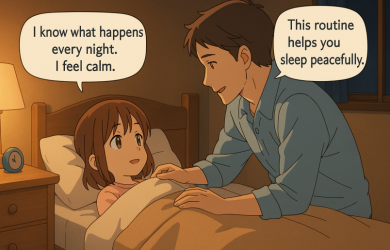
- Try this: Choose one daily moment, such as bedtime, and respond calmly and predictably every single night.
2. Name and accept their feelings
Naming a feeling tells a child it’s allowed and understandable: “You’re really disappointed.” Accepting a feeling doesn’t mean accepting every behavior. You can validate the emotion while still setting a limit, which helps a child feel understood and safe.
- Try this: When your child is upset, say “That sounds hard” before you try to fix anything.
3. Repair after conflict
After a hard moment, come back. A calm apology, a hug, or a simple “I was frustrated, and I’m sorry” shows a child that relationships can survive conflict. Repair matters more than avoiding every mistake. It teaches a child that love continues after conflict.
- Try this: Within a day of an argument, reconnect with a short, kind apology and a hug.
4. Set warm, clear boundaries
Boundaries and warmth work together. Clear, consistent limits help a child feel safe, while warmth keeps those limits from feeling like rejection. Support your child’s growing independence and ensure their feelings and decisions remain theirs, not yours to manage.
- Try this: Give your child one age-appropriate choice each day, and truly respect the choice they make.
Watch this TED Talk by Julie Lythcott-Haims, author and educator, who shares how parents can raise independent, successful children without over-parenting.

5. Spend regular one-on-one time
Short, regular time with your full attention builds closeness. It doesn’t need to be big or planned: a walk, a game, or a talk in the car. What matters is that your child feels you’re with them, without a phone or a to-do list competing for your attention.
- Try this: Set aside ten minutes a day to follow your child’s lead, with all screens off.
RELATED READING : How to Create One-on-One Time With Kids Successfully
When to Get Support
Small changes at home can help, and sometimes extra support helps too. Consider talking with a professional if you notice any of these.
- Your child seems persistently distressed, withdrawn, or unusually clingy
- There’s frequent aggression, extreme defiance, or fear around caregivers
- Your family has experienced trauma, loss, separation, or abuse
- You feel overwhelmed, or your own history makes bonding feel difficult
- The same patterns keep repeating despite your efforts
A child or family therapist, especially one trained in attachment-based approaches, can assess what’s happening and guide you. Adult children and parents can also work with a therapist on repairing their relationship. If you ever fear for a child’s safety, contact local child protection services or emergency services right away.
FAQs
Still have questions about healthy vs. unhealthy parent-child attachment? Here are answers to what parents ask most, from repair to what causes insecure attachment.
Yes, patterns can change. Consistent, responsive care, repair after conflict, and support from a counselor can all help, and it often takes time. No. Insecure attachment isn't a verdict on you. Many factors play a part, including stress, health, your own history, and your child's temperament. What matters is how you respond going forward, and you can start at any time. Often, yes, though it takes effort from both sides. It can start with honest, calm conversations, acknowledging past hurt, and setting new boundaries. A therapist can help, either with both of you or on your own. It usually develops when a child's needs are met unpredictably, dismissed, or met with fear. Contributing factors can include parental stress or mental health struggles, trauma or loss, separation, and difficult circumstances. There's rarely a single cause. No. Secure attachment comes from sensitive, consistent responses, not from a specific parenting style or set of practices. Parents using different approaches can raise securely attached children. Can an unhealthy attachment be repaired?
Does insecure attachment mean I'm a bad parent?
Can adult children repair attachment with their parents?
What causes insecure attachment?
Do I need attachment parenting for secure attachment?
Connection Over Perfection
Healthy vs. unhealthy parent-child attachment comes down to a few things: whether a child can count on comfort, whether feelings can be shared, whether independence is supported at the child’s pace, and whether the relationship recovers after hard moments.
If you recognize some unhealthy patterns in your family, you’re not alone, and they can change. Start with one habit: respond consistently, name your child’s feelings, repair after conflict, or take time for your own well-being.
A short apology after an argument is a reasonable place to begin. If you’d like support, find a therapist who can help you and your child build a more secure bond.
Helpful?
Continue exploring this topic

Marriage.com AI: Your Relationship Guide
You could start with
Share this article on
Marriage.com Editorial Team
Relationship & Marriage Advice
The Marriage.com Editorial Team is a group of experienced relationship writers, experts, and mental health professionals. We provide practical and research-backed advice on relationships. Our content is thoroughly reviewed by experts... Read more to ensure that we offer high-quality and reliable relationship advice. Read less
 Reviewed by

Marriage.com Community
Real people. Real relationships. No judgment.
How do couples stay connected after having kids when it feels like there’s zero time or energy left?
Have you navigated this in your own relationship?
Your perspective could help thousands of couples.
See what people are saying
Your perspective could help thousands of couples.


Recent Articles



Related Quizzes









 We'd love your feedback!
 Thanks for your feedback!